
If your earrings are stamped 925, have you checked what the post and back are made from? Most shoppers stop at the stamp on the decorative front, yet the parts that touch your piercing all day can be different metals entirely. That's the gap that causes the most confusion with sterling silver ear jewelry, and it's easy to close once you know what each label proves and what it doesn't.
Table of Contents
- What Sterling Silver Means for Your Earrings
- How to Read the 925 Stamp and Other Labels
- Benefits, Drawbacks and Why Sterling Silver Tarnishes
- How to Clean and Store Sterling Silver Earrings
- Is Sterling Silver Safe for Sensitive Ears
- Choose Sterling Silver Earrings for Everyday Wear or a Gift
What Sterling Silver Means for Your Earrings
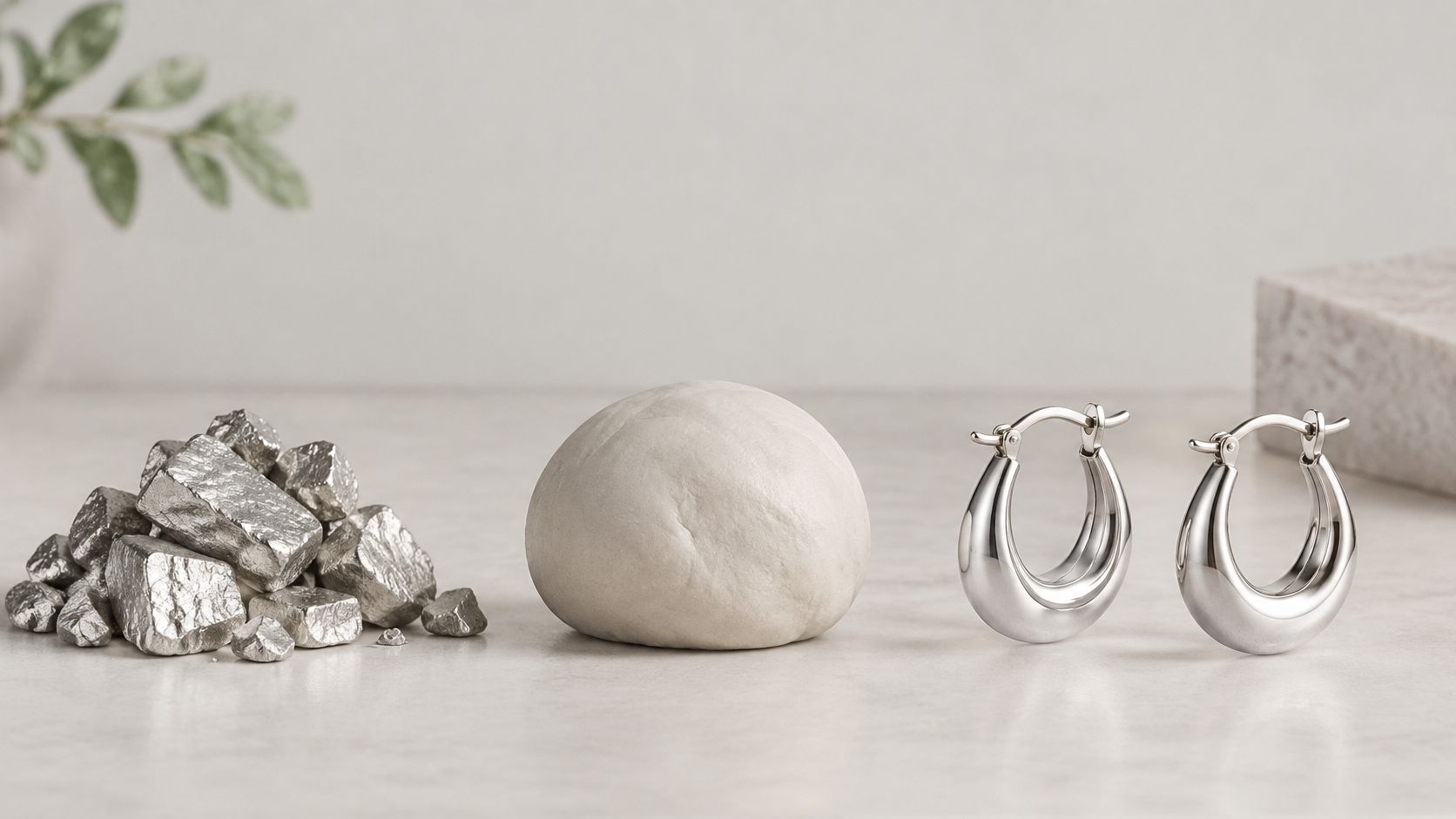
Think of sterling silver like dough that needs a little flour to hold its shape. Pure silver on its own is soft, so makers blend it into a sturdier mix that keeps thin parts from bending out of shape.
In plain words, sterling silver is about 92.5 percent pure silver, with the remaining 7.5 percent usually copper. The Dataintelo jewelry and silverware market report describes sterling silver as containing 92.5% pure silver, with the remaining 7.5% typically consisting of other metals that improve hardness and durability. The 925 mark is shorthand for that mix, so 925 parts out of 1,000 are silver.
Why Purity Is Not the Same as Strength
Fine silver sits at the other end of the scale. It's about 99.9 percent pure, but that purity makes it soft enough to bend, which is a poor fit for a thin hook you open and close daily or a post you push a back onto.
Earrings put stress on very small parts:
- Posts: They need to stay straight so the back grips properly.
- Hoops: They flex at the hinge and clasp every time you wear them.
- Hooks: They hold their curve only if the metal resists gradual bending.
The added copper gives those parts the stiffness nearly pure silver can't provide. That's why sterling, not fine silver, became the standard for earrings you wear often.
What the mark doesn't promise is just as important. A 925 stamp on the decorative front doesn't prove the post or back is also sterling silver, because those can be made separately and attached. Sterling silver is also different from silver-plated jewelry, where only a thin surface layer is silver over another base metal.
Core idea: Sterling silver is a material standard for the metal itself, not a guarantee that every part of the earring will feel comfortable on your skin.
How to Read the 925 Stamp and Other Labels
Labels do most of the work if you read them in order. Start with what the words claim about the metal.
| Label you see | What it means | Fit for daily wear and sensitive ears |
|---|---|---|
| 925 or Sterling Silver stamp | About 92.5% silver with the rest usually copper | Strong choice; still check the post and back |
| Fine silver or 999 | About 99.9% silver, softer and more likely to bend | Pure but soft for thin hooks and posts |
| Silver plated | Base metal with a thin silver layer | Occasional wear; the plating can wear through |
| 14K gold plated silver | Silver base with a thin gold layer | Occasional wear; check the base metal |
| Nickel-free claim | Maker says the piece has no nickel | Useful, but ask which parts were tested |
| No stamp or 'silver-look' | Metal not named | Best skipped for sensitive ears |
Three Checks Before You Buy
First, look for a 925 or Sterling Silver stamp on the earring body and, when it's visible, on the post and back too. Small earrings often carry stamps too tiny to read with the naked eye, so the product listing is usually the easier place to confirm.
Second, read the description for plating language such as 14K plated or silver plated. Plating isn't a flaw, but it changes how long the surface lasts and what's underneath once it wears. If you're comparing finishes, our guide to rhodium plated sterling silver explains how that coating works.
Third, look for a stated composition instead of vague words like silver tone or silver finish, which describe color rather than metal. A stamp is the maker's claim, so compare it with the product details and care information. If they don't match, trust the more specific statement, or ask before buying.
If a page says only silver or silver-look with no composition, treat the material as unknown.
Use this simple rule. Solid sterling silver with clear labeling suits everyday wear. Plated pieces suit occasional wear. Unmarked pieces are best skipped for sensitive ears.
Your final checklist takes under a minute:
- Stamp present: 925 or Sterling Silver appears on the piece or listing.
- Plating named: Any coating and its base metal are stated.
- Post material stated: The listing doesn't leave you guessing.
- Nickel claim checked: You know whether it covers every part.
Benefits, Drawbacks and Why Sterling Silver Tarnishes
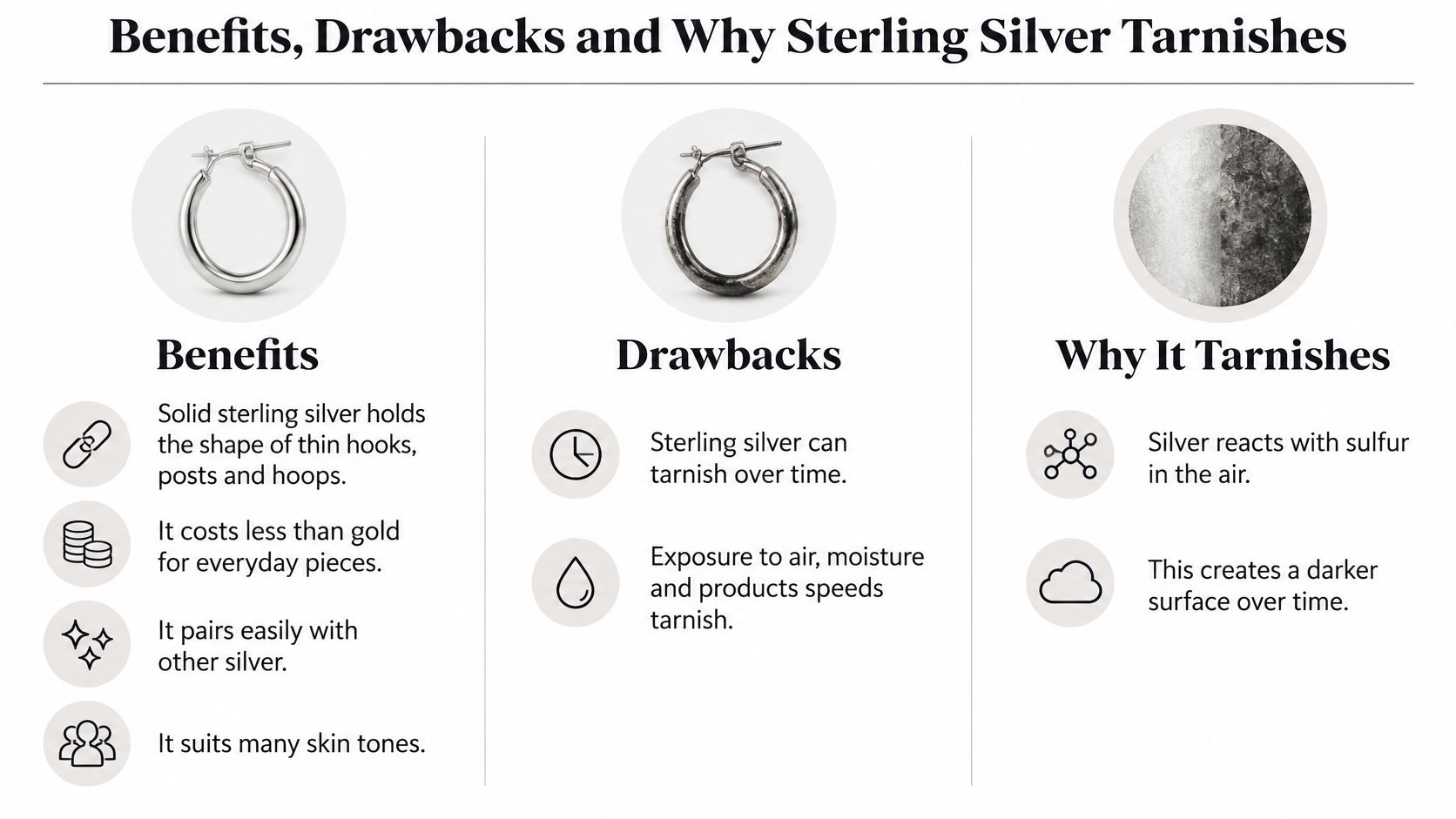
The chart below sums up the trade-off you'll live with, strong everyday metal on one side and surface upkeep on the other.
What Sterling Silver Does Well
Shape holding comes first. Solid sterling silver keeps thin hooks, posts, and hoops in form through daily handling, which is exactly where softer metal fails.
Cost matters for pieces you wear every day and might lose. Sterling silver costs less than gold, so replacing one lost stud hurts less, and you can own hoops, studs, drops, and personalized styles without treating each pair like an investment piece.
Versatility is quieter but real. It pairs easily with other silver you already own, suits many skin tones, and works across casual and dressed-up outfits without clashing.
Where It Falls Short
Tarnish is the main drawback. Silver darkens in humid or sulfur-rich air, often over weeks. Say you leave a stud on a steamy bathroom counter each night. It'll darken far faster than the same stud kept in a dry bedroom drawer, because moisture speeds the surface reaction.
Skin response affects some wearers, since the copper in the alloy can irritate certain skin. Plated pieces wear through with friction at the post and clasp, exposing whatever sits underneath. Very cheap listings often hide the base metal entirely, so you can't judge what you'll be wearing once the surface thins.
Why Tarnish Forms
Research published in PMC on silver corrosion reports that airborne hydrogen sulfide concentrations as low as approximately 0.2 parts per billion can initiate silver sulfidation. The same source describes sterling-silver earrings as typically 92.5 wt% silver and 7.5 wt% copper, with copper-rich regions oxidizing while sulfur and moisture promote silver sulfide, or Ag2S, the dark film you see as tarnish.
Because sulfur starts this at very low levels, storage near rubber bands, wool, or paper can darken pieces faster than you'd expect from air alone. Our explainer on whether sterling silver tarnishes over time covers the timeline in more depth.
Tarnish is mainly a surface issue, not an immediate break, so a lightly tarnished earring is usually still fine to wear once cleaned.
Don't overcorrect by scrubbing. Abrasive cloths and harsh pastes remove a little metal and fine detail each time, so repeated heavy polishing slowly wears edges and engraving. When a clasp bends or a post loosens instead, that's a repair rather than a cleaning job, and shops that track that work with jewelry repair software can log what's been fixed on a piece over time.
These drawbacks matter most if you wear the same pair daily. Occasional wear in dry conditions reduces nearly all of them.
The short video below shows what normal tarnish looks like compared with damage that needs attention.
How to Clean and Store Sterling Silver Earrings
Good care is mostly about timing. What you do in the minute before and after wearing matters more than any deep clean later.
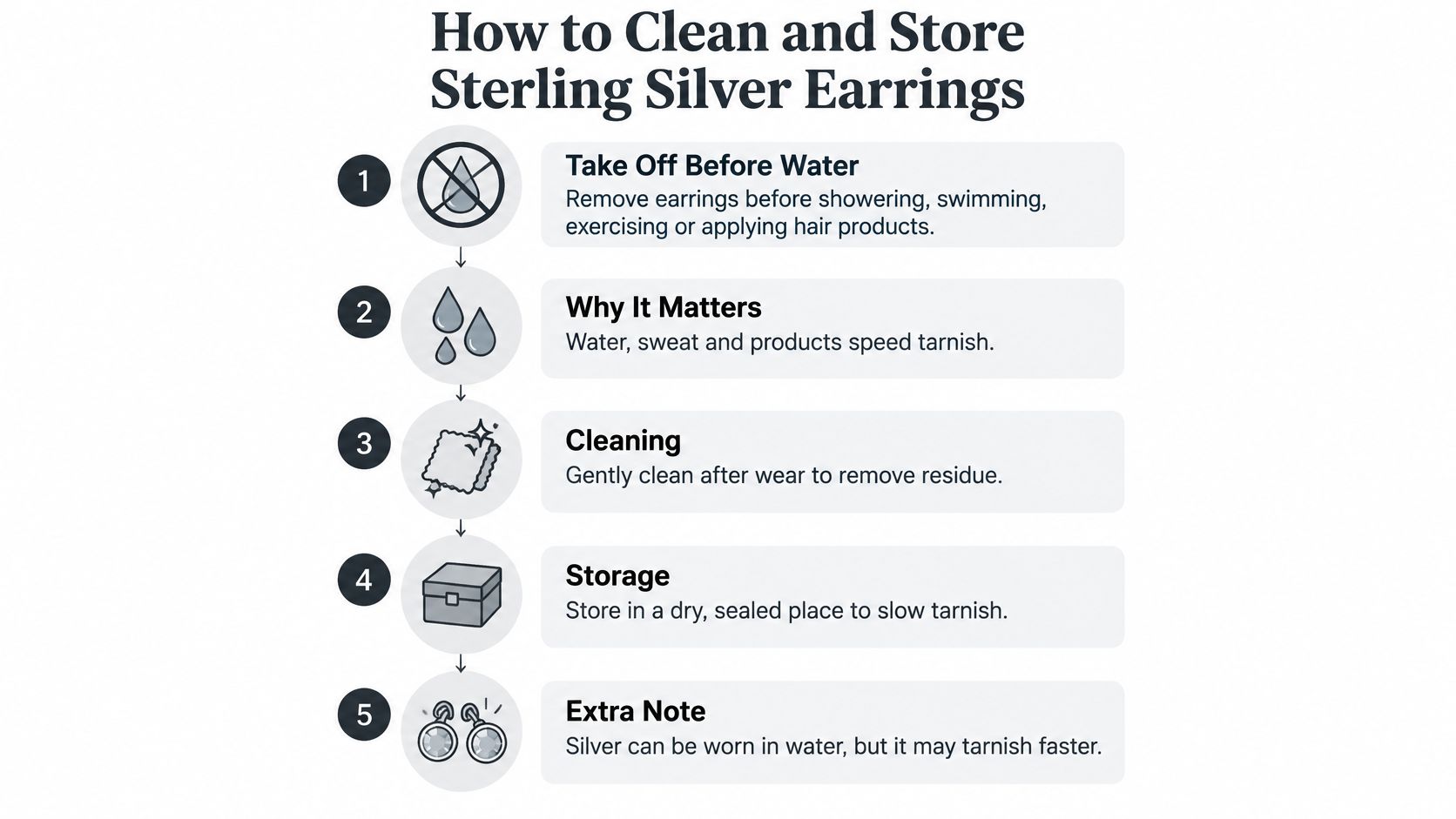
- Take earrings off before water and products. Remove them before showering, swimming, exercising, or applying hair products, because water, sweat, and sprays speed tarnish. Gold filled and silver jewelry can be worn in the water, and it lasts much longer if removed before showering, swimming, or working out.
- Dry each earring right after wear. Wipe with a soft cloth, paying attention to posts and backs where moisture and skin oils hide in the grooves.
- Wash gently when they look dull. Use warm water with a drop of mild soap, or a non-abrasive silver cleaner made for jewelry, then rinse and dry thoroughly.
- Polish light tarnish softly. Rub gently with a soft silver polishing cloth and skip harsh pastes or scrubbing, which remove metal and surface detail.
- Store each pair sealed and dry. Keep them in a sealed bag or small box away from humidity, rubber, and wool, which give off sulfur.
- Inspect posts and backs every few months. Look for roughness, bent posts, or coating wear, and replace damaged backs rather than forcing them on.
For a fuller routine covering other pieces you own, see our guide on how to clean jewelry at home.
How You Know It Worked
You'll see the shine return evenly, and your cloth will pick up dark residue rather than leaving fine scratches. If the cloth stays clean but the earring still looks dull, the dullness may be surface wear on plating rather than tarnish.
Treat plated pieces even more gently. Scrubbing can cut through the thin layer and expose the base metal, so use the soapy water step only, pat dry, and skip the polishing cloth on plated sterling silver ear styles.
Storage shortcut: One pair per small sealed bag stops earrings scratching each other and slows the air exposure that darkens them.
Is Sterling Silver Safe for Sensitive Ears
Many people assume sterling silver is always safe for sensitive ears. That's only partly true, and the part that's missing is the one that touches your skin longest.
Nickel allergy is a delayed skin reaction that causes an itchy rash where metal contacts skin. Earlobes and piercing channels stay against posts and backs for hours each day, so even small exposures add up there in a way they don't with a pendant that moves around.
The Mayo Clinic guide to nickel allergy lists pure sterling silver among generally suitable alternatives, while medical literature notes sterling silver is expected to contain low, not necessarily zero, nickel levels. That wording matters. Low risk isn't the same claim as nickel-free.
| Earring part | Common material | What to check |
|---|---|---|
| Decorative front | Sterling silver or silver-plated base | Stamp, plating details and whether the front is solid |
| Earring post | Silver, or sometimes another alloy | Whether it is solid sterling silver or stated nickel-free |
| Earring back or clutch | Often base metal | Often the real irritant; ask for a nickel-free claim |
| Hoop hinge or solder | Sterling silver or mixed solder alloy | Check that the clasp and join materials are stated |
Plating adds another variable. A coated post can feel fine for months, then wear thin at the friction point where the back slides on, exposing base metal directly inside the piercing. If a pair that used to feel comfortable starts itching, coating wear is a sensible first suspect. Our notes on stud earrings for sensitive ears go deeper on post choices.
Shop with three habits:
- Name the parts: Look for a nickel-free claim including the post and back, not just the front.
- Prefer solid posts: Choose posts labeled solid sterling silver over plated posts if you have a reaction history.
- Skip vague claims: Don't treat hypoallergenic as proof unless the listing states what's in the metal.
Stop wearing the earrings if redness, itching, blistering, or swelling appears, and see a doctor or dermatologist if it continues.
Switching to verified nickel-free components can reduce exposure, but it can't diagnose or treat dermatitis. Only a medical assessment can tell allergy apart from infection or plain irritation.
Choose Sterling Silver Earrings for Everyday Wear or a Gift
Match the metal to how the earrings will be used, and the choice gets simple.
For everyday wear, pick solid sterling silver with a 925 mark and take the pair off before showering and exercise. For sensitive ears, choose solid sterling silver with nickel-free posts and backs and avoid plated pieces. For gifts, solid sterling silver lasts longer, while a personalized piece needs a clear material note so the buyer knows exactly what's being given.
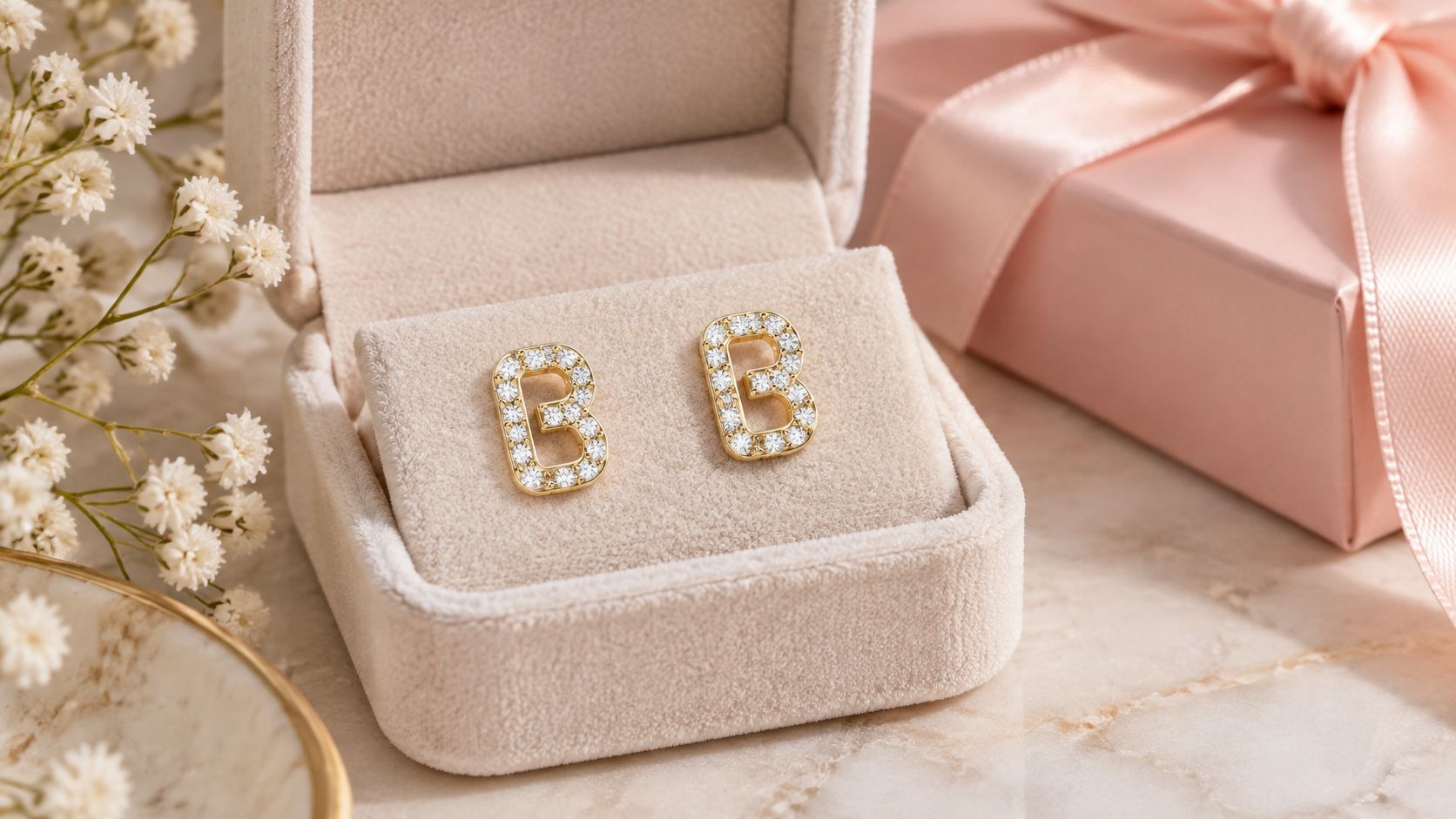
The Pave Bubble Cutout Earring shows why that note matters. It's a personalized initial piece listed as 14k plated silver with CZ, sold separately, with production taking about 4 weeks and a final sale policy. That makes it a plated gift, not solid sterling silver, so you'd weigh it differently than a daily stud.
We state that none of our jewelry contains nickel, and you should still confirm that claim on the specific product page if allergy is a concern. For a themed gift outside our catalog, thistle jewellery for Highland wedding attire is one example of matching a motif to an occasion, and our overview of the types of earrings helps narrow the style first.
Check policy before ordering personalized work, since some personalized or made-to-order fine jewelry may carry a restocking fee of up to $150 per item. Then confirm the stamp and material on the listing, match them to your use case, and buy with the returns terms already clear.
Visit EP Fine Jewelry to browse earrings, personalized pieces, and everyday fashion jewelry in silver and 14K gold, with material details listed on each product page. Check the post and back materials, the care guidance, and the return terms for the pair you like, then order with confidence that you've read the label the way a jeweler would.