
You're at a jewelry counter comparing two silver necklaces. Both look attractive, but one says rhodium plated while the other says sterling silver. The price difference is easy to see. What isn't obvious is what you're buying, how long the bright finish may last, and whether you'll eventually pay to have it renewed.
Rhodium plated sterling silver isn't a separate solid metal. It's sterling silver with a very thin rhodium coating. That finish can make a piece look whiter and delay tarnish, but it also wears away through use. The most useful way to judge it isn't to ask whether it's “tarnish-proof.” Ask where the finish will wear first, how you'll care for it, and whether future replating fits your budget.
Table of Contents
- What Rhodium Plated Sterling Silver Means
- How a Microscopic Metal Layer Changes Sterling Silver
- Where the Finish Lasts and Where It Wears Off First
- Benefits and Trade-offs Worth Knowing Before You Buy
- Caring for Rhodium Plated Sterling Silver at Home
- Misconceptions That Lead to Disappointed Buyers
- Who Should Choose Rhodium Plated Sterling Silver
What Rhodium Plated Sterling Silver Means
You are choosing a silver ring for a gift. The description says rhodium plated, but that phrase describes the surface, not the whole piece. Underneath is still sterling silver, and the bright finish may eventually need care or renewal.
Genuine sterling silver is generally made from 92.5% silver and 7.5% other metals, commonly copper. The added metals give it more strength than pure silver, which is too soft for many jewelry applications. Rhodium-plated sterling silver keeps that sterling silver structure underneath.
Rhodium is added afterward. It is a rare, bright-white metal from the platinum group, applied to the prepared surface through electroplating rather than mixed into the sterling alloy. Rhodium is therefore a finish, not the core material. Its coating is described by thickness, while the silver body may carry a purity mark such as 925.
The quick answer: You are buying standard sterling silver with a bright rhodium surface treatment.
What changes visually
Unplated sterling silver has a natural silver color that may look slightly warmer or grayer after handling and exposure. Rhodium gives the surface a cooler, brighter white appearance with strong reflectivity. Freshly finished jewelry can resemble white gold or platinum from a distance.
The underlying material remains different. A rhodium-plated sterling silver necklace is not structurally white gold or platinum. Its weight, repair needs, and future maintenance still relate mainly to the sterling silver body.
What the coating does
An intact rhodium layer places a barrier between the silver and everyday exposure to air, moisture, sulfur compounds, skin oils, and cosmetics. Because rhodium is chemically stable and harder than sterling silver, it can preserve initial brightness and slow visible tarnish. The barrier is microscopic and sacrificial, so rubbing, contact, and repeated wear can gradually remove it.
That distinction matters for gift buyers. “Rhodium plated” can sound like a permanent upgrade, although it is better understood as a finish that may require maintenance. A clear description states both parts: sterling silver underneath, rhodium on top. Ask how the piece was finished and what renewal service is available before treating the coating as a one-time feature.
How a Microscopic Metal Layer Changes Sterling Silver
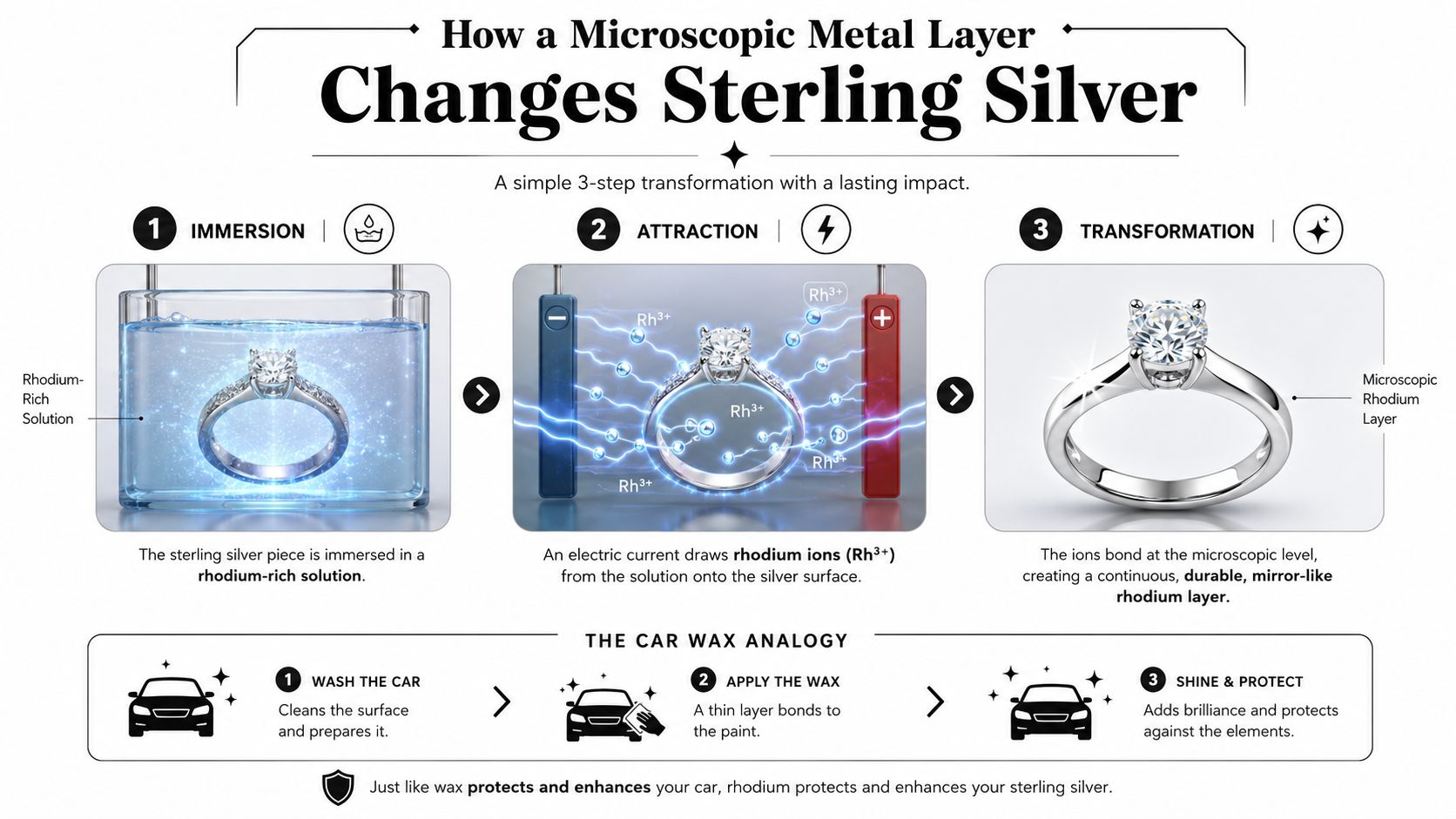
Electroplating deposits rhodium ions onto a prepared surface under controlled current, building a continuous metallic layer that follows the jewelry's shape and texture. The result resembles a fitted outer shell, while the sterling silver body keeps its original composition and structure. Rhodium forms a bonded metal coating rather than a layer of paint or wax.
The jewelry is cleaned and prepared first. It is then placed in a bath containing rhodium compounds, and an electric current draws rhodium ions toward the conductive surface. Those ions settle and bond into the coating, including across small contours and textured areas.
Why thickness matters
Jewelry plating is measured in microns, because the deposited layer is far too thin to describe in millimeters. Available care information describes modern sterling-silver rhodium plating as an ultra-thin finish. One process reference gives a common range of 0.75 to 1.5 microns, while another sterling-silver finish reference describes a thinner layer around 0.05 to 0.25 microns. The figures vary with the product, process, and specification, so the words “rhodium plated” do not identify the exact thickness. The process reference explains the commonly reported 0.75 to 1.5 micron range, while the sterling-silver finish guide describes its thinner coating range.
A thicker coating generally provides more material before the silver underneath becomes exposed, but thickness is only one part of the maintenance picture. Surface preparation, adhesion, jewelry geometry, contact frequency, and wearing habits also influence how long the finish remains even. A ring's underside can lose its coating sooner than a pendant, even when both were plated carefully.
How the layer slows tarnish
Sterling silver may darken after exposure to sulfur-containing compounds and moisture. An intact rhodium surface separates much of that exposure from the silver beneath it, helping the jewelry retain its initial brightness and reducing the need for frequent polishing.
The coating changes the surface behavior without altering the alloy underneath. Repeated friction can thin or remove the layer at particular contact points. The exposed sterling silver may then look warmer or darker, while nearby rhodium remains bright. This contrast can make wear appear sudden, although the microscopic coating has been gradually wearing down through use.
For buyers, the practical point is simple: rhodium plating is a recurring maintenance decision. Ask how the piece was finished and whether the jeweler offers renewal service before treating the bright surface as a permanent feature.
Where the Finish Lasts and Where It Wears Off First
Jewelry doesn't wear evenly. A pendant may brush clothing with little direct abrasion, while a ring meets soap, countertops, keys, tools, and other surfaces throughout the day. The same rhodium finish can stay bright on one piece and become visibly thinner on another.
For sterling-silver earrings and pendants, the finish commonly remains noticeable for roughly 2 to 5 years. Everyday rings often show visible wear in about 12 to 24 months. Daily-wear pieces may fall within a broader 6 to 24 months range, depending on coating thickness and how often the surface makes contact.
| Jewelry Type | Expected Finish Lifespan | High-Wear Zones to Watch |
|---|---|---|
| Earrings | Often about 2 to 5 years | Earring backs, posts, and areas touched during removal |
| Pendants | Often about 2 to 5 years | Chain contact points, bail, and the back of the pendant |
| Bracelets | Often shorter than low-contact pieces | Underside, clasp, links, and areas rubbing against desks or watches |
| Everyday rings | Commonly about 12 to 24 months, with some daily-wear pieces showing wear sooner | Inner band, bottom of the shank, edges, and prong tips |
A ring's lower shank usually receives the most friction as your hand moves and repeatedly contacts nearby surfaces. Bracelet links rub against one another, while the underside can meet desks or watches. Chains wear at points where links slide against skin, clothing, or the pendant bail.
Practical rule: Judge lifespan by contact, not by the jewelry category alone.
Sweat, lotions, soap, chlorine, salt water, and household chemicals can shorten the finish's useful life. Occasional wear and careful storage may help it remain attractive longer. For travel, separate each item so chain links and metal edges do not rub together. These jewelry storage practices are especially useful when preserving the plated surface matters.
The bright finish is therefore a maintenance decision, not a permanent feature. Check the high-wear zones periodically, and ask the jeweler whether replating is available before buying a piece intended for daily use.
Benefits and Trade-offs Worth Knowing Before You Buy
A gift buyer may first notice the bright, cool-white appearance. Rhodium plating gives sterling silver a reflective finish without requiring a solid white precious-metal alloy, and it can create a consistent look across several pieces. While the coating remains continuous, it also separates the silver from sulfur compounds and everyday residue that contribute to tarnish.
The smooth feel comes from the polish beneath the plating. Dirt and skin oils have fewer rough areas to cling to, so gentle wiping can handle ordinary residue. Rhodium's low reactivity may suit some wearers, yet sensitivity depends on the whole item. The sterling silver alloy, solder, posts, findings, and added layers can still contain nickel, so ask for the full material specification if the jewelry is intended for sensitive skin.
What you gain
- White appearance: The finish gives sterling silver a crisp, reflective look that coordinates with other white-metal jewelry.
- Delayed tarnish: Rhodium slows contact between the silver alloy and sulfur compounds, air, moisture, and residue.
- Surface hardness: Compared with untreated sterling silver, rhodium can resist some light surface abrasion.
- Simpler routine care: A soft cloth and sensible storage are generally better suited than aggressive polishing.
What you take on
The plated layer is temporary, so ownership includes future maintenance. Wear rate depends on contact, construction, and how the piece is used. Daily-use jewelry may require professional attention within the broader 6-to-24-month range described by independent jewelry-care guidance. Plating thickness and friction both affect when replating becomes useful.
Repairs can add another service decision. Resizing, polishing, soldering, or torch work may remove the finish or leave it uneven, requiring the jeweler to prepare and replate the piece afterward. Rhodium pricing has fluctuated significantly in recent years, and market conditions can make both the initial upcharge and future replating costs variable. Market reporting lists rhodium at $8,850 per ounce on August 28, 2026 and describes movement toward a small surplus in 2026. The finish therefore works more like a renewable surface treatment than a permanent feature.
For comparison, gold-plated jewelry also requires buyers to think about finish longevity and eventual wear. The color differs, but the buying question is similar: how often will friction expose the piece, and what will renewal involve? Ask about replating availability before choosing jewelry for frequent wear.
Caring for Rhodium Plated Sterling Silver at Home
The safest care routine is gentle and consistent. Rhodium doesn't need aggressive polishing to look good, and abrasive cleaning can remove the very layer you're trying to protect.
Do this
- Remove it before water exposure: Take jewelry off before showering, swimming, using a hot tub, or washing dishes. Soap, chlorine, salt, heat, and repeated wet-dry cycles can accelerate wear.
- Apply products first: Let lotion, perfume, sunscreen, hair products, and cosmetics dry before putting the piece on.
- Wipe after wearing: Use a soft, lint-free microfiber cloth to remove skin oils and residue without grinding particles into the surface.
- Store pieces separately: Use an anti-tarnish pouch or a lined jewelry box, keeping chains, rings, and bracelets from rubbing against each other.
- Remove rings for manual work: Cleaning chemicals, tools, exercise equipment, and rough surfaces create concentrated friction at the ring's edges and underside.
Avoid these shortcuts
Don't use silver dip, silver polish, toothpaste, baking soda, or abrasive cloths. Those products may be suitable for some unplated silver care routines, but they can thin or strip rhodium. Ultrasonic cleaning can also be inappropriate, especially when the item contains delicate stones, settings, or other construction details.
Gentle home cleaning guidance is a better starting point than treating every silver-colored piece the same way. If you're checking the care needs of a statement design such as the Two Finger Twist Ring, remember that its listed materials are 18K gold plated and CZ, not rhodium-plated sterling silver, so its finish should be cared for according to its own material description.
If the surface looks uneven, warmer at the edges, or visibly worn at contact points, ask a jeweler whether the piece needs cleaning, repair, polishing, or replating. Ask whether the stones can safely remain in place during the process, whether old plating must be removed, and what finish will be applied afterward.
A short visual reminder can help you build the routine into daily use.
Misconceptions That Lead to Disappointed Buyers
The first misconception is that rhodium plating makes sterling silver scratch-proof. Rhodium is harder than the silver beneath it, but a thin coating still faces keys, zippers, stone surfaces, tools, and other hard objects. A ring can develop fine scratches that soften its mirror reflection even before the underlying silver becomes obvious.
The finish also follows the surface below it. If the jewelry already has a deep scratch, pit, rough edge, or casting mark, plating won't fill that defect and turn it into a flawless solid-metal surface. It creates a bright layer over the prepared shape.
A harder surface can resist some abrasion. It can't eliminate the consequences of repeated contact.
The second misconception is that tarnish resistance means maintenance-free ownership. Rhodium can slow sulfur-driven tarnish while it remains intact, but the coating itself wears down. Once silver becomes exposed at an edge, scratch, seam, or high-contact area, that spot can darken while the surrounding rhodium remains bright.
That uneven contrast often disappoints shoppers more than a uniform natural patina would. The piece may look as though it has developed dark patches, when the actual issue is a mixture of surface residue, worn plating, and exposed sterling silver.
For a ring buyer comparing bold shapes and broad surfaces, dome ring designs are a useful reminder that visible area doesn't equal equal wear. The underside and contact edges still receive the most abrasion, even when the top remains bright.
The honest expectation is simple. Rhodium-plated sterling silver starts with a brighter, more resistant surface, but it remains jewelry that needs sensible care and may need professional renewal. A product description that explains this is more useful than one that promises permanent shine.
Who Should Choose Rhodium Plated Sterling Silver
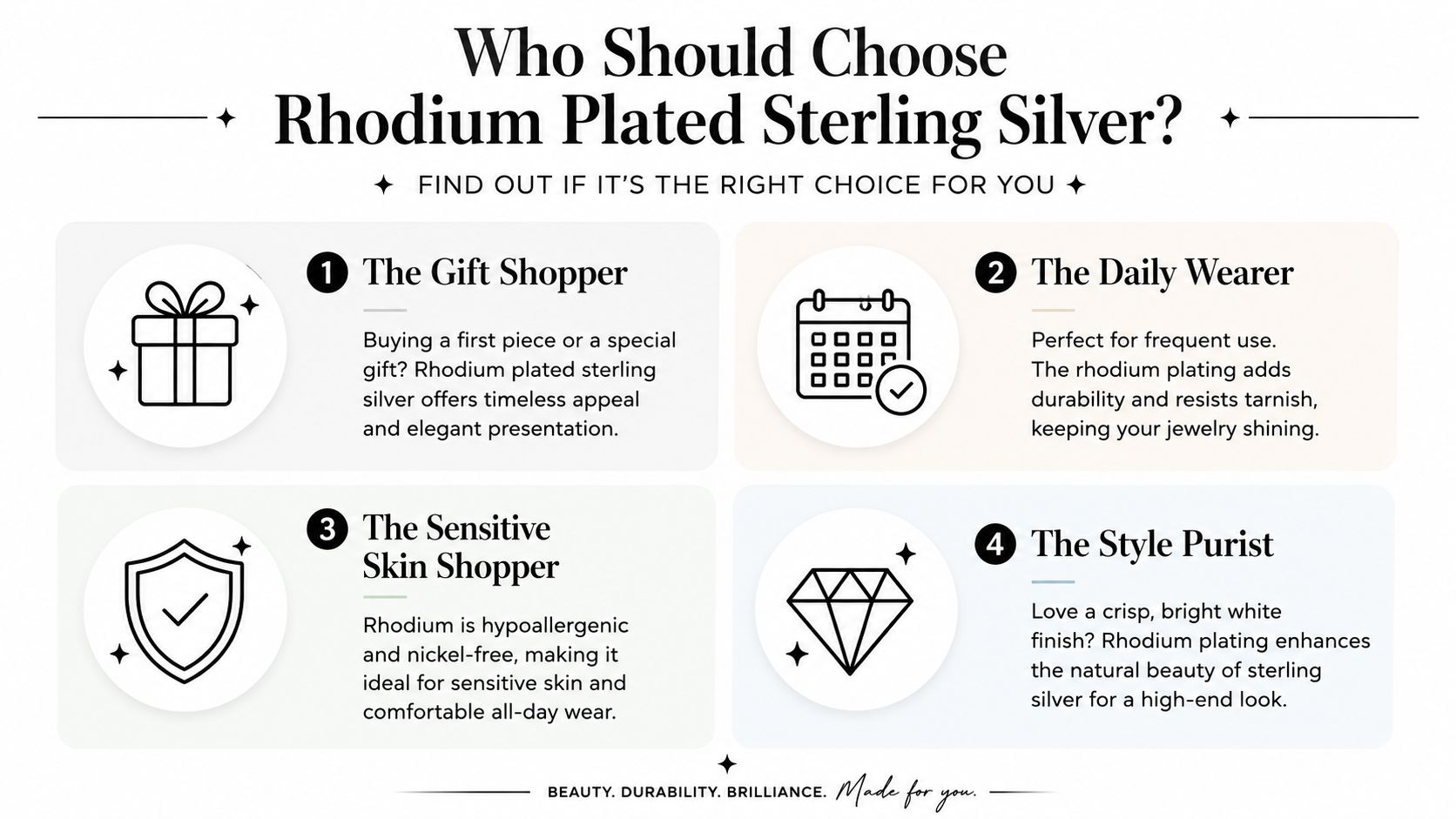
A gift shopper buying someone's first jewelry piece may like rhodium plating because the recipient gets a bright, familiar silver-white look immediately. It can be a practical choice when you don't know whether the recipient prefers warmer or cooler metal tones. The deal-breaker is daily wear on a ring, especially if the recipient expects never to think about maintenance.
An office professional who wears a necklace or studs regularly may find the finish suits a low-friction routine. Pendants and earrings generally avoid the constant impact that rings and bracelets receive, so they're often easier to keep bright. The buyer should still ask how the chain, earring backs, and contact points are finished, not just how the front looks.
Four buyer situations
The sensitive-skin shopper should treat rhodium as one part of the material story, not the whole answer. The surface is commonly selected for low reactivity, but the base alloy, solder, posts, findings, and any underlayers can affect skin response. Ask for complete material information and a nickel-free specification when that requirement matters.
The bride-to-be may choose the finish to coordinate visually with white gold or other bright white jewelry. That can help a ring set or wedding-day look appear consistent. The caution is wear planning. A frequently worn ring may need professional attention sooner than earrings or a pendant.
The value buyer needs to compare the initial purchase with future service. Replating is commonly estimated at $20 to $80 per piece by independent jeweler sources, so the maintenance and value discussion is relevant when comparing a lower initial cost with recurring upkeep. The right choice depends on how much the wearer values the white finish and how often the item will be exposed to friction.
The style purist may prefer unplated sterling silver if they want a natural silver tone and the ability to polish the surface without worrying about removing a coating. Rhodium is better suited to someone who specifically wants a cooler, brighter presentation and accepts that the finish is serviceable rather than permanent.
Before purchasing, run through this checklist:
- Confirm the base: Make sure the product is genuine sterling silver, usually identified as 925.
- Ask about thickness: Request the rhodium coating specification in microns when the seller provides it.
- Plan for wear: For a frequently worn ring, budget for possible replating around 18 to 24 months, based on the care ranges above.
- Check skin requirements: Ask whether the entire construction is nickel-free, not only the outer rhodium.
- Protect the finish: Store pieces separately and remove them before water, chemicals, exercise, and heavy work.
- Coordinate finishes thoughtfully: If you mix metals in a collection, guidance on combining gold and silver can help you decide whether the bright rhodium look fits with your existing pieces.
Rhodium plated sterling silver is a sensible choice when the buyer wants genuine sterling silver with a bright surface and accepts ongoing care. It's less suitable for someone who wants a maintenance-free ring or a finish that will never change. EP Fine Jewelry offers personalized jewelry, necklaces, rings, earrings, bracelets, charms, and gift options, so shoppers can compare designs while keeping the material and care details in view.
Visit EP Fine Jewelry to explore personalized and fashion jewelry across rings, necklaces, earrings, bracelets, and charms. Before choosing a silver-colored piece as a gift or everyday accessory, check its base metal, surface finish, and care guidance so the look you buy matches the maintenance you're ready to provide.