
Yes, sterling silver tarnishes over time. Standard sterling silver is typically 92.5% silver and 7.5% copper, and its surface reacts with sulfur and moisture in the air, not because the jewelry is poor quality.
But “will it tarnish?” is only the starting question. The more useful question is when will tarnish become visible on this particular piece, in this particular environment? A necklace stored in a dry pouch, a ring worn with lotion on the skin, and a gift left in a humid box can follow very different timelines.
This guide explains what tarnish is, why the sterling alloy affects it, how quickly discoloration may appear, and how to clean it without damaging the jewelry. You'll also learn how storage, daily wear, cosmetics, humidity, and gifting habits can delay or accelerate the reaction. By the end, you'll know how to care for a favorite chain, ring, or heirloom so it stays bright for years.
Table of Contents
- Does Sterling Silver Tarnish Over Time
- Why Sterling Silver Tarnishes in the First Place
- How Fast Tarnish Actually Shows Up
- Safe Ways to Clean Tarnished Sterling Silver
- How to Prevent Tarnish Before It Starts
- Common Sterling Silver Myths Worth Forgetting
- Keeping Your Silver Looking New for Years
Does Sterling Silver Tarnish Over Time
Yes, sterling silver tarnishes over time, and tarnish is a normal surface reaction rather than a manufacturing defect. Conservation guidance from the Government of Canada explains silver tarnish and sterling silver's alloy composition, including why the copper in sterling silver makes it more reactive than purer silver.
The reason jewelry uses sterling silver instead of completely pure silver is practical. Fine silver is relatively soft, so it can bend, mark, or lose its shape more easily in pieces that receive regular handling. Adding copper gives rings, chains, earrings, and charms the strength needed for everyday designs, but the alloy also creates conditions that make tarnish more likely.
Tarnish is a timeline, not a quality test
A bright piece can remain attractive for a long time in clean, dry storage. Another piece may begin to dull quickly in humid air or after contact with sweat, cosmetics, or pollutants. That difference doesn't mean one piece is genuine and the other isn't. It means the surrounding conditions are changing the speed of the chemistry.
You'll gain four practical skills from understanding that timeline:
- Identify the change: Learn to tell early yellow dullness from darker silver sulfide tarnish.
- Estimate the timing: Compare storage, bathroom, dresser, and daily-wear environments.
- Clean carefully: Start with the gentlest method and increase strength only when necessary.
- Delay the reaction: Control moisture, sulfur exposure, handling, and storage conditions.
Tarnish usually forms as a thin layer on the surface, which is why appropriate cleaning can restore brightness. It isn't automatically evidence that the metal underneath has been ruined. At the same time, aggressive cleaning can remove finishes, plating, or intentional dark details, so the safest routine is always gradual.
Why Sterling Silver Tarnishes in the First Place
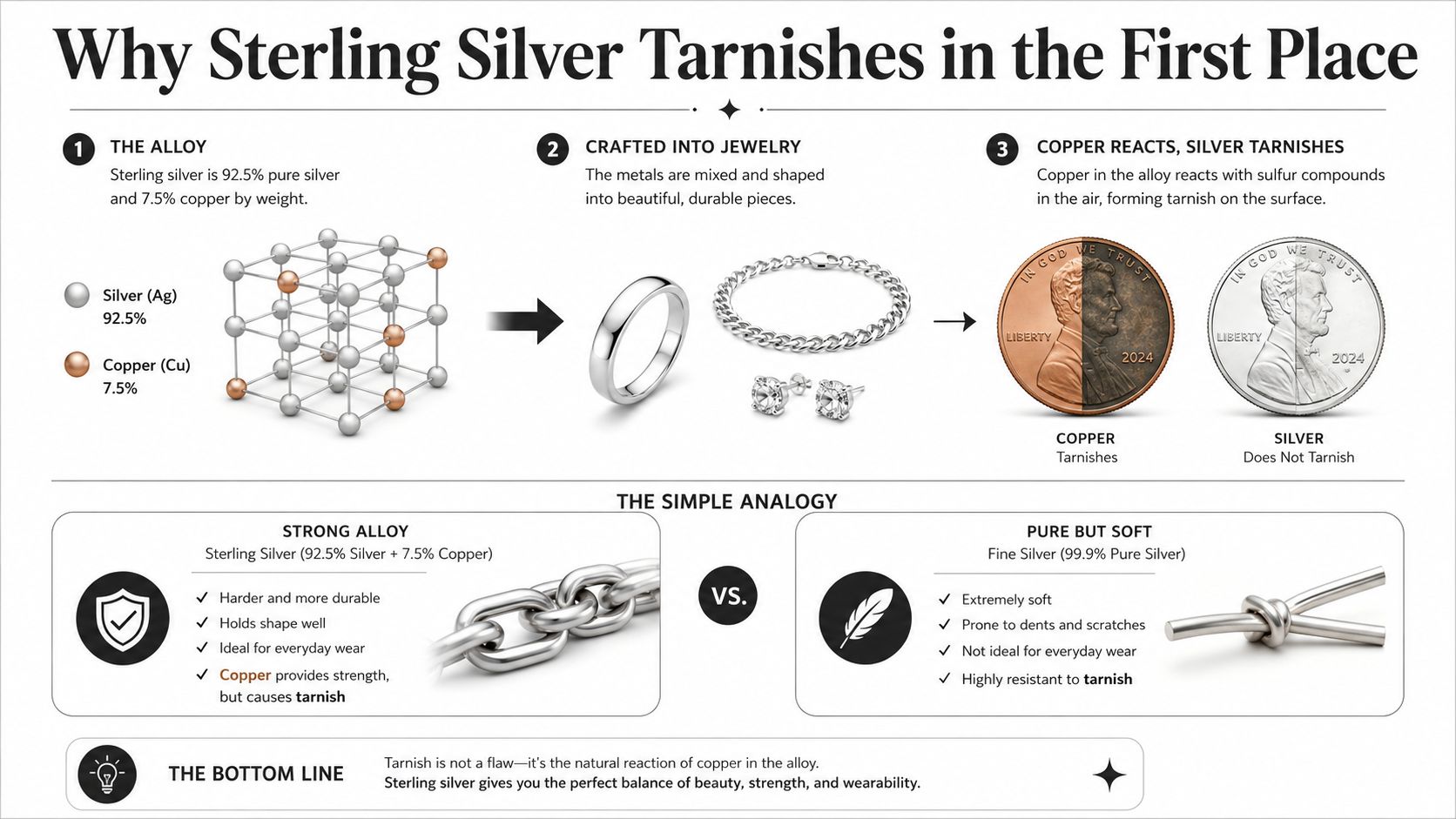
Sterling silver is typically 92.5% silver and 7.5% copper, as described in the Government of Canada's conservation guidance. Pure silver alone is too soft for many jewelry applications, so copper acts like the structural ingredient in a cake. The silver is the main body, while the copper helps the finished material hold its shape.
That copper doesn't sit apart from the silver like a separate layer. It forms part of the alloy, and the resulting surface is more prone to tarnish than pure silver. The chemistry begins when sulfur-containing gases, especially hydrogen sulfide, reach the silver surface. The silver reacts with sulfur to form silver sulfide, the dark compound associated with tarnish. The conservation research summarized in this technical study of tarnish testing shows that even very small concentrations of hydrogen sulfide can affect silver surfaces.
What moisture changes
Humidity doesn't create tarnish by itself, but it helps the surface reaction proceed. Silver tarnishes faster at higher relative humidity when sulfur concentration is held constant, while storage below 50% relative humidity slows the process, according to the conservation explanation summarized by Honho Jewelry's sterling silver care guidance.
Everyday materials can add further exposure. Perfume, sunscreen, sweat, rubber, wool, polluted air, and residues from personal-care products may place reactive substances close to the metal. A piece worn against damp skin in a warm environment therefore experiences a different chemical setting from one sealed in a dry pouch.
Tarnish versus deeper damage
Tarnish is primarily a surface layer, so gentle polishing can often remove it. That doesn't mean every dark mark should be scrubbed away. Antiqued finishes intentionally use darkened recesses for contrast, and plated jewelry may have a thin outer coating that harsh cleaning can wear through.
For broader maintenance instructions, EP Fine Jewelry's jewelry care guide can serve as a useful reference alongside the finish and stone-specific instructions supplied with a piece.
How Fast Tarnish Actually Shows Up
There isn't one universal answer to how long sterling silver takes to tarnish. The peer-reviewed research on silver tarnish behavior describes the process as strongly dependent on exposure, with visible changes ranging from subtle early films to progressively darker layers under more reactive conditions.
A technical tarnish study reports that a slight yellow film can form on a timescale measured from days to months, depending on hydrogen sulfide concentration. Separate corrosion research cited in the verified conservation material found a corrosion layer about 1 µm thick after 300 minutes in a sodium sulfide solution, a controlled condition that shouldn't be treated as a prediction for an ordinary home.
Tarnish Timeline by Environment
| Environment | Time to Visible Tarnish | Main Accelerators |
|---|---|---|
| Sealed, dry jewelry pouch or box | Often months or longer, and potentially years in clean, low-sulfur storage | Trapped moisture, contaminated packaging, residual cosmetics |
| Bathroom vanity | Can begin within hours to days in high humidity | Steam, water droplets, soaps, hair products, sulfur exposure |
| Open dish on a dresser | May remain subtle for weeks or months, depending on air quality | Household pollutants, dust, humidity, nearby rubber or wool |
| Frequently worn necklace | Variable, from subtle dulling to faster darkening | Sweat, skin oils, perfume, sunscreen, humidity, air pollutants |
These ranges describe visible change, not the instant the first chemical reaction begins. Under high-sulfur or high-humidity conditions, measurable darkening can appear within hours to days. In cleaner, drier storage, the first visible signs may take months or much longer.
How to read the first color change
Early tarnish isn't always black. A slight yellow or warm dullness can be the first visible film, followed by brown or progressively darker discoloration as the surface layer develops. Many owners mistake this early stage for dirt, but rubbing with a soft polishing cloth can reveal whether the change is mainly surface tarnish or ordinary residue.
Daily wear adds a complication. Friction from clothing and movement may lightly buff exposed areas, making a necklace look bright even while chemical tarnish develops in less exposed crevices. Skin contact, sweat, and cosmetics can also speed the reaction, so wearing silver often doesn't guarantee protection.
Practical rule: If a piece becomes noticeably yellow within a month while stored, inspect the storage environment first. Moisture, sulfur-containing materials, or contaminated packaging may be driving the timeline.
Safe Ways to Clean Tarnished Sterling Silver
The safest cleaning method depends on the finish, construction, stones, and severity of the tarnish. Start with the least aggressive option. If the surface brightens, stop there rather than continuing to a stronger treatment.
Start with light surface dullness
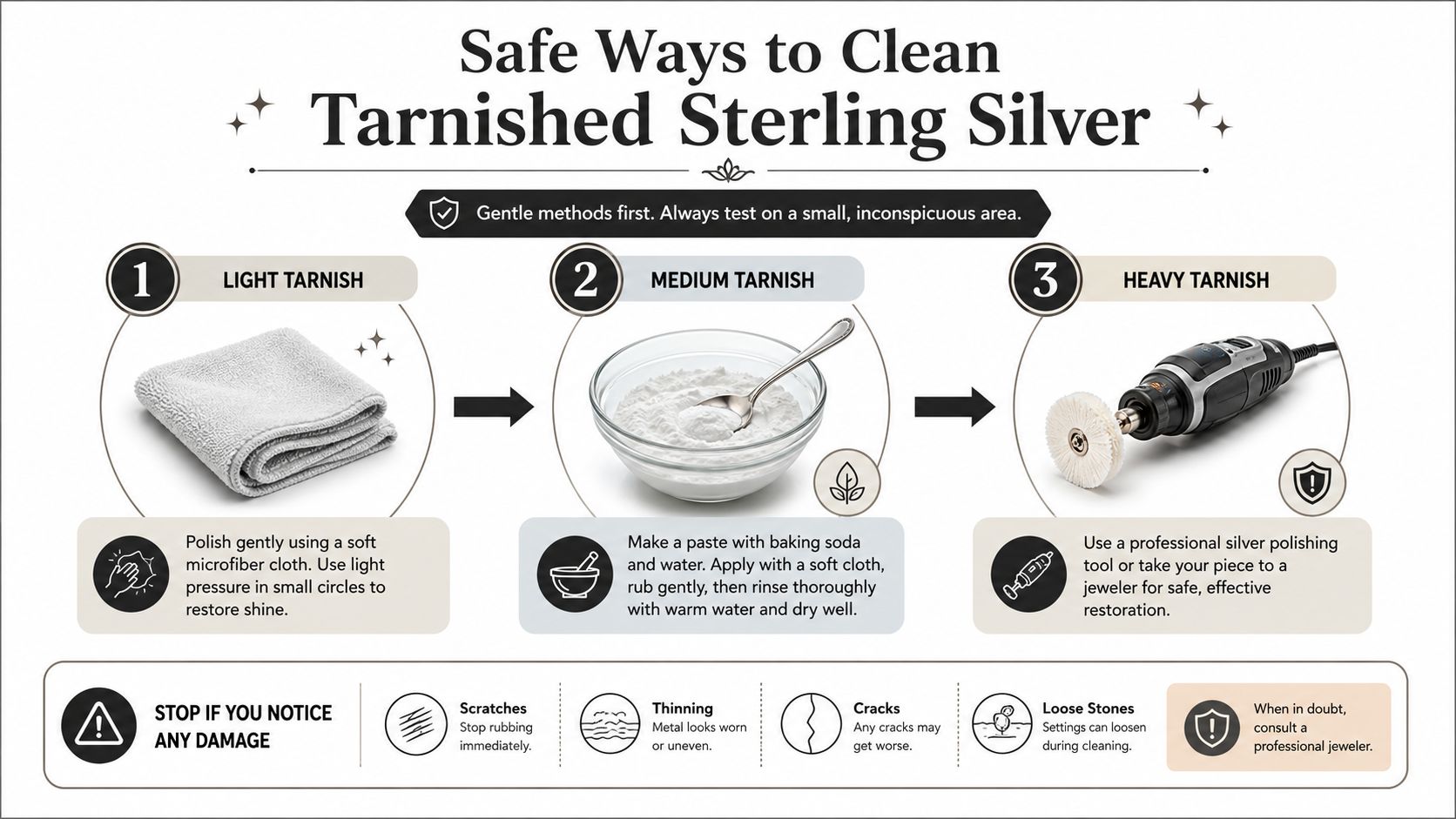
For a lightly dull chain, ring, or pair of earrings, use a clean microfiber silver-polishing cloth. Hold the piece securely and rub gently in straight or controlled motions. This targets surface film, fingerprints, and mild early tarnish without soaking the jewelry.
If the piece mainly carries body oils or cosmetic residue, use lukewarm water with a small amount of mild dish soap. Let the jewelry contact the solution briefly, wipe gently with a soft cloth, rinse carefully, and dry completely. Don't leave chains tangled in water, and protect the sink drain before you begin.
Move carefully to visible yellowing
A small amount of baking soda mixed with water can form a mild paste for visible yellowing on plain, unplated sterling silver. Apply it with a soft cloth using very light pressure, rinse thoroughly, and dry immediately. Baking soda can still be abrasive, so it isn't the right choice for mirror-polished surfaces, plated jewelry, soft gemstones, or intentional oxidized details.
The EP Fine Jewelry guide to cleaning jewelry at home provides additional at-home care context. Always check the material description before treating a piece, especially when the item combines silver with plating, cubic zirconia, pearls, enamel, or glued components.
For readers who prefer a visual demonstration, this cleaning video shows a practical silver-care process:
Reserve stronger methods for suitable pieces
The aluminum foil and baking soda method is commonly used for heavier black tarnish because it supports a chemical transfer process rather than relying only on scrubbing. It should be reserved for plain sterling silver that has no delicate stones, plating, intentional patina, glued elements, or fragile construction. Rinse and dry the piece thoroughly afterward.
Stop home treatment if the finish changes unexpectedly, a stone becomes loose, or the jewelry has intricate links and settings that are difficult to rinse. A professional jeweler is the safer choice for heirlooms, antique pieces, delicate chains, and jewelry with sentimental value. Some dips and cleaning treatments can leave a highly reactive surface that tarnishes again quickly, so stronger doesn't always mean better.
How to Prevent Tarnish Before It Starts
Prevention works by changing the environment around the jewelry. You can't remove every sulfur compound from daily life, but you can reduce the amount of sulfur, moisture, and residue that reaches the metal.
Build a dry storage routine
Store each piece separately in an anti-tarnish pouch or individual soft cloth bag. A sealed jewelry bag or box can reduce air exchange, while a silica gel packet helps manage moisture inside the container. Keep packets away from children and pets, and replace them when they become saturated according to the product instructions.
Avoid the bathroom, even if the jewelry box looks convenient there. Steam and splashes create a more reactive environment, and soaps or hair products can remain on the surface. Wooden surfaces may also release acidic compounds, so a lined jewelry box or dedicated pouch is preferable to leaving silver directly on a dresser.
Change the order of your getting-ready routine
Put jewelry on last, after lotion, sunscreen, perfume, and hair products have dried. Remove it before showering, swimming, exercising, or sleeping. Wipe the surface with a soft cloth after wearing it, paying attention to areas that sit against skin or collect product residue.
Anti-tarnish strips can help inside a closed drawer or box by absorbing reactive sulfur compounds. Chalk and activated charcoal are also used as low-cost moisture or odor-control aids, but they shouldn't touch the jewelry directly. Separate each piece so chains don't tangle and surfaces don't rub against one another.
Prevention is cumulative. Each dry storage choice and post-wear wipe reduces the work your next cleaning session has to do.
Gift-box storage deserves the same care as personal storage. If you're buying an item such as the Rainbow Heart Spinning Ring, its 18K plated white gold silver construction and cubic zirconia details make finish-aware handling especially important. Keep the boxed piece dry, away from bathrooms and direct contact with paper, rubber, or other potentially reactive materials, and inspect it before gifting after a long period in storage.
For plated pieces, rhodium-plated sterling silver care guidance can help you avoid applying a cleaning method designed for uncoated silver. After long storage, open the box in a dry room, check for dullness or residue, and use the gentlest suitable wipe before wearing the piece.
Common Sterling Silver Myths Worth Forgetting
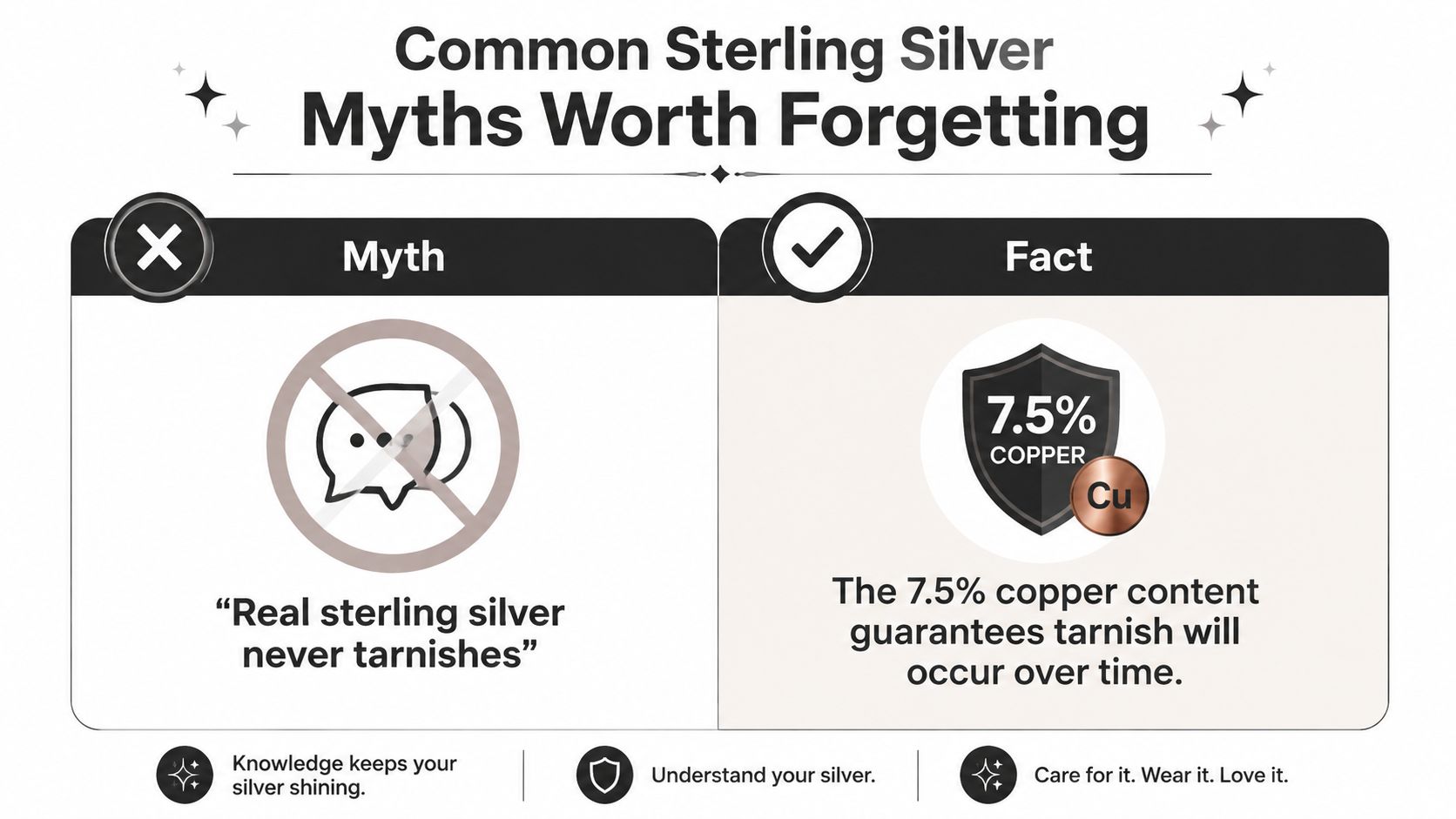
Myth one, real sterling silver never tarnishes. Sterling silver is genuine jewelry metal, but it isn't pure silver. The standard composition is 92.5% silver and 7.5% copper, and that alloy is one reason it tarnishes faster than purer silver, as conservation guidance from the Government of Canada explains. Tarnish doesn't disprove authenticity.
Myth two, toothpaste is a safe universal cleaner. Toothpaste contains abrasive particles designed for teeth, not delicate metal finishes. Rubbing it across silver can create fine scratches and may affect plating or polished details. A soft silver cloth and gentle soap are safer starting points.
Myth three, wearing silver always prevents tarnish. Movement can lightly buff exposed areas, but sweat, skin chemistry, lotion, sunscreen, and perfume may increase exposure to moisture and reactive compounds. A frequently worn necklace can therefore look bright in one setting and darken faster in another.
Myth four, silver dips are harmless for every piece. Dips can remove tarnish quickly, but they may also strip intentional patina, affect plated surfaces, or harm vulnerable stones and decorative details. Use them only when the manufacturer or a jeweler confirms that the piece can tolerate the treatment.
One more misconception deserves a clear correction: tarnished silver isn't automatically ruined silver. Tarnish is generally a surface-level change, but repeated harsh polishing can cause its own damage. If a piece has sentimental value, complicated settings, or an unusual finish, ask a professional before trying a stronger method. You can also review related metal-care considerations in EP Fine Jewelry's guide to mixing gold and silver.
Keeping Your Silver Looking New for Years
Sterling silver tarnishes because sulfur-containing compounds react with the metal surface, while moisture speeds the process. The visible timeline depends on the environment, so prevention should focus on controlling exposure rather than expecting silver to remain permanently unchanged.
A simple routine has three parts:
- Store each piece separately in an anti-tarnish pouch or sealed bag with a silica packet.
- Wipe it gently after wearing to remove moisture, sweat, and product residue.
- Use the mildest effective cleaner before moving to paste or stronger treatments.
Regular wear may keep exposed areas looking brighter through light friction, but it won't suit every skin chemistry or environment. If your jewelry darkens quickly, reduce contact with cosmetics and moisture before assuming the metal has a quality problem.
For travel, separate chains and rings in individual pouches, keep them away from damp toiletries, and consult these jewelry storage tips for travel before packing. Today, inspect the place where you keep your silver. If it's near a bathroom, sitting in an open dish, or touching other materials, move it into individual dry storage and plan a seasonal gentle clean.
EP Fine Jewelry offers personalized jewelry, rings, necklaces, bracelets, earrings, charms, and gift-ready options with care guidance to support ownership after purchase. Visit EP Fine Jewelry to browse pieces and choose jewelry you can store, wear, and maintain with confidence.