
You leave a party, glance in the mirror, and notice your earlobes are hot, swollen, and throbbing. The studs looked harmless, but you wore them for less than an evening. By the next morning, you're wondering whether every attractive pair of earrings is off-limits.
That reaction doesn't mean you're being fussy. Sensitive ears usually point to either a metal reaction, a fit problem, or both. The useful question isn't only which earrings look good. It's what touches the piercing, how the earring sits against the lobe, and whether the seller can prove the materials instead of hiding behind the word “hypoallergenic.”
Table of Contents
- Why Sensitive Ears React in the First Place
- The Safest Metals for Sensitive Ears
- Plated Versus Solid Metal Studs
- Posts, Backs, and Fit That Prevent Irritation
- How to Read Hypoallergenic Labels Without Getting Fooled
- Testing New Studs and Keeping Them Clean
- Smart Buying Checklist and Common Questions
Why Sensitive Ears React in the First Place
A customer once came into a shop after trying a new pair of studs. Within an hour, the piercing holes were intensely itchy and red. She blamed the butterfly backs because they felt tight, but the timing pointed more strongly to the post material. After switching to a verified nickel-free option, the itching stopped. A different pair caused soreness only after a full day, which was a fit issue, not the same allergy.
Nickel exposure from earrings has been a major historical reason people talk about “sensitive ears.” A clinical review reports nickel allergy prevalence in Europe of about 8% to 19% in adults and 8% to 10% in children and adolescents, with women affected 4 to 10 times more often than men. A Norwegian population study found nickel allergy in 27.5% and 31.1% of women, compared with about 5.0% to 5.1% of men, and identified ear piercing as a strong risk factor, with a relative risk of 3.30. These findings are detailed in this clinical review of nickel allergy and piercing.
Allergy and irritation feel different
True nickel allergy is a contact dermatitis response. It often brings itching, redness, swelling, burning, or a rash where the metal touches the skin. Symptoms can appear quickly, although allergic reactions don't always follow the same clock for every wearer.
Mechanical irritation has a different pattern. A heavy front can pull on the lobe, a short post can squeeze it, and a protruding back can press into your neck while you sleep. That usually feels like localized soreness, pressure, or throbbing, especially after hours of wear.
Practical rule: Itching and spreading redness make me inspect the metal first. Deep soreness at the contact points makes me inspect the fit.
When you speak with a piercer or jeweler, describe the symptom instead of saying only “my ears are sensitive.” Say, “The post became itchy within an hour,” or, “The lobe became sore after a full day and the back was pressing into my skin.” That language helps separate a likely allergy from a post-length or backing problem. For healing guidance, use a reputable piercing aftercare guide, especially if the piercing is new, painful, or producing unusual discharge.
The Safest Metals for Sensitive Ears
If you have a confirmed nickel allergy, I'd start with implant-grade titanium or niobium. Not vague “medical metal,” not an attractive gold-colored coating, and not a seller's unsupported promise. Look for a named alloy standard and a clear statement about what the post and backing are made from.
Implant-grade titanium, particularly ASTM F136, is the strongest everyday recommendation for a reactive piercing. Niobium is another excellent choice and is treated as nickel-free. These materials rank ahead of surgical stainless steel because surgical steel can contain nickel, even when many wearers tolerate it. Experts commonly recommend titanium during the full healing period for fresh piercings, typically 6 to 12 weeks for lobes and potentially up to a year for cartilage, as summarized in this material guide for hypoallergenic earrings.
Solid gold can work well, but don't confuse karat with a nickel-free guarantee. A solid 14k or 18k piece is made throughout from its stated alloy, yet the recipe can vary. Ask the seller whether the alloy is nickel-free, particularly if you've reacted strongly before. Platinum and palladium are excellent choices, but their higher cost makes them less practical for many everyday stud collections.
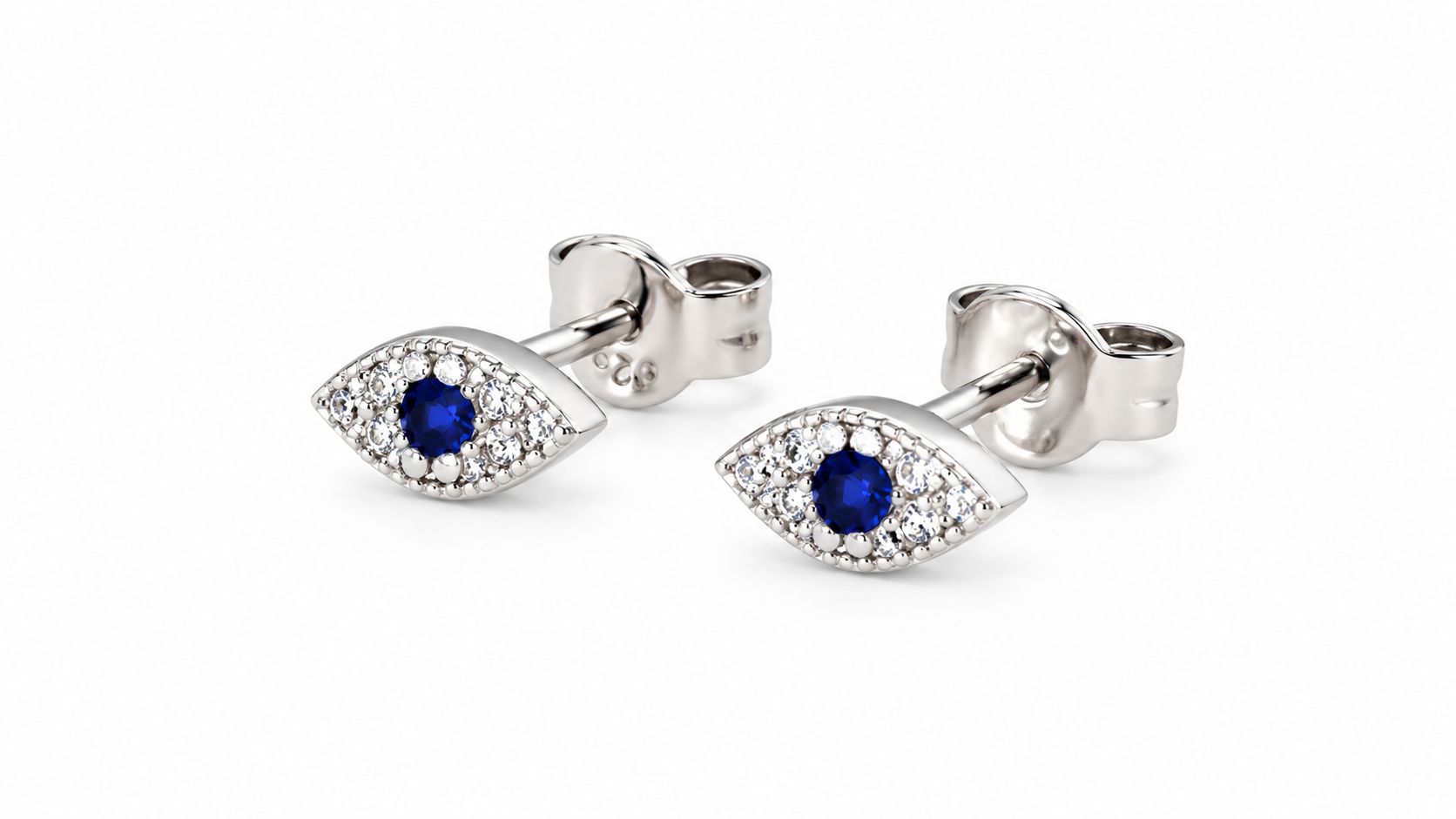
Sterling silver belongs in the cautious category. It can be comfortable for some people, but the alloy and any plating still matter. Read this explanation of rhodium-plated sterling silver before assuming a bright white finish tells you anything about the post beneath it. For example, Evil Eye Studs are listed as a pair made with 14K plated Gold Silver and Cubic Zirconia, so a buyer with a confirmed nickel allergy should verify the post and backing separately.
| Metal | Nickel Content | Biocompatibility | Price Tier | Best For |
|---|---|---|---|---|
| Implant-grade titanium | Nickel-free when the stated alloy is verified | Excellent | Lower to mid | Confirmed nickel allergy and fresh piercings |
| Niobium | Nickel-free | Excellent | Mid | Highly reactive ears and everyday studs |
| Nickel-free solid 14k or 18k gold | Depends on the certified alloy recipe | Very good | Mid to high | Daily wear when the alloy is disclosed |
| Surgical stainless steel | Can contain nickel | Variable for allergy-prone wearers | Lower to mid | People who tolerate trace nickel |
| Sterling silver | Alloy-dependent | Variable | Lower to mid | Occasional wear after material verification |
| Platinum or palladium | Generally treated as nickel-free options | Excellent | High | Luxury everyday studs |
Plated Versus Solid Metal Studs
Gold color tells you almost nothing about allergy safety. The important question is whether gold makes up the entire piece or only the surface.
Solid 14k or 18k gold doesn't have a separate coating waiting to wear away. The karat stamp describes the piece's alloy, although you still need nickel-free confirmation if your ears react to nickel. Gold vermeil uses a substantial gold layer over sterling silver and can be a reasonable middle ground when the silver core and the post are suitable for you. The core still matters, especially where the post enters the piercing.
Gold filled has a mechanically bonded gold layer over a base metal. It's more durable than ordinary plating, but the core can still contain nickel. Gold plated means the gold is a surface coating over another metal, often brass or a nickel-containing alloy. Friction from insertion, sweat, water, and contact with backs can expose that base metal much sooner than shoppers expect. For a stud that stays in a piercing daily, I treat ordinary plating as fashion jewelry, not a dependable sensitive-ear solution.
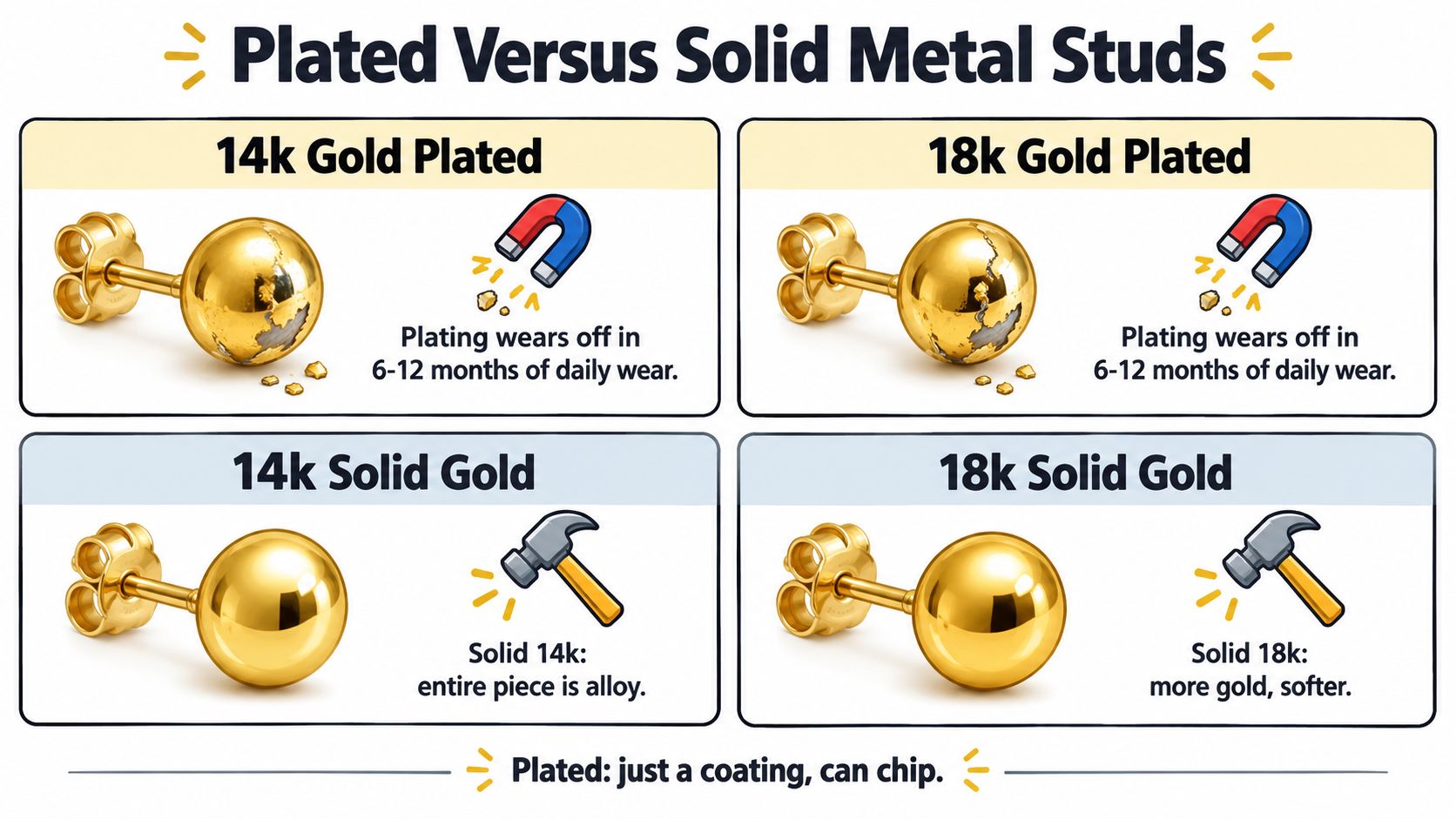
| Construction | What you're actually buying | My recommendation |
|---|---|---|
| Solid gold | The full piece is the stated gold alloy | Strong daily option, with nickel-free verification |
| Gold vermeil | Gold over sterling silver | Good occasional or careful daily option if the core is suitable |
| Gold filled | Bonded gold layer over base metal | Better durability than plating, but verify the core |
| Gold plated | Thin gold coating over base metal | Fashion-only for reactive ears |
A plated front can look perfect while the post tells a different story. Before buying, ask whether the post, clutch, and decorative front share the same material. This guide to gold-plated jewelry longevity is useful background, but the practical rule is simple: if you can't identify the metal touching the piercing, don't treat the pair as allergy-safe.
Posts, Backs, and Fit That Prevent Irritation
A safe metal can still feel awful if the earring is badly fitted. I've seen perfectly wearable studs blamed for an allergy because the post was too short and the backing was clamping the lobe.
Match the post to your lobe
A standard 11 mm post fits many lobes, but thicker lobes may need 12 mm or longer. The front should sit against the ear without crushing it, and the backing shouldn't leave a deep impression. If the lobe looks pinched after removal, the problem may be pressure rather than metal.
Gauge matters too. A 20-gauge post, about 0.8 mm, is common for ordinary studs and works with butterfly backs. An 18-gauge post, about 1 mm, offers more stability for heavier gemstone designs, but a thicker post must match the piercing. Don't force a thicker gauge through a piercing that isn't prepared for it.
Choose the backing for your routine
Butterfly backs are familiar and widely compatible, but they can loosen and may press into the skin. Push-on or flat backs sit closer to the lobe and are often more comfortable for sleeping or active days. Screw-on backs take longer to remove, but they're my preferred choice for valuable studs because they're harder to lose. Locking backs add useful grip for children and people who move constantly.
Read a seller's explanation of earring clasp types before choosing based only on the front design. A decorative back disc can trap pressure against the skin, and that pressure can create soreness that looks like an allergy. Weight also matters. A large front should distribute its load across the lobe instead of hanging from one small contact point.
How to Read Hypoallergenic Labels Without Getting Fooled
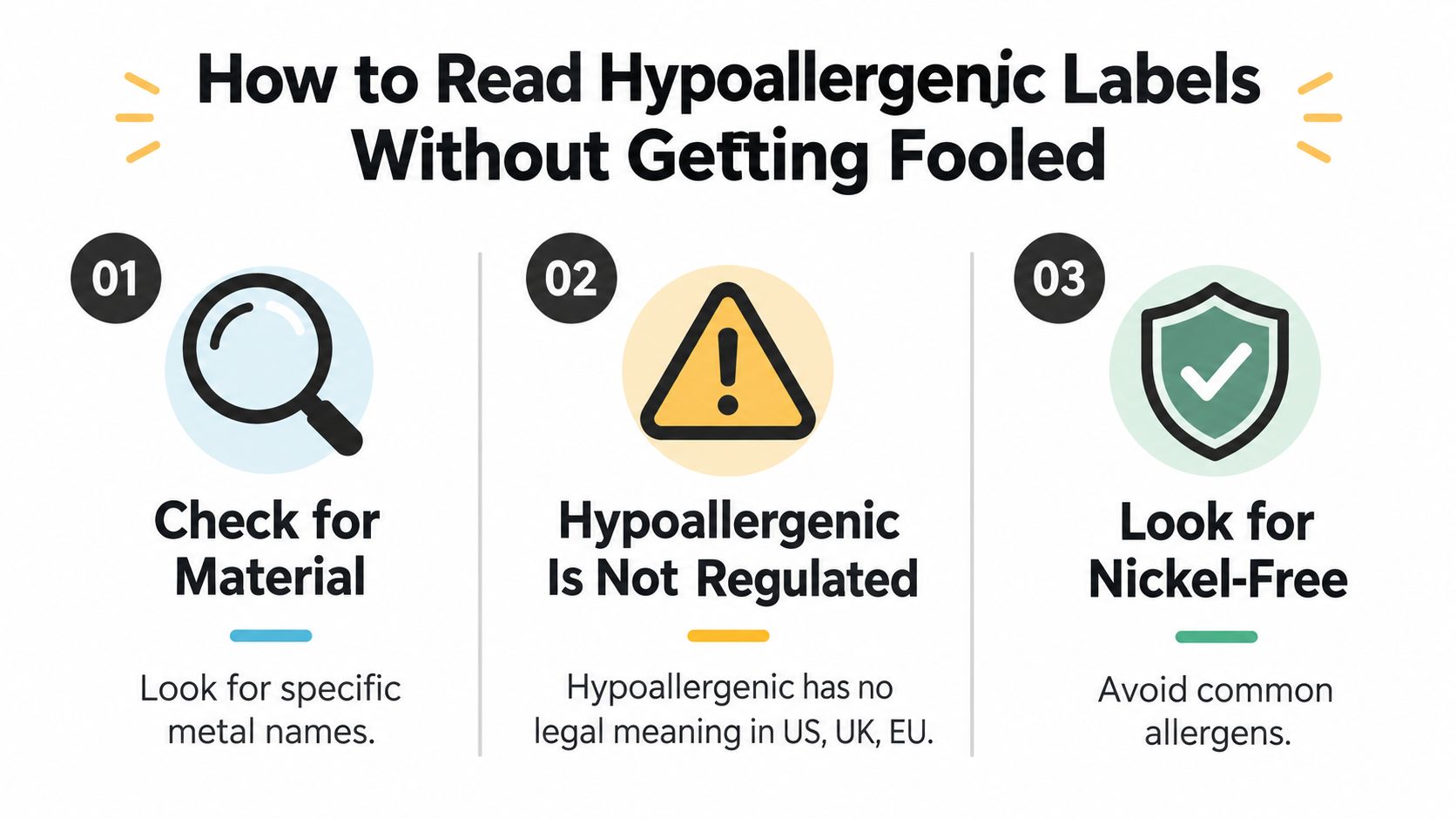
“Hypoallergenic” is not a material specification. It tells you the seller expects the item to cause fewer reactions, but it doesn't identify the alloy, the plating, or the metal inside the post. If a product page gives you only that word, you haven't received enough information to make a confident purchase.
Three checks belong on every product page
First, demand the exact alloy. “Surgical steel” and “medical grade” are broad marketing terms unless the seller identifies a recognized standard. ASTM F136 titanium gives you a meaningful starting point. ASTM F138 steel is a more specific designation than an unspecified steel label, but steel can still contain nickel, so it isn't my first recommendation for a confirmed nickel allergy.
Second, look for regulatory or testing language. European nickel restrictions limit release from posts inserted into pierced ears to 0.2 micrograms per square centimeter per week, while other jewelry in prolonged skin contact is limited to 0.5 micrograms per square centimeter per week, according to this systematic review of nickel release and earring testing. A REACH compliance statement, an EU nickel directive statement, or a disclosed nickel-release result is more useful than “gentle on skin.”
Third, inspect the gold wording. “Gold” may mean solid gold, vermeil, filled, or plated. Ask what lies beneath the surface and whether the post uses the same material as the front.
Green flags include implant-grade titanium ASTM F136, niobium, solid nickel-free gold, and a clear statement naming the post and backing material. Distrust phrases such as hypoallergenic, skin-friendly, medical grade, premium metal, and gold tone when they appear without an alloy disclosure. The word “hypoallergenic” alone can't tell you whether the earring will release nickel or whether the backing will pinch.
Testing New Studs and Keeping Them Clean
Even a well-made pair deserves a controlled first wear. Don't put new studs into both ears before you know how your skin responds. Clean the pair first, then test it in the ear that's easiest for you to monitor.
Use a cautious first-wear routine
Wash the posts and backs with mild soap and water, rinse them thoroughly, and dry them with a clean towel. Manufacturing residue, polishing compounds, oils, and dust can irritate a piercing before the metal itself gets a fair test.
Wear the studs for 24 to 48 hours, including sleep if the post and backing are designed for it. Watch for itching, spreading redness, swelling, burning, or clear fluid that dries into crust on the post. If those signs appear, remove the earrings. Don't keep “testing” an item that is visibly irritating your skin.
Stop sign: A new earring should never require you to push through worsening itch, swelling, or discharge to prove that it's safe.
This routine isn't a substitute for medical care or formal allergy testing. If a reaction is severe, persistent, or repeatedly returns with different jewelry, stop wearing the suspected pair and ask a healthcare professional about evaluation.
Keep the hardware free of buildup
For routine care, use mild soap, warm water, and a soft toothbrush to clean the post and backing. Rinse away all soap and dry the pieces completely. This at-home jewelry cleaning guide can help you adapt the method to the material.
Daily perfume, sunscreen, hair products, and chlorine can be especially hard on plated finishes. Remove studs before swimming in pools, using hot tubs, or attending a hair-dye appointment. Store each pair in a soft pouch or separate compartment so posts don't scrape against one another and weaken plating at contact points.
A monthly deeper clean can use rubbing alcohol or a UV jewelry sanitizer if the jewelry's materials and construction allow it. Don't apply harsh chemicals to unknown stones, porous materials, or delicate finishes without checking the care instructions first.
Smart Buying Checklist and Common Questions
A good purchase should survive three tests: the metal must be identifiable, the construction must suit daily wear, and the fit must match your ear. If a product page fails the first test, attractive photography doesn't rescue it.
Save this checklist before you shop
- Confirm the metal: Choose verified implant-grade titanium, niobium, or a disclosed nickel-free solid gold alloy.
- Check the whole earring: Ask about the post and backing, not only the decorative front.
- Avoid mystery plating: For full-time wear, solid construction is safer than an unknown coated base.
- Match the post length: Use a longer post when a thicker lobe needs room, and avoid backs that visibly pinch.
- Choose the backing deliberately: Pick a flat or push-on style for low pressure, a screw-on style for security, or a locking style for active wear.
- Test before committing: Clean the pair and complete a controlled first wear.
- Plan for care: Keep studs away from chlorine, hair dye, and heavy product buildup.
How long should I wear new studs at first?
Use the 24 to 48 hour controlled wear test described above, but remove the earrings sooner if itching, redness, swelling, burning, or discharge begins. A test isn't a challenge to tolerate pain. It's a way to identify a problem before you commit to repeated wear.
Is sterling silver safe for sensitive ears?
Sometimes, but not automatically. Sterling silver is an alloy, and its comfort depends on the specific composition, any surface plating, and your personal sensitivity. If the seller won't identify the post and backing, I wouldn't choose it for a confirmed nickel allergy.
What if sterling silver turns my skin green?
The green tint usually reflects a copper reaction as the alloy oxidizes. It isn't the same thing as a nickel allergy, but it does show that the metal is reacting with moisture, skin chemistry, or products. If the area also becomes itchy, sore, or inflamed, stop wearing the pair and reassess both the alloy and the fit.
For shoppers comparing stud earrings for sensitive ears, the winning choice is rarely the prettiest pair with the strongest label. It's the pair whose alloy, post, backing, and dimensions are all clear enough to verify before checkout.
EP Fine Jewelry organizes earrings alongside personalized jewelry, charms, necklaces, rings, bracelets, and bangles, with Jewelry Care, FAQ, shipping, and returns information available for shoppers who want product and ownership details in one place. Visit EP Fine Jewelry to compare its earring offerings and review the care and policy information before choosing your next pair.