
If two bracelets both say 14K, why can one cost far more, feel far lighter, and wear out years sooner than the other?
That question is the fastest way to understand a gold charm bracelet. The stamp tells you purity, not how much gold you're buying, how the links are built, or whether the clasp can carry your charms day after day. Shoppers who compare only the stamp often pay for size they can see instead of metal they can feel.
Start with material, then check weight and construction, then fit. Once those three pieces make sense, choosing charms and caring for the bracelet gets much simpler.
Table of Contents
- What Gold Charm Bracelets Are Made Of
- How to Judge Value Beyond the Karat Stamp
- Bracelet Sizing, Clasp Types and Fit
- Choosing and Personalizing Your Charms
- Layering and Styling a Gold Charm Bracelet
- Caring for Your Gold Charm Bracelet
- Gift Buying, Checkout and Final Checklist
What Gold Charm Bracelets Are Made Of
A gold charm bracelet's surface may be gold, while its core is another metal. The material description explains what you are buying and how the finish is made.
Karat measures the proportion of gold in a solid gold alloy. The Patsnap Eureka gold alloy materials guide states that 18K gold contains approximately 75 wt% gold and 14K contains approximately 58.5 wt% gold. On the same karat scale, 10K has a lower share of gold than 14K. The remaining metal is alloy, which can include copper, silver, zinc, nickel, or palladium and helps shape the piece's hardness, color, and workability.
A recipe offers a useful comparison: gold is the main ingredient, while alloy metals adjust the result. More gold generally gives a richer color; the mix of metals also affects how the bracelet responds to wear. Purity measures gold content, while construction and materials together shape how a piece holds up.
Gold Bracelet Materials and What They Mean for Wear
| Material | What It Is | Gold Content | Best For |
|---|---|---|---|
| 10K solid gold | Solid gold alloy | Lower gold share than 14K | Budget solid gold, lower color depth |
| 14K solid gold | Solid gold alloy | About 58.5% gold | Balance of color and durability |
| 18K solid gold | Solid gold alloy | About 75% gold | Rich color |
| 14K gold filled | A bonded gold layer over base metal | A bonded layer many times thicker than plating | Everyday wear at lower cost than solid gold |
| Gold vermeil | Gold layer over sterling silver | Gold layer over silver base | A gold finish over a silver base |
| Gold plated | Thin gold layer over base metal | Thin surface layer | Fashion jewelry |
Solid gold alloy runs throughout the piece. Gold filled jewelry has a bonded layer over a base, while vermeil uses sterling silver underneath its gold layer. Plated jewelry has a thin surface coating. For a closer comparison, read this guide to gold filled versus gold plated jewelry.
Read the material line first on a product page. It tells you which type of construction you are comparing.
Practical rule: Compare solid gold with solid gold, gold filled with gold filled, and plated with plated. Prices are most meaningful within the same material category.
White gold formulas can use different alloy metals, including palladium or nickel. If nickel may irritate your skin, check the maker's material disclosure before buying.
How to Judge Value Beyond the Karat Stamp
Start with the bracelet's construction. A large link may be hollow, shaped like a tube, while a link of the same size may be solid throughout. The hollow link uses less metal and feels lighter; the solid one has more weight. That difference can affect both price and how well the bracelet supports dangling charms.
The World Gold Council chart gallery reports that global gold-jewelry consumption fell to a five-year low in 2025, while spending reached a record US$172 billion. With shoppers spending more on less gold, comparing weight and construction can help you understand what a price reflects.
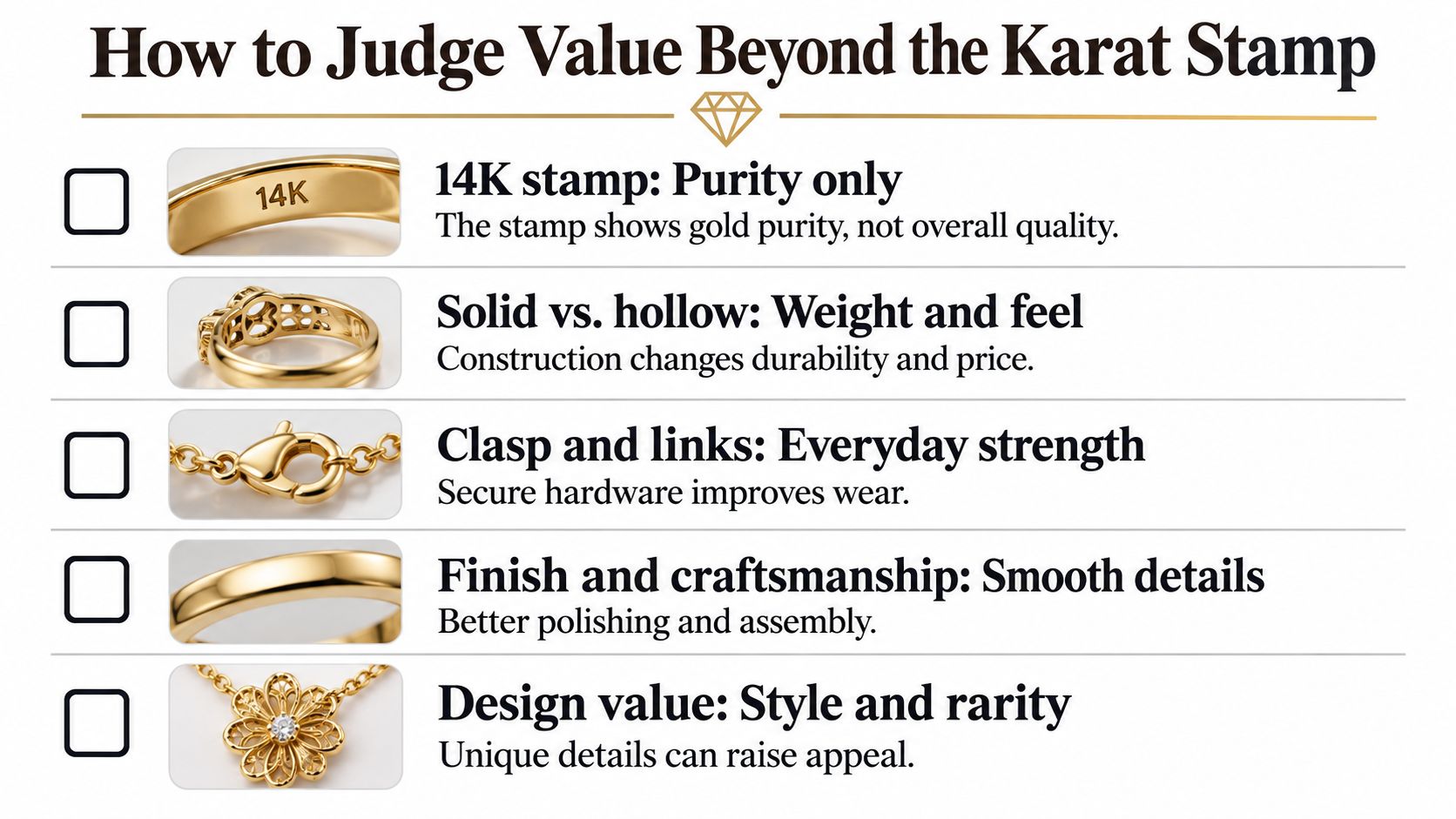
A Five Step Check for Any Listing
- Confirm the category: Check whether the bracelet is solid gold, gold filled, vermeil, or plated.
- Look for weight: A weight in grams helps you compare bracelets with similar materials and designs.
- Inspect the hardware: Check the clasp and whether the jump rings appear thin, open, or securely finished.
- Consider the charms: A bracelet carrying several dangling charms puts more demand on its links than one with a couple of small charms.
- Protect the chain: If your budget is tight, lighter charms can reduce the load without requiring a thinner chain.
If you're weighing karat against construction, this comparison of 10-karat gold and 14-karat gold can help clarify what the karat stamp does, and does not, tell you about a piece.
Careful checking also helps with a different kind of lookalike: perfume buying tips from Gotham Fragrances offer advice on examining a product before paying. For a bracelet, apply that same attention to the listed material, weight, links, and clasp.
A well-built bracelet with a sensible weight can offer better long-term value than a larger hollow one. You're buying the links, clasp, and weight you'll wear daily.
Bracelet Sizing, Clasp Types and Fit
Charm bracelets are sized by total length. The right length is your wrist measurement plus a little room to move, type, and let charms settle without pinching.
Wrist Size to Bracelet Length
| Wrist Measurement | Recommended Length | Fit Note |
|---|---|---|
| 6 inches | 6.5 inches | Snug fit for small charms |
| 6.5 inches | 7 inches | Comfortable everyday fit |
| 7 inches | 7.5 inches | Room for stacking one bracelet |
| 7.5 inches | 8 inches | Good for chunky or heavy charms |
| 8 inches | 8.5 inches | Relaxed fit, extra room for movement |
To measure, wrap a soft tape around your wrist just above the wrist bone. Don't pull it tight. Then add roughly half an inch to one inch for wearing room. No soft tape at home? Use a strip of paper, mark where it meets, and measure the strip with a ruler.
Fit changes with charm style. Small flat charms can sit close to the skin. Heavy or dangling charms pull the bracelet down and twist it, so the next size up usually feels better. Our bangle bracelet size chart is handy if you're comparing a chain style with a bangle style for the same wrist.
Choosing a Clasp You'll Actually Use
- Lobster clasp: Secure and common on charm bracelets. It's a strong default for daily wear.
- Spring ring: Simple and neat, but small rings can be fiddly and may loosen over time.
- Toggle: Easy if grip is limited. The bar must be long enough that it can't slip back through the loop.
- Box clasp: Closes with a firm click and holds well, often found on more structured designs.
Pick based on your routine. If you'll remove the bracelet daily, ease matters. If you'll wear it for days at a time, security matters more. Either way, test that the clasp closes firmly and doesn't open with a light tug.
Choosing and Personalizing Your Charms
People buy a gold charm bracelet because each charm stands for something. A person. A place. A date they don't want to forget.
The tray below shows how a bracelet starts to build its own story, one charm at a time.
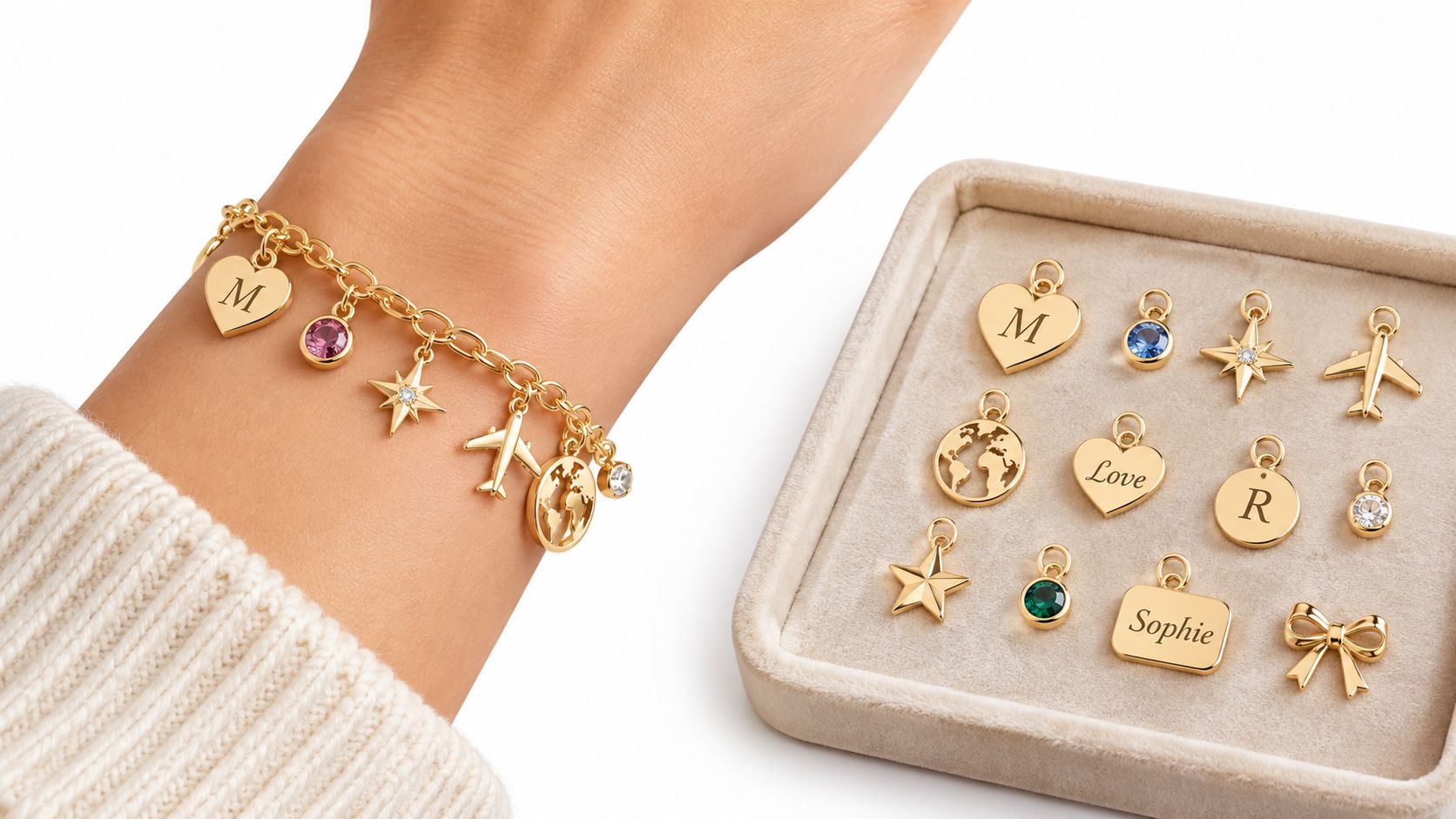
Common themes include initials and names, birthstones, hearts and stars, travel symbols, family and pet charms, and milestone charms for graduations or anniversaries. Personalization might mean a letter charm, an engraved name, or a chosen stone. Before you order, confirm whether a charm is in stock or made to order, and ask about lead time if you have a gift date.
Charm weight adds up faster than most buyers expect. Ten small charms can weigh as much as three chunky ones, and that total load sits on the same links and clasp every day. If you want examples before you plan your own mix, these charm bracelet ideas show different ways to group themes.
Plan It on Paper First
- Choose one theme: Family, travel, faith, hobbies, or milestones gives the bracelet a clear thread.
- Count and size: List each charm and note whether it's small, medium, or heavy.
- Sketch the order: Work outward from the clasp and leave space between charms so they don't tangle or bunch.
This short video shows how individual charms come together on a finished bracelet, which helps when you're picturing spacing.
We offer a Personalized collection and charm bangles with additional charms in the shop, so you can build a custom piece without starting from scratch. Keep a photo or short note of your planned order. When the bracelet arrives, you can check it against your plan in seconds.
Layering and Styling a Gold Charm Bracelet
At a desk, a charm bracelet worn beside a watch can knock against the case; under a close sleeve, dangling charms may catch on the fabric. Wear it on the other wrist for a quieter pairing, or let the bracelet sit over a loose cuff where the charms can move freely.
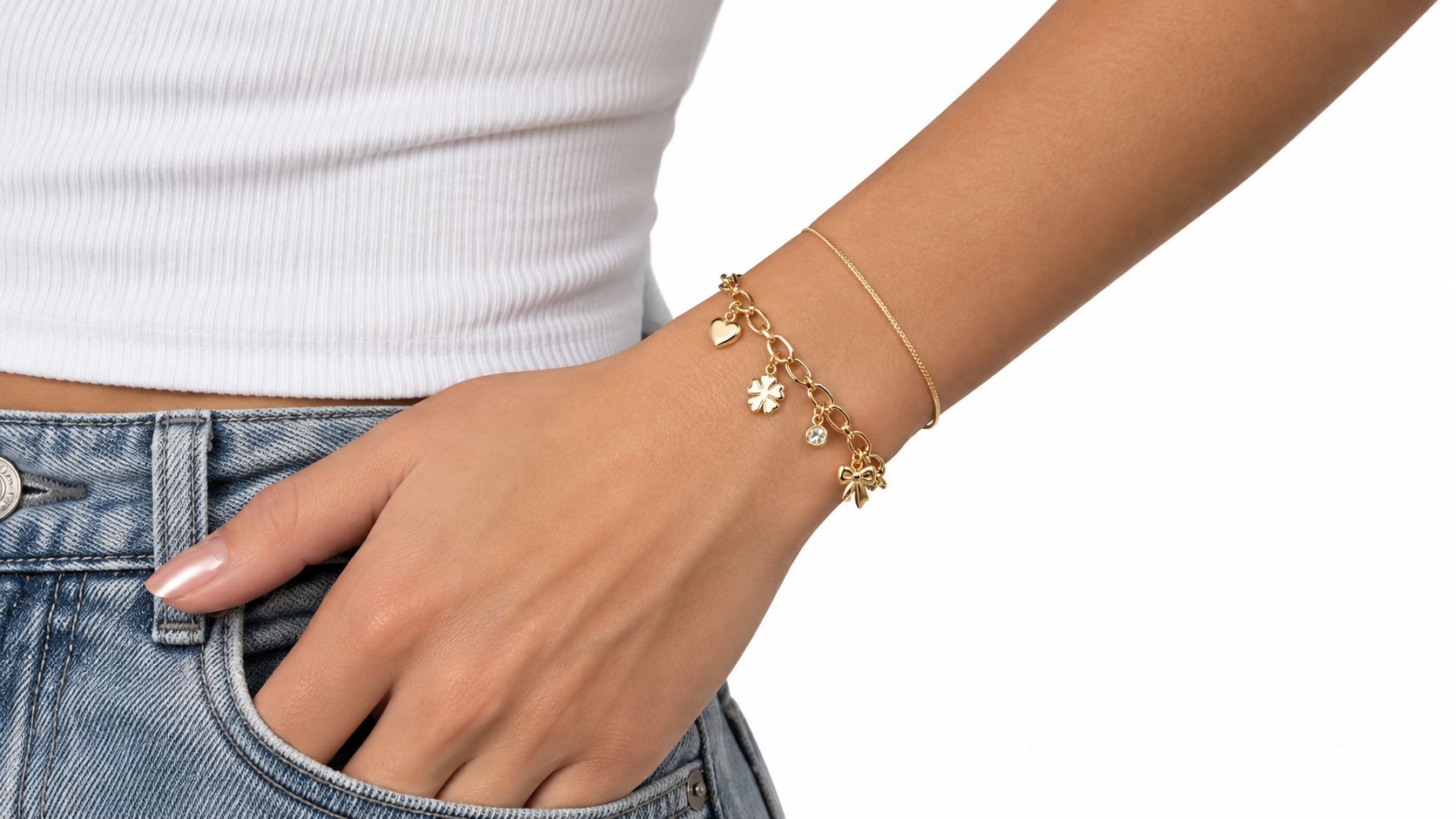
For a stack, balance texture and visual weight. A thin, plain gold bead bracelet adds a soft contrast, while a tennis-style bracelet brings more sparkle. A wider bangle or heavier charms can make the whole stack look more substantial, so pair them with simpler pieces rather than adding several bold styles. Matching yellow gold with yellow gold keeps the look cohesive; a single rose-gold piece can make a mixed-metal stack feel deliberate.
Easy Pairings by Setting
- For work: A small charm bracelet with simple earrings keeps the wrist understated at a desk.
- For weekends: Pair two or three bracelets with different textures for a relaxed stack.
- For evenings: Let a heavier charm bracelet take focus, and keep other wrist jewelry simple.
Try a new combination at home before wearing it to an event. If charms catch on a sleeve or knock against another bracelet, adjust the order or remove one piece.
Caring for Your Gold Charm Bracelet
Most damage happens at the connectors, not on the big charms. Jump rings, bail openings, clasp tongues, and thin chain links bend, rub, and take impact every time the bracelet moves. Those small parts thin and stretch first.
That's why routine checks matter more than the stamp. A comparative wear study in Johnson Matthey Technology Review tested 585 and 750 white-gold alloys and found the 750 gold-palladium alloy showed the highest volume loss, while alloys behaved differently depending on chemistry. In other words, you can't predict wear from hardness alone.
Everyday Activities and How to Protect a Gold Charm Bracelet
| Activity | Risk | What to Do |
|---|---|---|
| Swimming in pools or hot tubs | Chlorine or salt can dull the finish | Remove before swimming |
| Sleeping or exercising | Impact and sweat can stretch links | Take it off for sleep and workouts |
| Applying lotion or perfume | Residue film dulls the surface | Put the bracelet on last |
| Routine cleaning | Dirt builds up between links | Use lukewarm water, mild soap and a soft brush |
| Storage | Charms scratch each other | Store flat in a soft pouch or lined box |
| Monthly check | Thin or loose jump rings and clasps | Inspect rings and test the clasp |
Clean gently and pat dry with a soft cloth. Don't scrub plated or filled pieces hard, since you're working on a surface layer. Our step by step guide to cleaning jewelry at home covers safe methods by material. For special occasion pieces that spend long periods in storage, the bridal care advice from Get Spliced offers helpful reminders about keeping delicate items protected between wears.
Once a month, take two minutes. Look at each jump ring for gaps or thinning, test that the clasp closes firmly, and check that charms sit straight instead of twisting. At the first sign of looseness, take the bracelet to a jeweler. Replacing one ring costs far less than replacing a lost charm.
Gift Buying, Checkout and Final Checklist
A good gift starts with two practical details: a fit the recipient can wear comfortably and a style that suits the occasion. If you can, confirm their wrist size before choosing a bracelet. For a milestone, anniversary gift ideas by year can help you choose a charm theme.
The bangle style below is one option to compare with a chain charm bracelet.
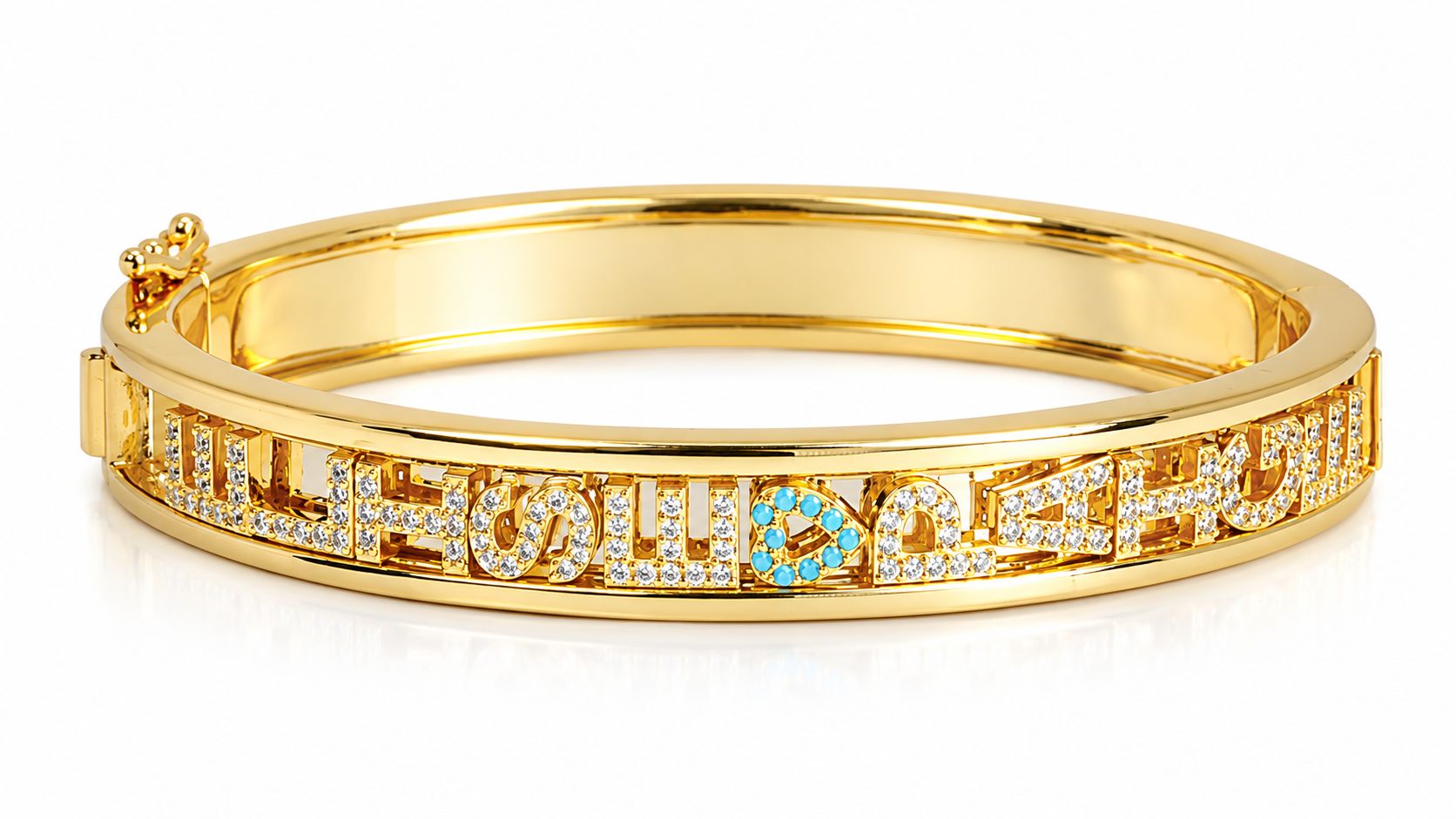
The Gold Charm Bangle Large gives you a reference for the bangle format; check the product page for its sizing details. EP Fine Jewelry's charm bangle is made of brass with heavy 18 karat gold plating and a coating to help prevent tarnishing. The Personalized Charm Bangle is $150.00. Judge its value by the construction, weight and clasp as well as the karat description: a karat stamp alone does not show whether a bracelet is hollow or how securely it closes.
Final Check Before You Pay
- Material confirmed: Check whether the bracelet is solid gold, gold-filled, vermeil or plated, and read the karat description.
- Length matched: Compare the listed size with the recipient's wrist measurement and the fit they prefer.
- Charm plan saved: Confirm the order and spacing of charms, and consider how their combined weight will feel.
- Care reviewed: Use the Jewelry Care page and FAQ for upkeep guidance.
- Policies read: Review the shipping and returns policies before placing the order.
At checkout, check whether your order meets the free-shipping threshold of $200. You can add an optional gift box and include a message or handling request in the order notes. For a personalized gift, browse the Personalized collection, then check the product page for stock and timing before ordering.
Choose a base and charms that suit the recipient's style and budget. EP Fine Jewelry offers personalized bangles and individual charms, with gift options available during checkout.