
You're probably looking at two gold-tone pieces that seem almost identical on your screen. One feels like an easy yes. The other seems overpriced for something that, at first glance, looks the same.
That's where most shoppers get tripped up.
Gold filled and gold plated are not basically the same thing. They're different constructions with different ownership outcomes. One is usually the smarter buy for daily wear. The other is often the smarter buy for trend-driven, short-term use. If you want a plain-English answer to what is gold filled vs gold plated, the short version is this: you're choosing between years of wear and a season of shine.
Table of Contents
- Two Pieces of Jewelry That Look the Same on Day One
- What Gold Filled and Gold Plated Actually Mean
- How the Two Materials Compare on the Factors That Matter
- Side-by-Side Performance Under Everyday Wear
- How to Care for Each Type Without Ruining It
- Choosing the Right Option for Real Buying Situations
- When the Higher Price of Gold Filled Is Worth Paying
- Quick Answers to the Questions Shoppers Ask Next
Two Pieces of Jewelry That Look the Same on Day One
A shopper picks up two necklaces. Same warm gold color. Same delicate chain. Same style in photos. One is cheap enough to buy without thinking too hard. The other costs enough to trigger a pause.
On day one, that price gap can feel ridiculous.
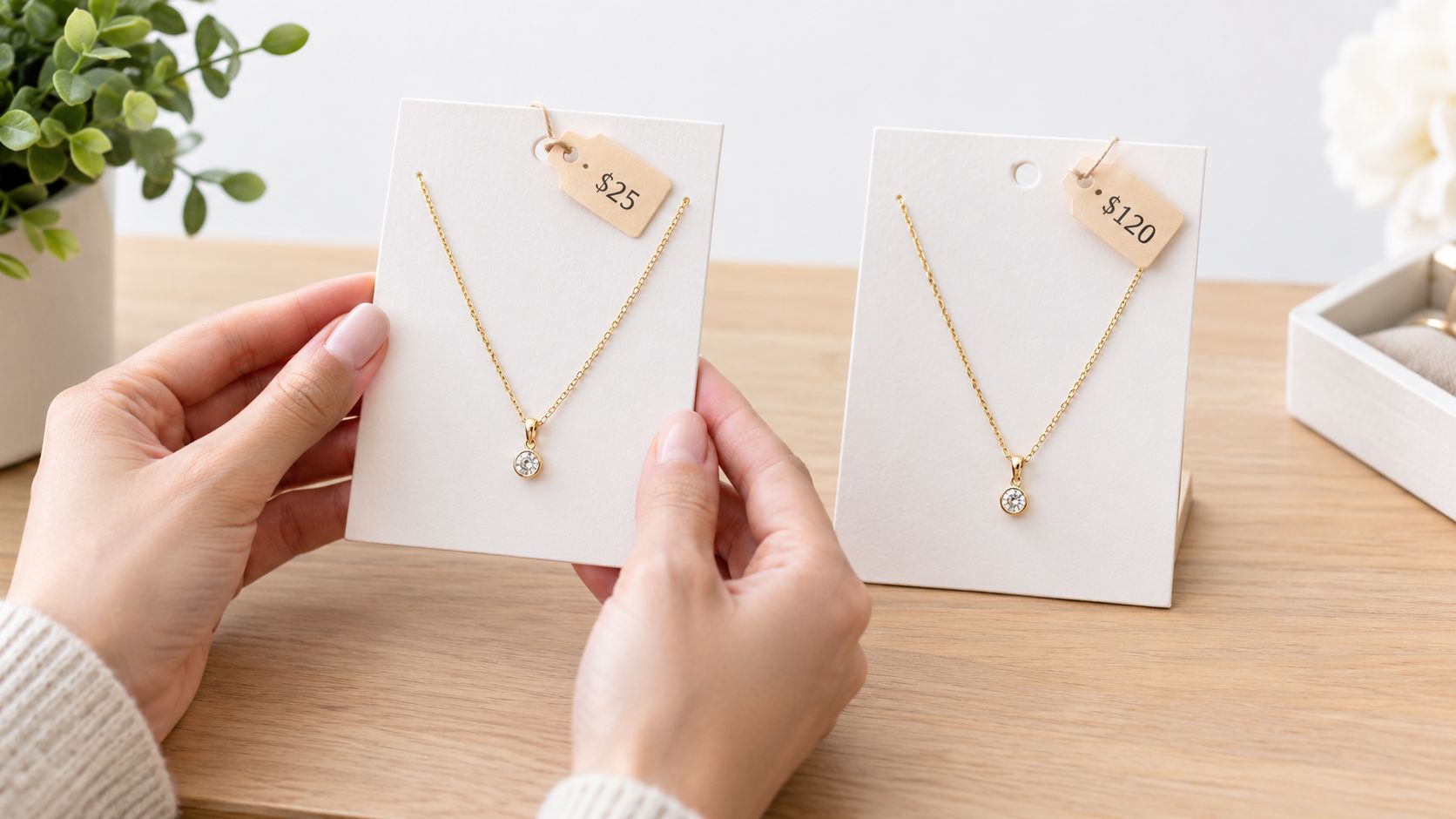
But these aren't two versions of the same product. They're two different products that happen to share a color. One is built for repeat wear. The other is built for appearance first, lifespan second.
That difference matters most when the jewelry leaves the box and starts living with you. It matters when lotion hits the chain, when sweat sits on the ring, when a clasp rubs against your neck, and when a bracelet bumps your desk every day. If you're shopping everyday pieces, that's why many buyers start with a dedicated gold-filled collection instead of sorting by color alone.
What the price gap is really buying
The higher price usually isn't about a prettier finish. It's about more real gold in a more durable form.
Gold filled is made to hold up better because the gold layer is substantially more substantial. Gold plated can look great out of the box, but it relies on a thin surface coating that can wear away much faster in real life.
Practical rule: If two pieces look the same today, judge them by how they'll look after repeated wear, not by how they photograph under bright lighting.
That's the buying question. Not “Which one looks better right now?” but “Which one still makes sense after I've worn it enough to justify owning it?”
What Gold Filled and Gold Plated Actually Mean
Most guides stop at “one is thicker than the other.” True, but too vague to help you shop well.
Gold filled means bonded gold with a real minimum standard
Gold filled has a legal and trade meaning in the U.S. A gold-filled item must have a mechanically bonded gold layer that is at least 10 karat and makes up at least 1/20 of the item's total metal weight, or 5% according to U.S. trade guidance summarized here.
That's why stamps like 1/20 14K GF matter. They tell you the piece contains a bonded outer layer of real gold that is materially thicker than ordinary plating.
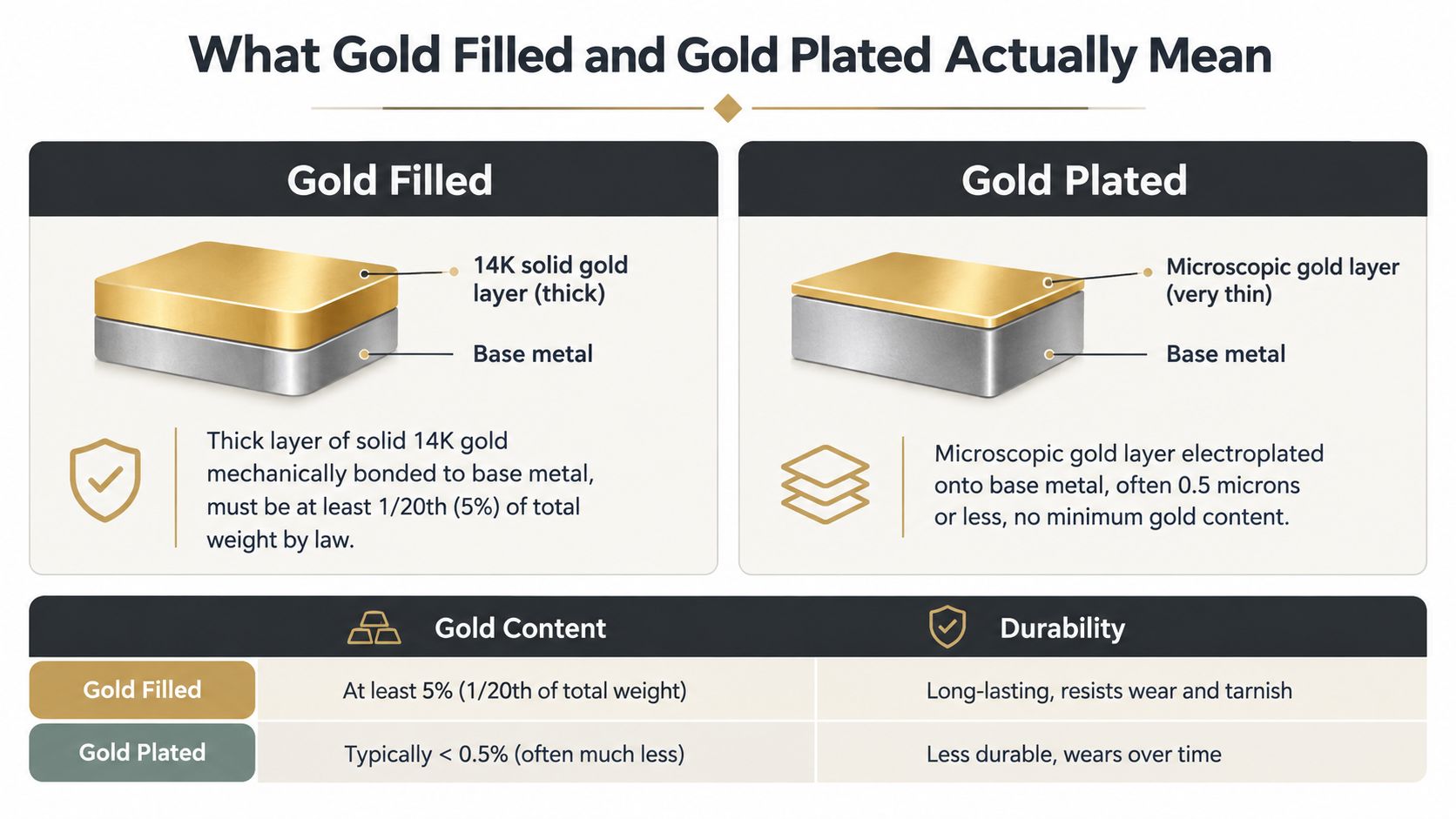
Gold filled is usually made by bonding the gold layer to a base metal with heat and pressure. That construction matters more than shoppers realize. The gold isn't just flashed onto the surface. It's attached in a way designed to last through far more friction and contact.
Gold plated means a thin surface coating
Gold plated usually means a thin layer of gold applied through electroplating. It may be marked GP or GEP. The trade language here is very different. Standard gold-plated jewelry does not have the same minimum gold-by-weight requirement that gold filled does.
Here's the part that changes the buying decision. Gold plating is often measured in microns or microinches, and common trade references put ordinary gold-plated items around 0.17 to 0.5 microns, while heavy gold electroplate starts at 100 microinches, or 2.5 microns according to this gold plating thickness guide.
A quick visual helps more than another paragraph:
What shoppers often confuse with these terms
A few categories get mixed together all the time:
- Solid gold is gold throughout, not a surface layer.
- Gold filled is a bonded gold layer with a defined minimum standard.
- Gold plated is a thinner applied coating.
- Vermeil is its own category and isn't interchangeable with either term above.
- Gold wash or very light electroplate is thinner still.
If you only remember one thing, remember this: karat and construction are not the same signal. A higher-karat plated piece can still be less practical than a lower-karat gold-filled piece because the construction is thinner.
How the Two Materials Compare on the Factors That Matter
The answer to what is gold filled vs gold plated gets useful. Shoppers don't need a manufacturing lecture. They need to know what ownership feels like after the purchase.
Gold Filled vs Gold Plated Factor-by-Factor Comparison
| Factor | Gold Filled | Gold Plated |
|---|---|---|
| Construction method | Mechanically bonded outer gold layer over base metal | Electroplated gold coating over base metal |
| Gold layer thickness | Much more substantial; a typical 14K gold-filled chain may contain roughly 50 to 100 microns of gold according to JewelTrendPro | Commonly around 0.17 to 0.5 microns in standard plated pieces under FTC-linked guidance |
| Durability with regular wear | Better suited to frequent wear because the gold layer is thicker and bonded | Better for lighter, occasional wear because the surface layer wears through faster |
| Appearance over time | Holds color longer and stays presentable longer | More likely to show fading at edges, clasps, rings, and contact points |
| Skin sensitivity risk | Usually a safer bet because the thicker gold layer reduces exposure to base metal over time | Risk rises once the thin top layer wears and base metal starts contacting skin |
| Price point | Higher upfront spend | Lower upfront spend |
The real tradeoff is cost per year of wear
Gold filled costs more for a simple reason. It contains far more real gold in the finished piece than standard plating does. That's not marketing fluff. It's the actual material difference that helps it resist wear and keep base metal from showing through.
Gold plated wins the upfront-budget argument. If you like variety, want a trend piece, or know you won't wear something often, plating can be the smarter purchase. It gives you visual impact without asking you to commit much money to longevity.
Why base metal exposure matters
A lot of shoppers ask whether they should focus on karat, color, or brand name. My view is simpler. For everyday jewelry, construction beats headline karat.
Once plating starts thinning at high-friction points, your skin can end up interacting more with the metal underneath. That's one reason people shopping for pieces they'll wear close to the skin often move toward thicker finishes or bonded options. If you're comparing finishes across categories, this breakdown of rhodium plated sterling silver is useful for understanding how surface treatments behave over time in general.
Buy plated when you're paying for style. Buy filled when you're paying for service life.
Side-by-Side Performance Under Everyday Wear
Thickness numbers only matter if they translate into behavior. Here's what tends to happen once jewelry enters your routine.
Gold Filled vs Gold Plated Everyday Wear Performance
| Exposure Factor | Gold Filled | Gold Plated |
|---|---|---|
| Daily skin contact | Handles repeated contact better | Wears faster where it rubs constantly |
| Sleeping in it | More forgiving, though still not ideal for chain longevity | More likely to dull or wear at contact points |
| Perfume and lotion | Better buffer against occasional exposure | Surface can break down faster with repeated exposure |
| Sweat and gym wear | Usually holds up better | Sweat speeds up visible wear on thin plating |
| Chlorinated pools and salt air | Still worth caution, but generally more resilient | One of the quickest ways to shorten the finish life |
| Friction from rings and bracelets | Better than plating, but these categories still take the most abuse | Often the first places where fading shows |
| Storage habits | Less fussy, though separate storage is still smart | Scratches and rubbing can strip the thin finish faster |
What “regular wear” usually looks like
A necklace pendant that sits fairly still will often age better than a ring. Earrings can also hold their look longer because they usually face less rubbing from desks, steering wheels, bags, and constant hand washing.
Rings and bracelets are the hardest test. They collide with everything. If you choose plating in those categories, do it knowingly.
One practical guide for shoppers is this: gold-plated fashion pieces often hold color for 1 to 12 months with frequent wear before visible wear starts showing at high-contact points, while gold-filled pieces usually stay presentable for years under similar use patterns. If you want more context on expected wear patterns, this overview of how long gold-plated jewelry lasts is worth reading.
Match the material to the wear pattern
If a piece will live on your body most days, gold filled is usually the better call. If it's an occasional earring, a holiday-party necklace, or a trend you'll move on from quickly, gold plated is often enough.
The wrong material usually doesn't look wrong on day one. It looks wrong after repeated contact, moisture, and friction.
How to Care for Each Type Without Ruining It
Good care won't turn plated jewelry into gold filled. But bad care can ruin either one faster than most shoppers expect.
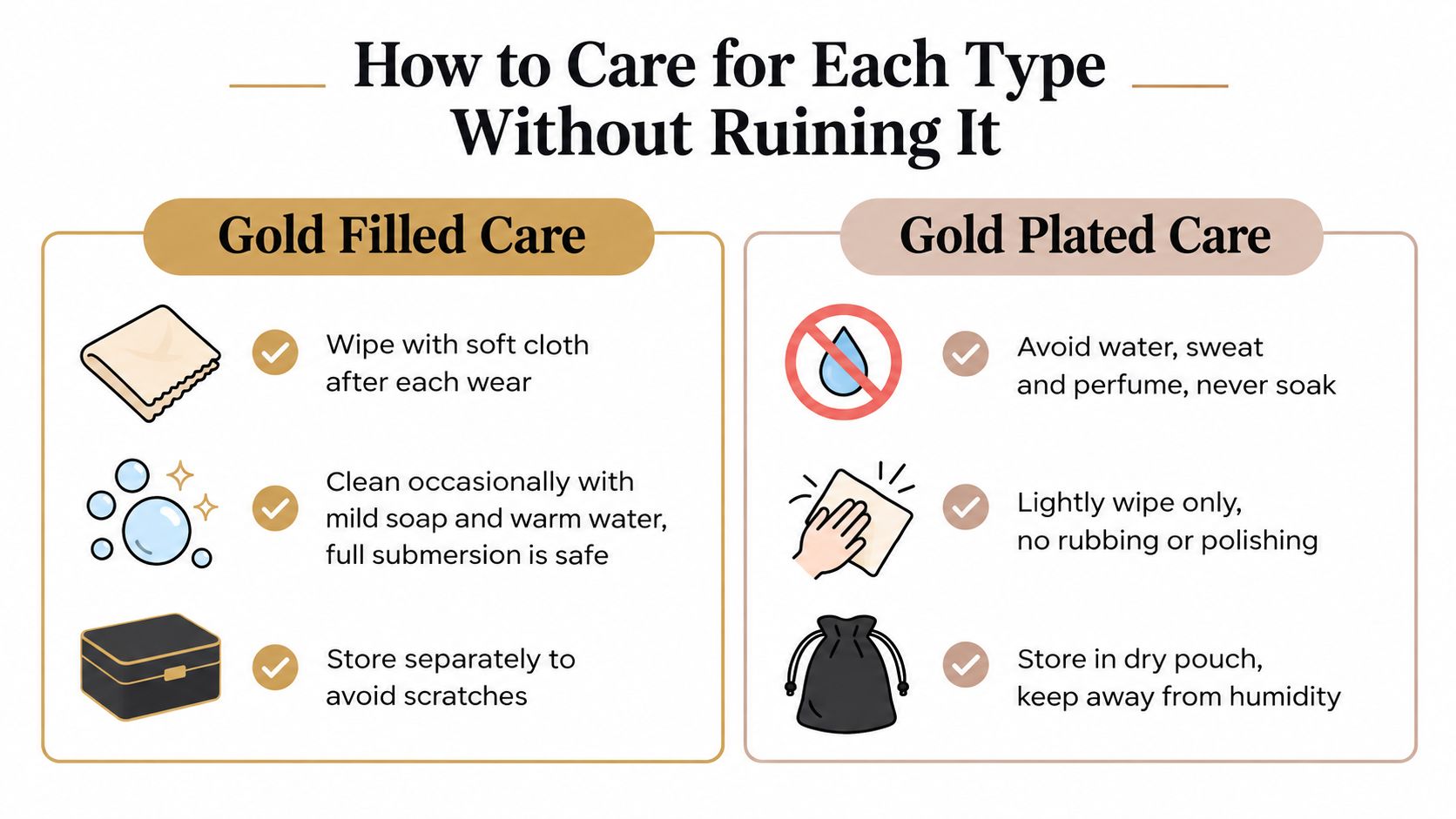
Care for gold filled
Gold filled is fairly forgiving. That doesn't mean it's indestructible.
- After wear: Wipe it with a soft cloth.
- For cleaning: Use mild soap and water when it needs more than a surface wipe.
- After washing: Dry it thoroughly before storing.
- For storage: It doesn't need special babying, but separate storage still helps avoid scratches.
Do not use harsh chemical dips meant for other jewelry categories. They're unnecessary and can create problems instead of solving them.
Care for gold plated
Gold plated needs lighter handling because the finish is so thin.
- Before showering or swimming: Take it off.
- Before perfume, sunscreen, or self-tanner: Put the product on first, jewelry second.
- After wearing: Gently wipe with a dry microfiber cloth.
- For storage: Keep it separate in a pouch or dry compartment so it doesn't rub against harder pieces.
If you want a fuller maintenance routine, EP Fine Jewelry also has a practical guide on how to care for gold-plated jewelry.
What shoppers damage first
The most common mistake is rubbing plated jewelry too aggressively because it looks dull. That often removes more of the finish. Another mistake is treating statement plated rings like permanent everyday rings.
A good example is the Two Finger Twist Ring, which is listed as 18K gold plated/CZ and designed as a statement ring that fits on two fingers. That kind of piece makes sense as plated jewelry because it's style-forward and visually specific. It does not make sense to treat it like a low-maintenance forever ring.
Replating can make sense for a sentimental plated piece. For ordinary fashion jewelry, replacement is often the more rational move.
Choosing the Right Option for Real Buying Situations
Shoppers don't buy “materials.” They buy gifts, travel pieces, daily chains, wedding guest earrings, and fun rings they may only love for a few months.
Best Choice by Buying Situation
| Buying Situation | Smarter Pick | Why |
|---|---|---|
| Chain you'll wear most days | Gold filled | You'll get more useful life from the higher upfront spend |
| Trendy statement earrings for one season | Gold plated | Lower commitment makes more sense for short-term style |
| Gift for someone with sensitive skin | Gold filled | Thicker gold coverage is the safer practical bet |
| Stackable ring you want to test as a style | Gold plated | No reason to pay for long service life if you're experimenting |
| Travel jewelry you might lose | Gold plated | Better to protect the budget |
| Milestone or sentimental everyday piece | Gold filled | More suitable for repeat wear and repeated photos |
The easiest way to decide
Ask three questions.
- Will I wear this often? If yes, lean gold filled.
- Will this piece sit directly on skin for long stretches? If yes, lean gold filled again.
- Am I buying this for novelty, styling, or one season? If yes, gold plated is often enough.
For gifts, I'm even more opinionated. If you don't know the recipient's skin sensitivity or habits, don't gamble on a thin finish if the piece is meant for regular wear. If the gift is a casual fashion piece, plating is fine.
Where shoppers overspend and underspend
People overspend when they buy gold filled for pieces they'll only wear a handful of times. They underspend when they buy plated chains or rings they plan to keep on constantly.
If you're browsing gift-style necklaces and trying to decide whether a personalized piece should be a temporary trend or an everyday item, this example of a gold personalized bar necklace shows the kind of category where wear frequency should drive the material choice.
You're either paying for years of safer wear or a short run of color at a lower entry cost. Both can be smart. They just aren't smart in the same situations.
When the Higher Price of Gold Filled Is Worth Paying
Here's the cleanest rule I can give you.
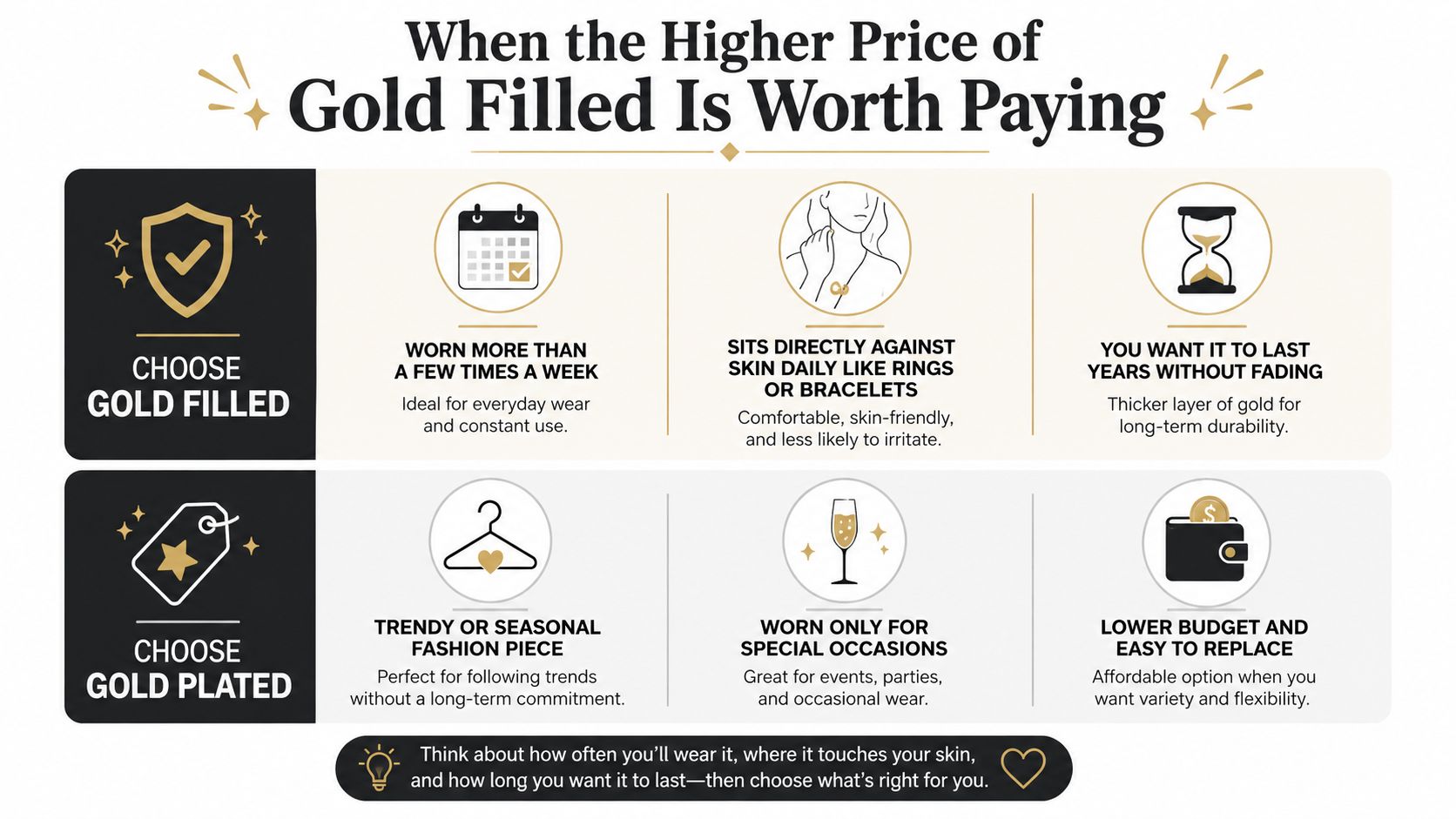
Choose gold filled when the piece will be worn more than a few times a week, sits against the skin for hours, or carries enough meaning that you'll be annoyed if it fades early. In those cases, the premium usually earns its keep.
Choose gold plated when the piece is trend-driven, occasional, experimental, or easy to replace. That's not settling. That's buying appropriately.
A quick ownership math example
Let's keep it simple. If a plated chain costs $45 and you replace it every year, while a gold-filled chain costs $90 and you wear it for 3 years, the filled chain can work out better on cost per year of wear. That's the kind of comparison shoppers should make before clicking buy.
One caveat that matters
Not every gold-filled piece is automatically better than every plated piece. Construction matters most, but finish quality and use case still matter. Some plated jewelry is perfectly sensible if your expectations are realistic.
If you want one piece to live with you, spend for gold filled. If you want one piece to complete a look, save with gold plated.
That's the answer to what is gold filled vs gold plated. You're not just choosing a material label. You're choosing how long you expect the piece to earn its spot in your jewelry box.
Quick Answers to the Questions Shoppers Ask Next
How do I read the stamp?
Look for marks like 1/20 14K GF on gold-filled jewelry. On plated pieces, you may see GP or GE instead. The filled stamp tells you more because it points to a defined construction standard.
Do they tarnish, or is it wear-through?
With plated jewelry, what shoppers often call tarnish is sometimes the thin gold surface wearing away so the base metal starts showing. With gold filled, surface aging is usually slower because the gold layer is more substantial.
Do either of them have real resale value?
Neither should be treated like solid gold from a resale standpoint. Gold filled contains more real gold than plated, but most shoppers should think of both categories as wear-value purchases, not investment purchases.
Is replating worth it?
Sometimes. If a plated piece has sentimental value, replating can make sense. For ordinary fashion jewelry, replacing it is often more practical than paying to restore a finish on a piece that was never built for long service life.
Which one should I buy if I still feel stuck?
Use this tiebreaker. If you want to wear it often and forget about it, buy gold filled. If you want the look now and don't care whether it's still perfect far down the line, buy gold plated.
EP Fine Jewelry offers both the kind of fashion-forward jewelry shoppers buy for style and the guidance they need to care for it properly. If you're deciding between a longer-wearing everyday piece and a lower-commitment plated look, browse EP Fine Jewelry with that use case in mind, not just the photo.