
You're trying to pick a gift that feels personal, not generic, and you keep landing on the same problem. A name alone feels plain, but a charm alone could belong to anyone. A Charm Name Necklace solves both parts at once, yet it also raises practical questions most gift pages skip. Will a long name stay readable on a tiny charm, will the metal irritate sensitive skin, and will a made-to-order piece arrive in time? This guide walks through those decisions in order, so you can check spelling, metal, comfort and timing before you order.
Table of Contents
- What a Charm Name Necklace Is
- Personalization Options at a Glance
- Materials That Decide Wear and Skin Comfort
- How to Keep a Name Readable on a Small Charm
- Daily Care That Prevents Tarnish and Wear
- Order Timing, Gift Planning and Checkout Decisions
What a Charm Name Necklace Is
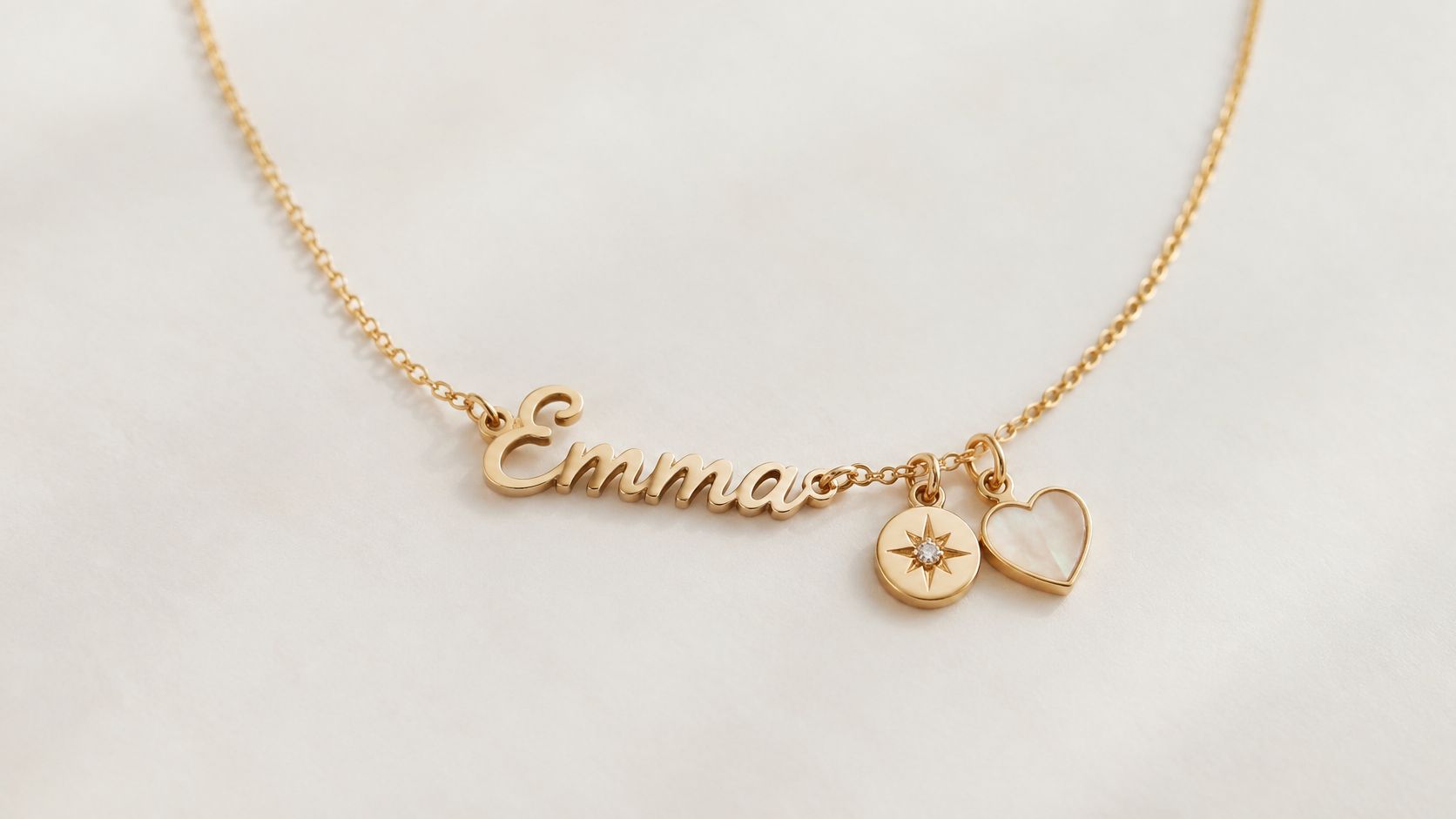
A Charm Name Necklace is a chain that carries a personalized name, initial, or short word, plus one or more charms that add a second meaning. The name identifies the wearer. Each charm marks something else, such as a family tie, a milestone, an interest, or a memory.
Take a necklace for a new mother named Emma. A small "Emma" pendant identifies her, a heart charm can mark the baby, and a birthstone charm can mark the month. The combination reads like a short sentence. You do not need a long caption for someone else to follow it.
Two Traditions in One Piece
The style joins two older ideas. Charms are small symbolic or commemorative objects. A nameplate displays a person's name, initials, or chosen words. Together, one necklace can work as an identity statement, a keepsake, and a gift.
Charm adornment is documented at least in the 1800s. The Metropolitan Museum of Art charm bead record describes a set attributed to Üsküdar, Turkey, dating to the late 19th century and made from pearls and coral. Nameplates arrived as a later form: a plate or pendant that spells a name instead of relying only on a symbol. Contemporary nameplate jewelry later became a widely recognized style in American fashion, including through hip-hop culture, though the exact path of that popularity varies by city and decade.
That split still shapes how you buy. The charm side gives you symbols you can add or change as children arrive, anniversaries pass, or interests change. The name side stays fixed. A useful comparison is a house number plus a set of keys on the same ring. The number says whose place it is. The keys mark what that person uses.
Before you treat every personalized chain as the same product, run a simple test.
If the necklace can say who it's for and what it marks, it's a Charm Name Necklace.
Shop with that test in mind. Remove the charms and only a name remains, and you are looking at a name necklace. Remove the name and only symbols remain, and you are looking at a charm necklace. Knowing which piece you are ordering also tells you what to check next: whether a long name will stay readable on a small charm, whether the metal will sit comfortably against skin, and whether a made-to-order name will need extra time before a gift date.
Personalization Options at a Glance
You already have "Alexandra" and a small heart charm in the cart. Those letters have to shrink to share one tiny face, and thin script is the first detail that blurs once the piece leaves the product photo and sits on a neck. Personalization is a buying decision before it is a styling one: whether the name stays readable, whether the finished stack feels comfortable on skin, and whether the spelling is locked before you check out.
A 2025 Plumb Club research chart reported that nearly 70% of respondents considered personalization important when selecting jewelry and wanted specific messages or symbols incorporated into their pieces. A necklace is easy to see, easy to layer, and able to hold both a fixed name and extra symbols.
Personalization Options and What Each One Signals
| Element | Common options | What it signals | Design point to check |
|---|---|---|---|
| Name or word | Script or block name | Identity and keepsake meaning | Longer names need a wider charm |
| Initials | One or two letters | Subtle, everyday wear | Letter size must stay legible on a small charm |
| Charms | Birthstones, symbols, dates, hearts, letters | Milestones, interests, relationships | Total charm count affects chain comfort |
| Chain length | Sizes listed by the shop | Fit and layering with other necklaces | Confirm length before ordering |
| Metal finish | Gold, silver or two-tone per listing | Color match with existing jewelry | Note how the finish will sit against skin |
If you are building the piece from separate pendants rather than one fixed nameplate, our guide to charm holder necklaces explains how holders let you rearrange charms on a chain. A pave loop can be purchased to add any charm to any chain size. That flexibility does not remove the two choices that cause the most problems after the box arrives.
The Two Choices That Cause Problems
Name length sets charm width. "Ava" can sit on a small pendant the way a short word fits on a luggage tag. "Alexandra" needs more horizontal space, or the letters get smaller. Shrink a long name onto a tiny charm and you trade size for readability.
Single-letter charms such as A, E, and I are priced at $18.00 each in white or yellow. An initial is the practical alternative when a full name will not stay sharp. It signals the person without crowding the charm face. A full name signals a keepsake other people are meant to read. Give the lettering one job before you surround it with symbols.
Total charm count sets comfort. Each charm works like another key on a ring: more weight, more swing, and another spot where metal can rub the chain or the skin at the collarbone. Three light charms may feel balanced. Six heavier charms can pull the chain forward, twist while you walk, and bunch at the center.
Practical rule: Decide the name first, then the charms, then the chain length, because the name sets the width of the pendant.
Charm pendants, including letter or initial charms and personalized charm necklaces, are final sale. A wrong letter is not a casual exchange, so this order is also an order-timing choice.
Start with the exact spelling and the letter count, including a space if the listing allows more than one word. Next, keep only charms you can explain in one short phrase, such as a birth year or a shared symbol. Then match the listed chain length to a necklace the wearer already owns, especially for layering.
Personalized items include name necklaces and bracelets, and charm bangles can be personalized. The same test still applies. A long name needs room, and every added charm has to sit without digging in.
Materials That Decide Wear and Skin Comfort
The metal label predicts wear more than the design does. Two necklaces can look identical in a photo and age very differently, because one is solid metal throughout and the other has a thin surface layer that rubs away at the clasp, edges and charm loops. Read the material line before you judge the font or charm shape.
Metal Types Compared for Everyday Wear
| Material | What it is | Typical wear | Skin-contact question to ask |
|---|---|---|---|
| Solid gold (14K or 18K) | Gold alloy throughout | Does not rely on plating, wears slowly | Is the alloy nickel-free, and what is the exact karat? |
| Gold-filled | Thick gold layer bonded to a base metal | Lasts for years with regular wear | What is the base metal under the gold? |
| Vermeil | Gold plating over sterling silver | Plating thins at contact points | How thick is the gold, and what is the silver base? |
| Gold plated | Thin gold layer over base metal | Plating can wear through over months | Is the base metal nickel-free, and how thick is the gold layer? |
| Sterling silver (925) | Silver alloy stated as 925 | Tarnishes, gentle polishing restores shine | Is the piece stated as 925 with the alloy named? |
Solid gold has no thin layer to wear through, so scratches show the same metal underneath. Ask for the exact karat, because karat changes color, hardness and price. Our comparison of 10 karat gold vs 14 karat gold is a useful starting point if you're weighing durability against gold content.
Gold-filled sits in the middle. A thick bonded gold layer usually lasts years of regular wear, but you should still ask what base metal sits underneath. That base matters if the surface is damaged or if the wearer reacts easily to certain alloys.
Vermeil and gold-plated pieces need more caution. Vermeil uses gold plating over sterling silver, and that plating thins first where charms slide, chains rub and skin oils collect. Gold-plated jewelry uses a thin layer over a base metal, so it can wear through within months of frequent use, especially on a necklace worn against clothing every day.
For silver, look for 925 sterling silver, not just the word "silver." The exact alloy matters because composition affects tarnish behavior and maintenance. A precise listing also tells you the seller expects you to care for a known material, not guess.
What Hypoallergenic Does Not Tell You
Many buyers stop at the word "hypoallergenic," but that word isn't a precise materials claim. It doesn't tell you which alloy is used, whether the chain differs from the pendant, or which parts touch skin for hours. A pendant may be one metal while the chain, jump rings and clasp are another.
That gap matters because nickel remains the most common cause of allergic contact dermatitis worldwide, and a 2025 systematic review in Contact Dermatitis reported nickel-allergy prevalence of 11.4% across Europe, North America, and China. In plain terms, sensitive skin isn't a rare edge case. It's common enough that you should ask direct questions before a custom order is made.
Use this short checklist at checkout:
- Exact metal: What's the karat for gold, or is the silver stated as 925 with the alloy named?
- Nickel content: Is the alloy nickel-free, including the chain, clasp and charm loops?
- Base metal: If the piece is plated, vermeil or gold-filled, what's underneath the surface layer?
- Daily use limits: Can the wearer sweat, shower or sleep in it, or should they remove it first?
- Replacement parts: Can the chain be swapped if the pendant is fine but the chain causes irritation?
Be extra careful with children and gift recipients. They may not describe itching or redness clearly, and they may keep wearing a meaningful piece because they don't want to disappoint the giver. Personalization raises emotional value, so vague durability language carries more risk, not less.
How to Keep a Name Readable on a Small Charm
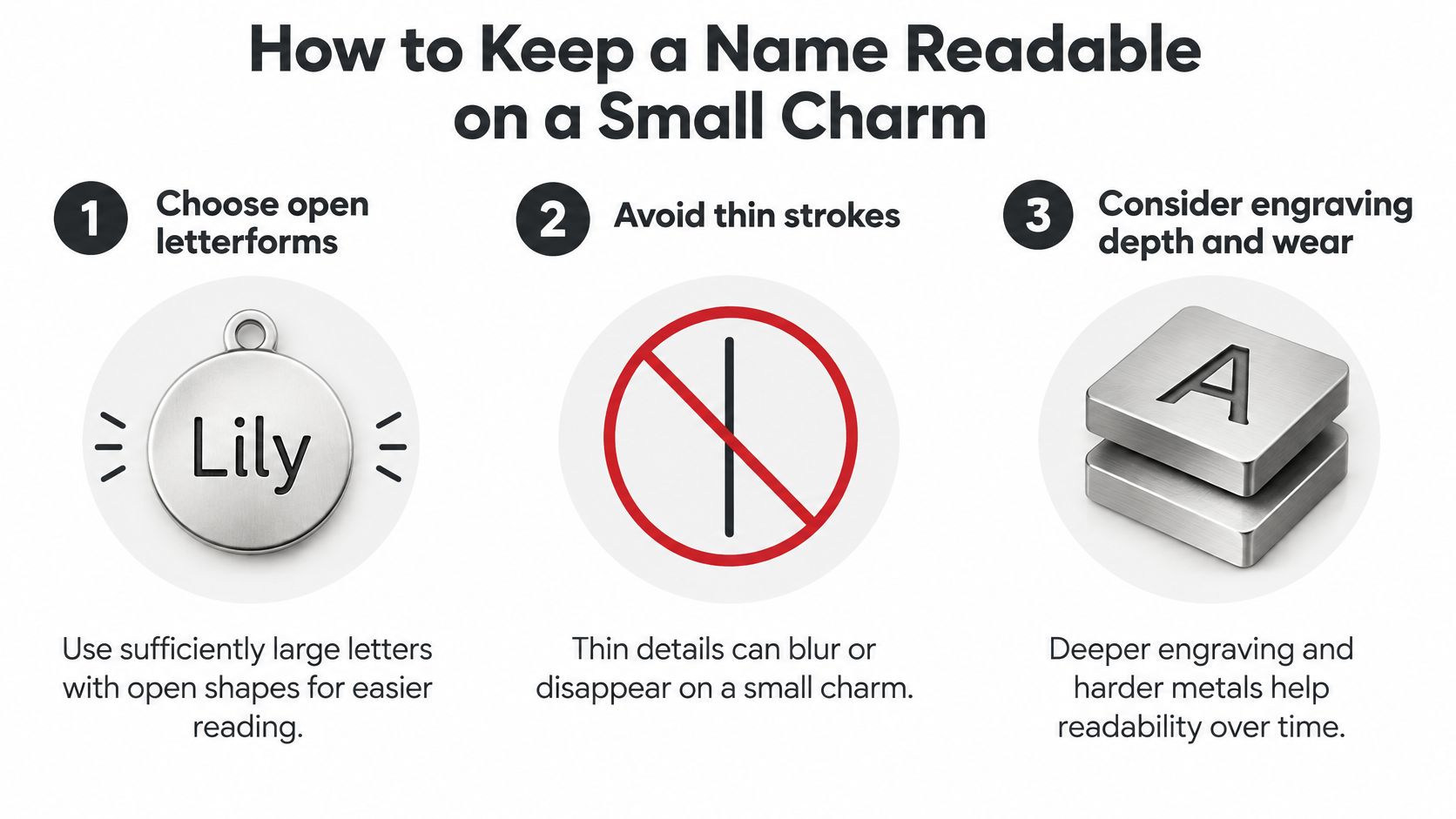
Before you approve a design, hold the preview at arm's length. Then look again under magnification if you can. Ask whether each letter stays separate. If an "e," "a," and "s" blur together on screen, daily wear will not sharpen them.
Legibility depends on four things working together: letter shape, engraving depth, metal hardness, and future wear. A flowing script can fail when the strokes are too thin. A plain block font can stay readable for years because each line has enough width. A small charm only holds so much detail before neighboring letters start to collide.
Letter Shape Comes First
Choose sufficiently large, open letterforms. Open shapes leave space inside letters such as "a," "e," "g," and "s," so the eye can separate them quickly. Those openings work like windows. Close the window and the letter stops looking like itself. Avoid overly thin strokes and tightly condensed scripts, especially on small curved charms where the surface bends away from the viewer.
Handwritten styles need the same check. A loop that looks elegant on paper may close up once it is reduced to charm size. The guide to personalized jewelry with handwriting shows why line thickness matters before a signature or a loved one's writing is shrunk.
Ask for a stated letter height, not only a photo. Photos rarely show true size, so compare that height with the longest name you expect to order.
Depth Decides How Long It Lasts
Technical guidance from LaserMarkTech on laser engraving metals indicates that a 20 to 30 W MOPA fiber laser can create deep, legible marks on 18-karat gold and sterling silver. Settings still need testing, because speed, pulse frequency, power, and surface finish change contrast and edge definition. The same name can look crisp or fuzzy depending on how the maker sets up the job.
Depth is the trade-off you will feel later. Shallow marks can lose contrast when repeated polishing removes surface material. Deeper engraving generally preserves legibility longer, but it needs thicker metal and can increase production time. Engraved letters work like grooves in a path: a light scratch fills in after a few passes, while a deeper groove stays visible.
Before you buy, ask the maker to confirm three checks. They should test the longest expected name, inspect the smallest letters under magnification, and verify that the engraving remains readable after simulated polishing and abrasion. Those checks cut the chance of receiving a name that is spelled correctly and still hard to read in everyday use.
Count the letters one more time. Charm width changes with name length, so a longer name may need a larger charm or a smaller script. Choose the larger charm when you can. Shrinking the letters is the option most likely to hurt readability.
Daily Care That Prevents Tarnish and Wear
You finish a walk, the clasp is warm, and the back of the name charm is damp against your skin. That film is the start of tarnish, not proof the necklace is ruined. A study on silver alloy corrosion and sulfidation identifies silver sulfide formation as the key mechanism, accelerated by humidity, atmospheric pollution, sweat, and saliva. Small daily habits do more than an occasional deep clean.
Sterling silver tarnish works like a thin coat from sulfur in the air and on skin, not like rust eating through iron. Wipe it early and the letters stay easier to read. Leave the film, and later cleaning has to be harsher, which is the step that softens engraved edges.
Everyday Exposures and the Right Response
| Situation | Risk | What to do |
|---|---|---|
| Sweating during exercise | Tarnish and plating wear speed up | Wipe dry after activity |
| Swimming or hot tubs | Chemicals speed tarnish and plating loss | Remove before swimming |
| Showering or bathing | Soap and trapped water dull the surface | Take off and dry before wearing again |
| Sleeping | Friction and pressure on the charm | Remove at night |
| Storage | Humidity and sulfur-containing materials cause tarnish | Store dry in an airtight pouch away from rubber and treated wood |
| Cleaning | Aggressive polishing softens engraved letters | Use a soft cloth and a mild jewelry cleaner |
Sweat speeds the surface reaction. Use a dry, soft cloth on the back of the charm, where moisture sits against skin longest. That spot also decides comfort: a damp pendant pressed in one place all day feels different from a dry one. Don't wait until the piece looks dark. Early film lifts with less rubbing.
Water is a different problem. Pool and hot tub chemicals speed tarnish and plating loss. Shower soap and trapped water dull the surface and collect around letter edges. Take the necklace off before swimming, bathing, and household cleaning. Afterward, how to clean jewelry at home shows a gentle method that will not scrub the name away.
Sleep adds friction you will not notice. A charm can press into skin, catch on bedding, or rub the chain for hours. Taking it off at night protects the pendant shape and any plated surface at the loop. Your skin also gets a break from metal and trapped moisture.
Storage should be dry and airtight or low-humidity, away from sulfur-containing materials such as rubber and treated wood. A small sealed pouch beats an open dish in a steamy bathroom. Fasten the chain so it does not knot, and keep the necklace away from harder pieces that can scratch it.
Clean with a non-abrasive method. Aggressive polishing gradually reduces the crispness of engraved or stamped lettering, so skip rough pads and strong dips unless the seller specifically approves them for that metal. A soft cloth and mild jewelry cleaner protect the letters you want to keep readable.
Alloy details help you predict upkeep. Experimental Ag-Cu-Zn alloys resisted sulfidation better when silicon was part of the mix, which is one reason composition matters. A piece stated as 925 sterling silver with a named alloy is easier to maintain than one labeled only "silver," because the mix of metals changes how fast the surface darkens.
Order Timing, Gift Planning and Checkout Decisions
A birthday is two weeks away, the spelling is still a guess, and the necklace is not made until you pay. That gap is what makes a charm name gift miss its moment. Personalized pieces are produced after the order, so the date on the invitation matters as much as the font.
Production Time and Return Rules by Product Type
| Product type | Listed price | Production time | Return rule |
|---|---|---|---|
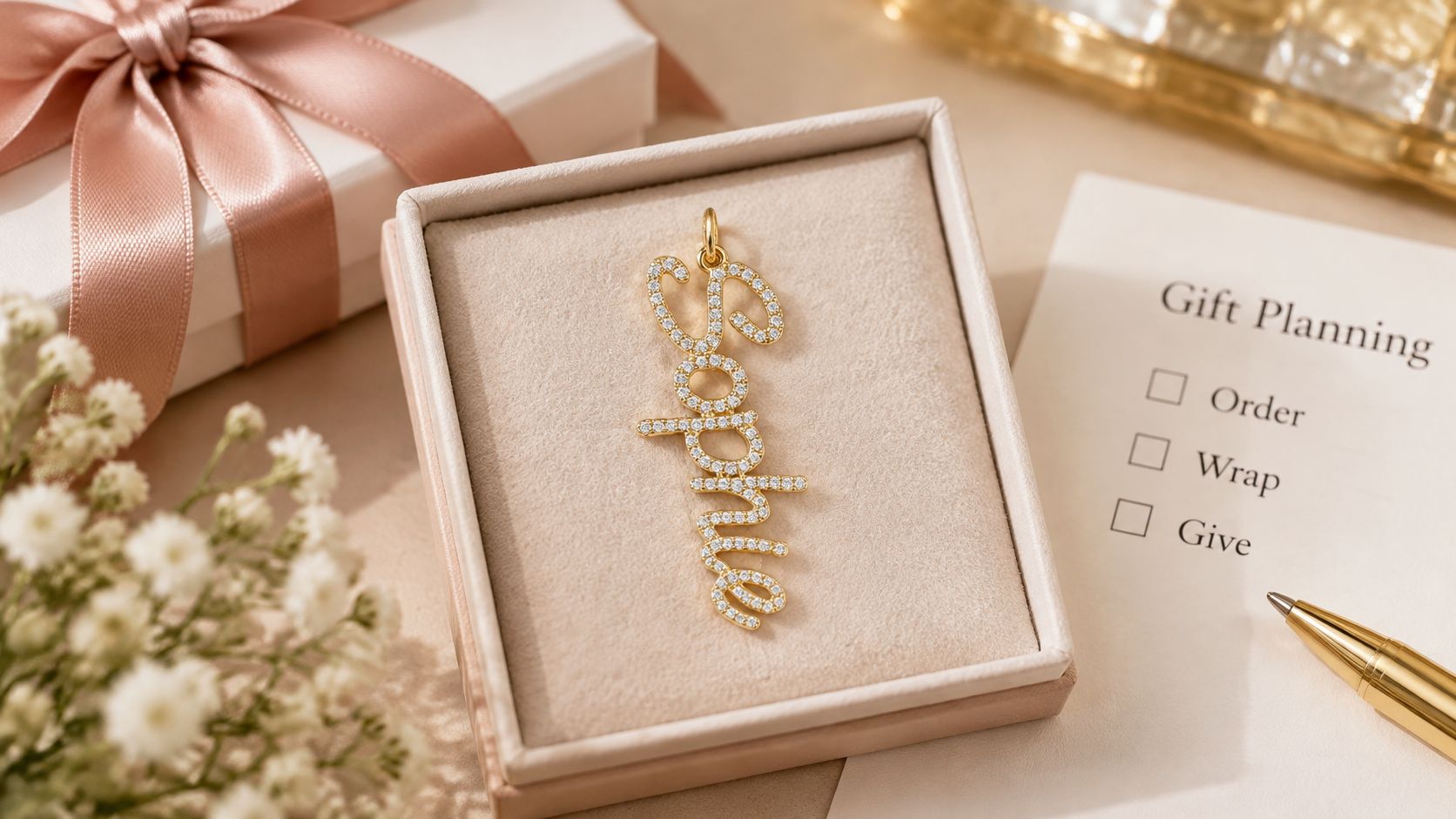
| Pave Name Charm | $195 | Confirm on the product page before ordering | Final sale |
| 14K Diamond Name Charm | $850 | Confirm on the product page before ordering | Confirm on the product page before ordering |
| Personalized charm necklaces and letter charms | Listed on each product page | Confirm on the product page before ordering | Final sale |
The Pave Name Charm is sold on its own. Read the production time on that listing before you commit to a font, then do the same for the 14K Diamond Name Charm. Those two pages, not a general guess, tell you how long making and shipping will take.
At EP Fine Jewelry, charm pendants including letter or initial charms, cuffs, and personalized charm necklaces are final sale. Custom work follows that rule for a simple reason: another buyer cannot wear your child's name or your initials. It works like a bakery cake with a name piped on top. Once the order is in, the shop cannot put it back on the shelf. Spelling, metal, and length have to be right before checkout. Our explainer on what is custom jewelry shows why made-to-order pieces use different return rules than ready-to-ship ones.
Work Backward From the Event Date
Start at the event and count backward. Use the longest lead time printed on the product page, then add shipping, then a few days to open the box and read every letter.
Leave room for a spelling question, a payment delay, or a slow carrier. Gift wrapping needs time too. If the page's lead time already fills the days you have left, pick a different piece or move the gift to a later visit.
New baby gifts need that same buffer, even when the news feels urgent. If you are pairing a necklace for the mother with a card for the family, these heartfelt ways to welcome a newborn can help you write a message that matches the keepsake. A short card is not a reason to rush a custom order.
Four Decisions to Make in Order
- Write the exact name first. Check spelling letter by letter, choose capitals, and count the characters. The name sets the charm, and a final-sale piece cannot be fixed by sending it back. Read it backward once. That forces you to see each letter instead of the word you expect.
- Pick metal by wear and skin, not color alone. Ask which karat the gold is, or whether the silver is marked 925, and confirm nickel content for the chain and clasp. A gift worn every day needs a different surface than a piece saved for photos and dinners.
- Choose charms and chain length together. Keep the charm count light enough for comfortable all-day wear, and confirm the listed length before you order. If you want to move charms between chains later, the pave loop can be purchased to add any charm to any chain size. That gives you flexibility without rebuilding the whole necklace.
- Plan the gift at checkout. Choose the gift box if you want present-ready packaging, and put your message or special handling request in the order notes field. Recheck the event date against the longest lead time on the product page before you pay.
That order stops the mistakes that cost the most. A wrong letter, a metal that bothers skin, a chain that feels crowded, and a box that arrives late are all avoidable while the order can still be changed. After production starts, your options narrow quickly.
Custom means the piece is made for one person. Treat the checkout page as your final proofread, because in practical terms, it is.
The Personalized collection gathers custom name pieces, including name necklaces and bracelets, while individual charms support mix-and-match styling as meanings change. You can add a gift box at checkout, use order notes for a message, and follow the Jewelry Care page after delivery for maintenance guidance. Orders of $200 qualify for free shipping as shown in the shopping flow, so check that threshold before splitting a gift into separate orders.
Start with the exact name, pick a metal that fits the wearer's skin and routine, and order with enough lead time for production and shipping. At EP Fine Jewelry, you can browse personalized name pieces and individual charms, add a gift box, and leave your message in the order notes for a present that arrives ready to give. Visit the shop today to build a Charm Name Necklace that stays readable, comfortable and meaningful long after the occasion.