
A sterling silver minimalist necklace looks like the easiest jewelry to own. It has a fine chain, a small pendant, and none of the visual complexity of a statement piece. Yet the popular advice that “minimal means low-maintenance” gets one important thing wrong. Delicate designs often need more attention, not less, because thin metal, tiny clasps, and smooth surfaces make tarnish, kinks, scratches, and wear easier to notice.
That doesn't make minimalist silver a poor choice. It means you should match the necklace to your habits. Daily wear can work when you control exposure and handle the chain gently. Rotation is smarter when you swim, exercise, apply products frequently, or want to preserve a pristine finish.
Table of Contents
- The Minimalist Myth - Why Thin Chains Need More Care
- Reading the Hallmark - Identifying Real Sterling Silver
- Understanding Tarnish - The Chemistry Behind the Dullness
- Practical Prevention - Storage and Wear Habits That Work
- Styling Your Minimalist Necklace for Every Occasion
- Choosing the Right Finish - Polished, Matte, or Oxidized
- Buying Checklist - What to Evaluate Before You Purchase
- Your Sterling Silver Necklace Through the Years
The Minimalist Myth - Why Thin Chains Need More Care
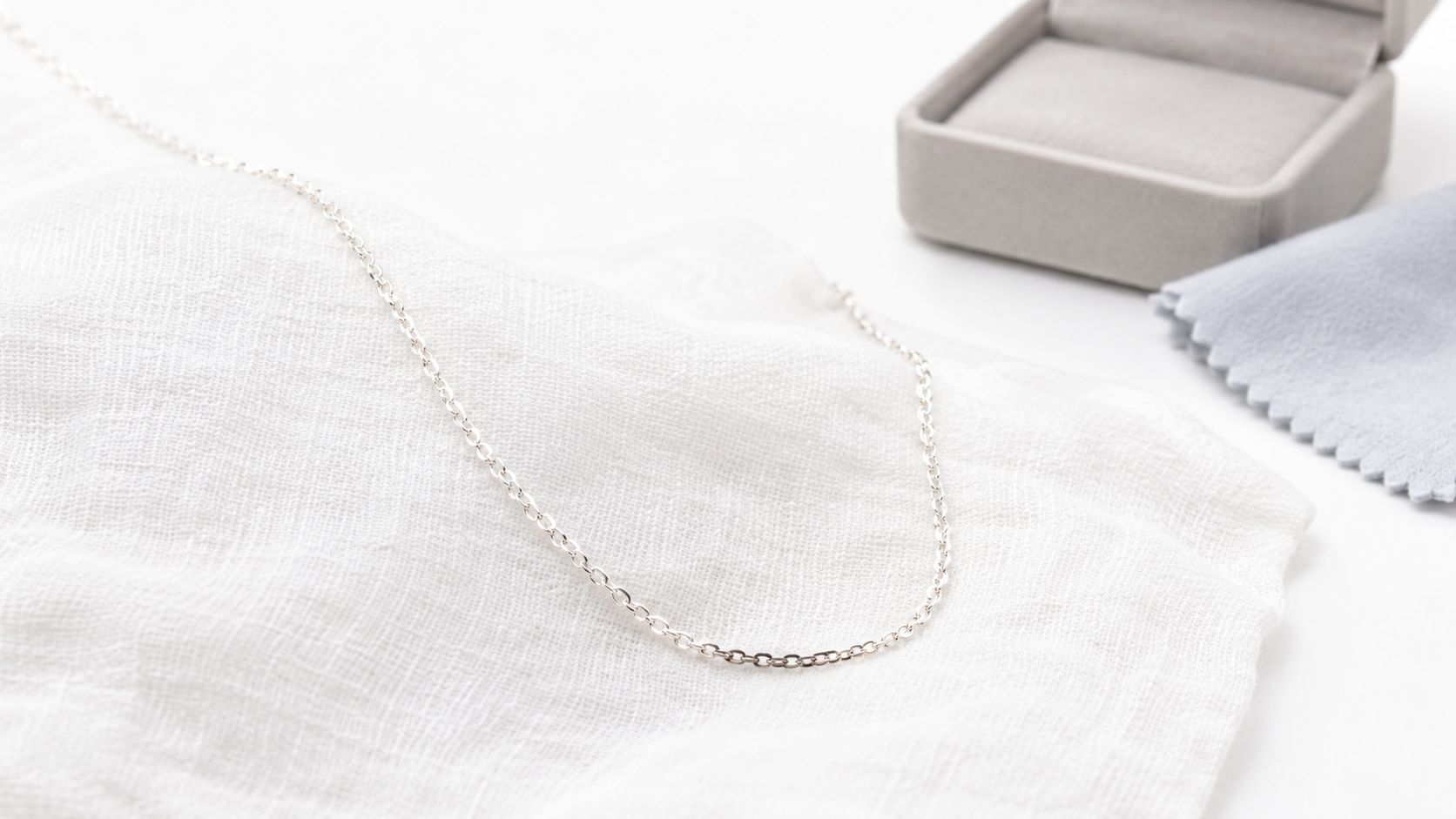
Minimal jewelry isn't automatically low-maintenance. A thick chain can disguise small marks because its links have more visual weight. A fine chain places every link, bend, and darkened section in plain sight, while a small pendant has little surface area to distract from a dull patch.
The same applies to hardware. A delicate clasp may experience repeated pulling from clothing, hair, and sleeping positions. A thin chain can also develop kinks when it sits loose in a jewelry box. The piece may remain wearable, but its refined appearance changes faster than you expect.
When daily wear makes sense
Daily wear is realistic if you put the necklace on after lotions and perfume, remove it before water-based activities, and store it separately at night. A simple chain worn over clean, dry skin in a controlled routine may hold its finish well.
Rotation is wiser if your day includes heavy perspiration, frequent swimming, or rough contact with bags and clothing. Keep one delicate necklace for work and ordinary outings, then switch to a sturdier design when the setting is more demanding. A Cuban link chain necklace illustrates the visual difference, but the maintenance principle is simple: lighter construction usually leaves less room for visible wear.
Practical rule: Choose minimal jewelry for its visual restraint, not because you expect it to require no care.
Reading the Hallmark - Identifying Real Sterling Silver
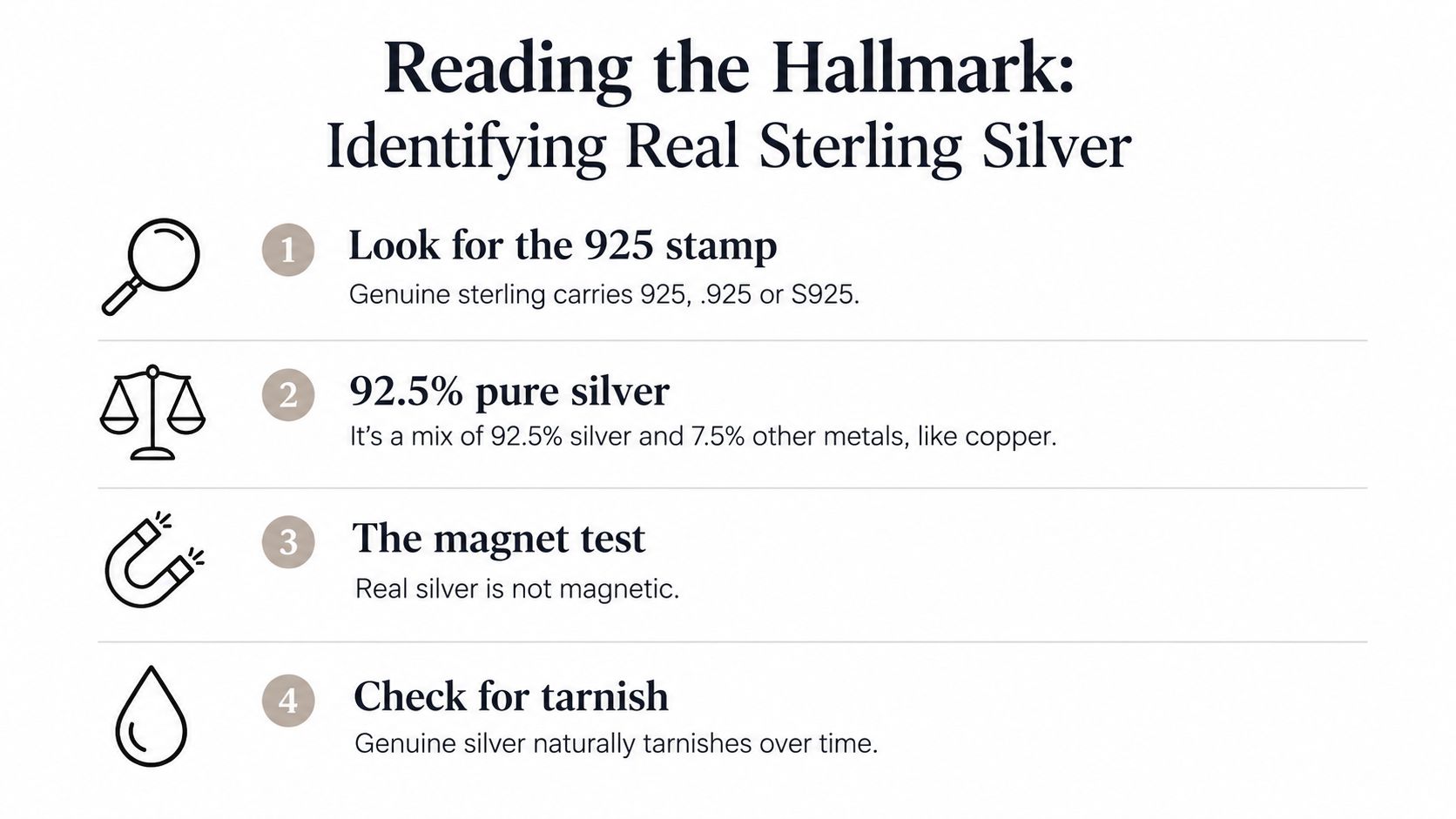
Start with the material mark. Genuine sterling silver is typically identified by 925, meaning 92.5% silver and 7.5% alloy metal, most often copper. The formula became a recognized standard in England by the 12th century, and in 1300, Edward I formalized wrought silver at the same purity with assay testing and hallmarking before sale, as described in this history of sterling silver jewelry.
That composition exists for a practical reason. Pure silver is too soft for durable everyday jewelry, while the alloy addition improves strength. For a thin chain or small pendant, that balance helps the necklace keep its shape while retaining silver's bright appearance.
A simple shopping check
Look for the mark on the clasp, clasp tag, or another discreet part of the chain. You may see 925, .925, or S925. Inspect the stamp with a phone camera or magnifying glass if the necklace is delicate, because the mark can be extremely small.
Then compare the seller's description with the hallmark. “Silver tone,” “silver color,” and “silver plated” don't mean the same thing as sterling silver. Plating can offer a silver-colored surface, but the underlying material and long-term care requirements differ.
A hallmark is useful evidence, not a complete evaluation. Ask whether the pendant, chain, and clasp are all sterling silver, rather than assuming one marked component represents the entire necklace. Also check whether a bright outer coating changes the care routine. A guide to rhodium-plated sterling silver can help clarify why some silver pieces stay brighter than untreated sterling.
Understanding Tarnish - The Chemistry Behind the Dullness
Tarnish isn't dirt, and it doesn't mean you've ruined the necklace. Silver can react with sulfur-containing gases in the environment, creating silver sulfide, the dark surface compound commonly associated with dull or blackened silver. The process often starts unevenly, especially around links, the pendant bail, and areas that touch skin.
Sterling silver's copper content improves hardness, but it also makes the alloy more reactive than pure silver. That trade-off gives you a practical metal for wearable jewelry, while leaving the surface vulnerable to conditions that pure silver might handle differently.
Everyday accelerators
Humidity, salt air, chlorine, bleach, cosmetics, perspiration, rubber, and certain papers can speed discoloration. A necklace worn close to the skin meets several of these variables at once. Sweat and body oils can remain around small links, while perfume or lotion can leave residues on the pendant.
Showering and swimming create especially poor conditions for a delicate silver necklace. Water alone isn't the whole story. Chemicals in pools, cleaning products, and personal-care formulas can increase surface reaction and leave the finish looking flat.
The reassuring part is that tarnish is generally superficial and reversible when cleaned correctly. The care guidance on sterling silver tarnish is useful when you need to distinguish normal surface dullness from physical damage such as a bent clasp or broken link.
Tarnish is a material reaction, not a verdict on your buying decision or your ability to care for jewelry.
Practical Prevention - Storage and Wear Habits That Work
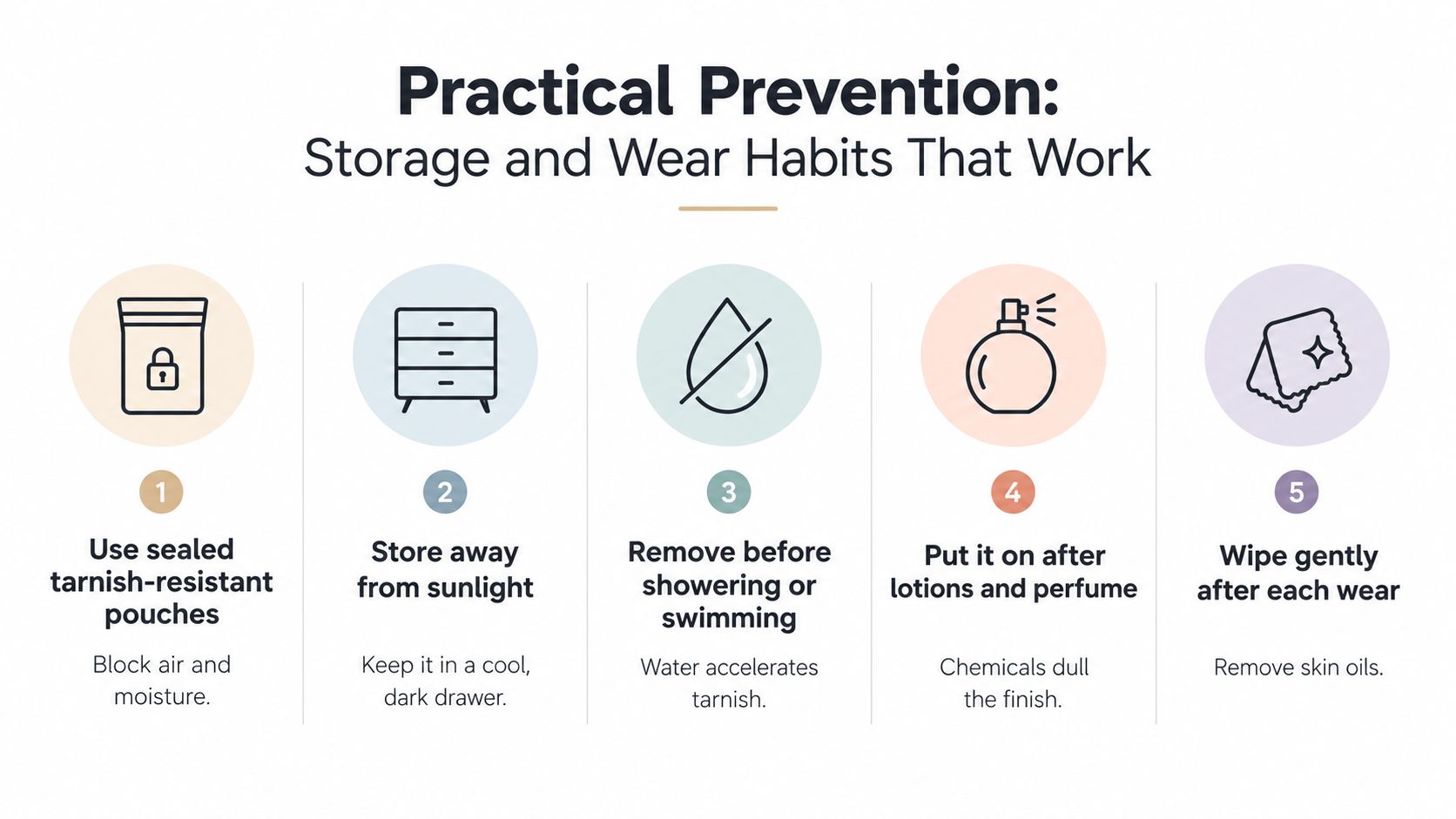
Good care starts before the necklace enters the jewelry box. After wearing it, wipe the chain and pendant gently with a soft polishing cloth to remove skin oils and residue. Don't pull the cloth aggressively through a fine chain, since repeated tension can stress small links.
Build a low-effort routine
- Store it sealed: Use a dry, tarnish-resistant pouch or box that limits contact with air and moisture.
- Control the environment: Conservation guidance recommends keeping silver below 50% relative humidity, as explained by the Canadian Conservation Institute's silver tarnish guidance.
- Remove it before water exposure: Take the necklace off before showering, swimming, or exercising.
- Apply products first: Let lotion and perfume settle before putting on the necklace.
- Separate delicate pieces: Keep chains away from rubber, certain papers, and harder jewelry that can scratch or catch them.
For travel, a compact sealed pouch is safer than leaving the necklace loose in a toiletry bag. These jewelry storage tips for traveling also apply to daily storage when you want to prevent tangles.
If you prefer contrast at the same time as a delicate necklace, the Two Finger Twist Ring is a separate statement design that fits on two fingers and uses 18K gold plating with CZ.
Styling Your Minimalist Necklace for Every Occasion
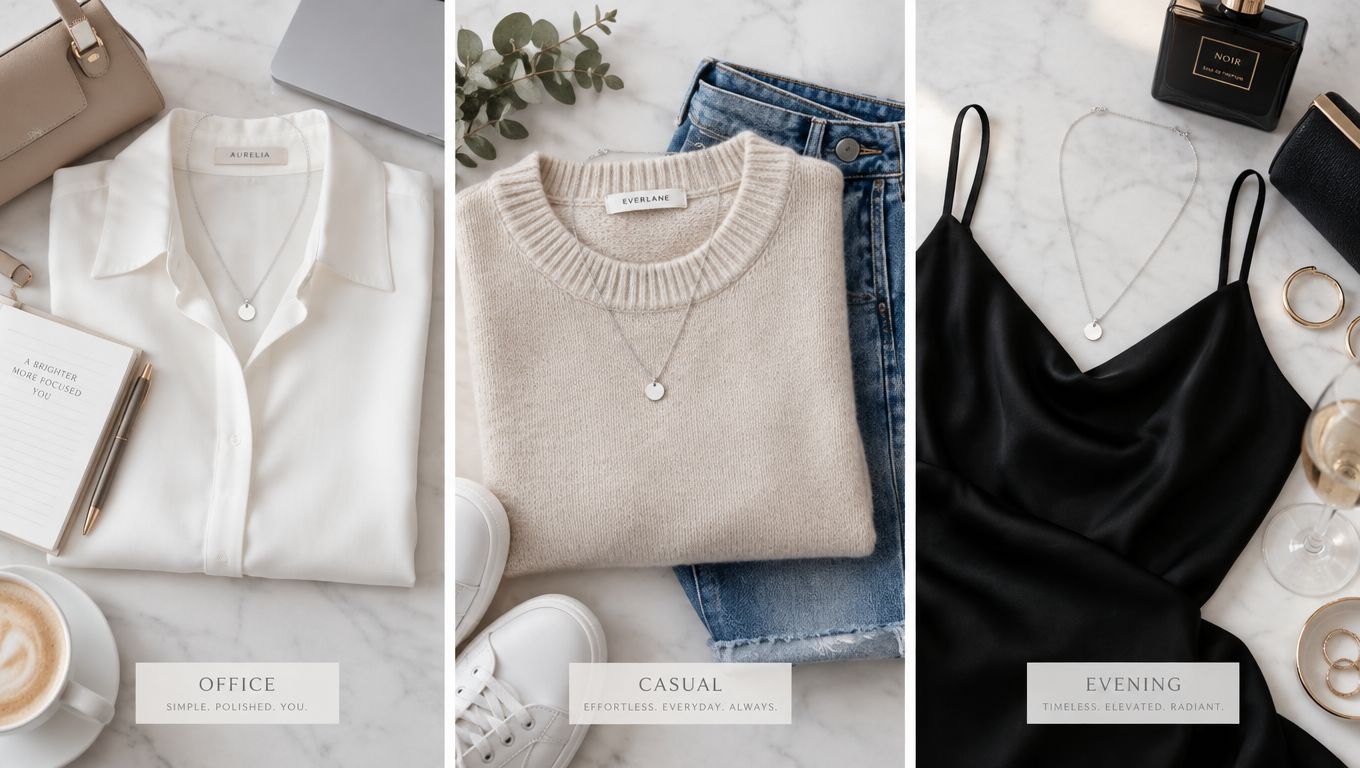
A minimalist silver necklace looks intentional when the rest of the outfit gives it a clear role. For officewear, wear a single fine chain over a plain blouse, knit top, or shirt. The necklace adds a small point of brightness without competing with collars, glasses, or structured tailoring.
For casual clothing, let the pendant sit against an uncomplicated neckline. A small silver shape works with denim, cotton, black, grey, navy, and other neutral clothing because its cool tone doesn't demand a matching color.
Single chain or layered composition
Choose one necklace when the neckline, pendant, or outfit already has enough structure. Choose layers when the clothing is simple and you want more depth. Combine a short minimalist chain with a longer chain, leaving visible space between their lengths so the pieces don't merge into one line.
Mixed metals can also make a restrained necklace feel more current. Silver brings a cool note beside yellow gold, while the contrast creates definition rather than requiring a perfect match. This guide to mixing gold and silver supports an intentional approach: repeat one metal elsewhere in the outfit, or let the necklace remain the cool accent.
For a visual styling reference, use the video below after considering the single-chain and layering options.
The key question isn't whether minimal silver is stylish. It's whether one quiet piece creates the right amount of focus for the occasion.
Choosing the Right Finish - Polished, Matte, or Oxidized
Finish changes both the first impression and the way you experience maintenance. A polished surface reflects more light, so it gives a minimalist necklace a crisp, bright appearance. It also makes fine scratches, fingerprints, and patches of dullness easier to see.
Matte or brushed silver diffuses light. That softer surface can feel more contemporary and may make minor marks less visually obvious. Oxidized silver uses darker areas to create contrast, which can make chain details or pendant texture easier to read. The darkened effect is part of the design, not the same thing as accidental tarnish.
| Finish Type | Appearance | Scratch Visibility | Best For |
|---|---|---|---|
| Polished | Bright and reflective | Higher | Wearers who like shine and will wipe the piece regularly |
| Matte | Soft and low-reflection | Lower | Everyday styling with a quieter, modern look |
| Oxidized | Dark contrast and depth | Varies by design | Graphic pendants and textured pieces |
Match the finish to your routine
Choose polished silver if brightness is central to your style and you don't mind frequent gentle cleaning. Matte is a practical choice when you prefer subtle texture and don't want every small surface mark to stand out.
Select oxidized details when contrast matters more than uniform shine. Clean them carefully and follow the maker's instructions, because aggressive polishing can alter intentional dark areas. Finish can't eliminate maintenance, but it can make the visible results more compatible with your habits.
Buying Checklist - What to Evaluate Before You Purchase
A product photo can't tell you everything about a delicate necklace. Before buying, inspect the construction details and decide whether the piece is intended for constant wear or occasional styling.
Check the chain first
Look closely at the links. They should appear consistently formed, without obvious gaps, flattened sections, or uneven soldering. A very fine chain may suit a refined look, but it won't offer the same visual or practical presence as a heavier design.
Next, examine the clasp. It should close cleanly and connect to a secure ring or tag. If the clasp looks disproportionately small, ask how the seller expects the necklace to be worn and whether replacement components are available.
Evaluate the pendant and finish
A small pendant should hang without twisting constantly. Check the bail, the loop that connects the pendant to the chain, because it receives repeated movement and can affect how the piece sits.
Use this short checklist before checkout:
- Material: Confirm that the listing identifies sterling silver rather than silver tone or plating.
- Purity mark: Look for a clear 925, .925, or S925 hallmark.
- Dimensions: Review chain and pendant measurements instead of judging scale from the photograph.
- Wear context: Decide whether the construction suits officewear, occasional use, or a more active routine.
- Care instructions: Favor listings that explain storage, cleaning, and exposure limits.
A seller who clearly explains materials and care gives you better information than a product page focused only on appearance.
Your Sterling Silver Necklace Through the Years
A well-chosen minimalist necklace usually develops a routine with its wearer. At first, you may wear it every day because the low-profile design works with nearly everything. After exposure to skin oils, humidity, or cosmetics, the surface may lose some brightness. That change doesn't automatically mean the necklace is damaged.
You remove it before swimming and exercise, wipe it after wearing, and keep it sealed when you're not using it. When tarnish eventually appears, gentle cleaning can restore the surface, while a jeweler can assess a clasp or link that has suffered physical wear.
A sustainable ownership pattern
By the time you reach longer-term ownership, rotation becomes a useful form of protection. The necklace remains part of your regular wardrobe, but it isn't exposed to every activity. You might choose it for work, errands, and dinners, then select another piece for travel days, workouts, or the beach.
That approach preserves the qualities that attracted you in the first place: a clean silhouette, restrained shine, and easy styling. Minimalism works best when the design is simple and the ownership habits are deliberate.
EP Fine Jewelry offers personalized jewelry, charm necklaces, bracelets, rings, earrings, and necklace collections, along with jewelry care guidance and gift options. Visit EP Fine Jewelry to explore pieces for everyday wear or gifting, then choose a design whose materials and care requirements fit your routine.