
A birthday is approaching, and you want a gift that feels chosen rather than grabbed at the last minute. You know the recipient's birth month, but you're still weighing the stone, the metal, the chain length, and whether the necklace will hold up to real life. A silver birthstone necklace can bring those decisions together in one personal piece, without making the gift feel overly formal.
The meaningful part comes from the birthstone. The practical part comes from the silver, the setting, and the way the necklace will be worn. Personal touches such as an initial engraving, a message added through order notes, or a gift box add-on can turn a necklace into a present that feels ready to give.
This guide follows the choices in the order a buyer usually needs them. You'll learn how the modern birthstone list developed, what the 925 stamp means, how stone hardness affects daily wear, and how to choose a pendant style, chain length, and care routine. You can also explore ideas for personalized jewelry gifts before deciding which details suit your recipient.
Table of Contents
- Why a Silver Birthstone Necklace Is a Meaningful Gift
- Birthstone Meanings and the Modern 12-Month List
- Understanding Sterling Silver and What the 925 Stamp Means
- Matching Stone Hardness to How You Will Actually Wear It
- Pendant Styles and Personalization Options
- Chain Lengths, Layering, and Everyday Styling
- Care Routine That Keeps Silver and Stones Looking New
- Gifting Checklist and Frequently Asked Questions
Why a Silver Birthstone Necklace Is a Meaningful Gift
A birthstone necklace works because it gives the gift a personal starting point. Instead of choosing a color only because it looks attractive, you can select a stone connected to the recipient's birth month. That small detail gives you a natural message for the card: “I chose this stone because it belongs to your month.”
Silver adds a quieter, flexible look. It pairs with casual clothing, office outfits, and other jewelry, so the necklace doesn't have to wait for a special occasion. For a buyer who wants sentiment without an extravagant presentation, a silver setting often feels approachable and easy to wear.
The category also has a clear commercial history. Silver jewelry fabrication worldwide reached 208.7 million troy ounces in 2024, after increasing 3%, while silver represented an average 31% of jewelry unit volume among surveyed U.S. jewelry retailers. Those figures describe silver jewelry broadly, not birthstone necklaces specifically, but they help explain why silver is a familiar material for personalized jewelry and gifting. The Silver Institute's 2024 market overview provides that wider market context.
Personal details make the gift feel finished
Start with the stone, then decide whether the necklace needs another personal layer.
- Initial engraving: A letter on a bar, disc, or pendant back can identify the recipient without competing with the birthstone.
- Gift message: An order note can carry a short birthday message or special instruction, making the package feel intentional when it arrives.
- Gift box add-on: Present-ready packaging helps when the necklace is being sent directly to the recipient or delivered close to the celebration.
- Layered meaning: A birthstone pendant can sit beside an initial, a heart, or a charm connected to a shared memory.
A useful example is a recipient who already wears simple silver jewelry but rarely buys personalized pieces. A small birthstone pendant gives her something connected to her identity, while the understated metal keeps the result wearable with the pieces she already owns.
Practical rule: Choose the birthstone for the meaning, then choose the silver finish and setting for the recipient's everyday habits.
Before clicking add to cart, check the product page for the metal description, stone type, chain length, personalization instructions, gift options, shipping information, and return terms. The right buyer's decision isn't only “Which month is it?” It's also “Will this necklace suit the way this person lives?”
Birthstone Meanings and the Modern 12-Month List
The birthstone system most shoppers recognize became standardized in the United States in 1912, when the American National Association of Retail Jewelers, now known as Jewelers of America, created an official list for the 12 months. That framework organized older religious, cultural, and commercial traditions into a consistent system that retailers could use for jewelry design and gifts. You can read the historical overview in this birthstone reference.
The list didn't remain fixed. A 1952 revision added alexandrite for June, citrine for November, and pink tourmaline for October, while zircon replaced lapis lazuli as a December option. Tanzanite later joined the recognized December choices in 2002. The changes show that the category can evolve as gemstones gain wider recognition.
Modern Birthstones by Month
| Month | Primary Stone | Alternative Stones |
|---|---|---|
| January | Garnet | Choose garnet for a warm, grounded gift associated with protection and commitment. |
| February | Amethyst | Amethyst brings a calm purple color and is often linked with clarity and peace. |
| March | Aquamarine | Aquamarine has a cool blue appearance that suits a gentle message about calm or renewal. |
| April | Diamond | Diamond is associated with lasting affection and a bright, classic look. |
| May | Emerald | Emerald's rich green color makes it a natural choice for a gift connected with growth and love. |
| June | Pearl or alexandrite | Pearl feels classic and soft, while alexandrite offers a color-changing alternative with a more unusual character. |
| July | Ruby | Ruby's vivid red tone suits a message about passion, courage, or deep affection. |
| August | Peridot | Peridot's fresh green shade works well for a cheerful gift linked with optimism. |
| September | Sapphire | Sapphire offers a strong blue color and a traditional association with loyalty and wisdom. |
| October | Opal or tourmaline | Opal gives an expressive play of color, while tourmaline offers a broad range of shades, including pink. |
| November | Citrine or topaz | Citrine feels sunny and warm, while topaz gives the buyer another recognized option. |
| December | Turquoise, tanzanite, or blue zircon | These blue-toned choices let you match the recipient's style as well as the month. |
The list gives you a starting point, not a rule that limits the gift. If the recipient was born in June and prefers a minimalist wardrobe, pearl may feel right. If she loves unusual color, alexandrite may be more expressive. A person born in December might prefer turquoise for an earthy look, tanzanite for a deep blue tone, or blue zircon for a brighter finish.
For more ideas about turning birth months into a personalized piece, browse this guide to a birthstone ring charm. A card message can stay simple: “Your stone is aquamarine, so I chose it as a reminder of your calm strength.” The meaning becomes personal when it reflects the recipient, not just a list of traditional associations.
Understanding Sterling Silver and What the 925 Stamp Means
Sterling silver is an alloy, not pure silver. A piece marked 925 contains 92.5% silver and approximately 7.5% copper or other strengthening metals. Pure silver is softer, so the additional metal helps a thin chain, jump ring, or pendant bail resist bending during ordinary wear. The metal composition and care implications are explained in this sterling silver materials guide.
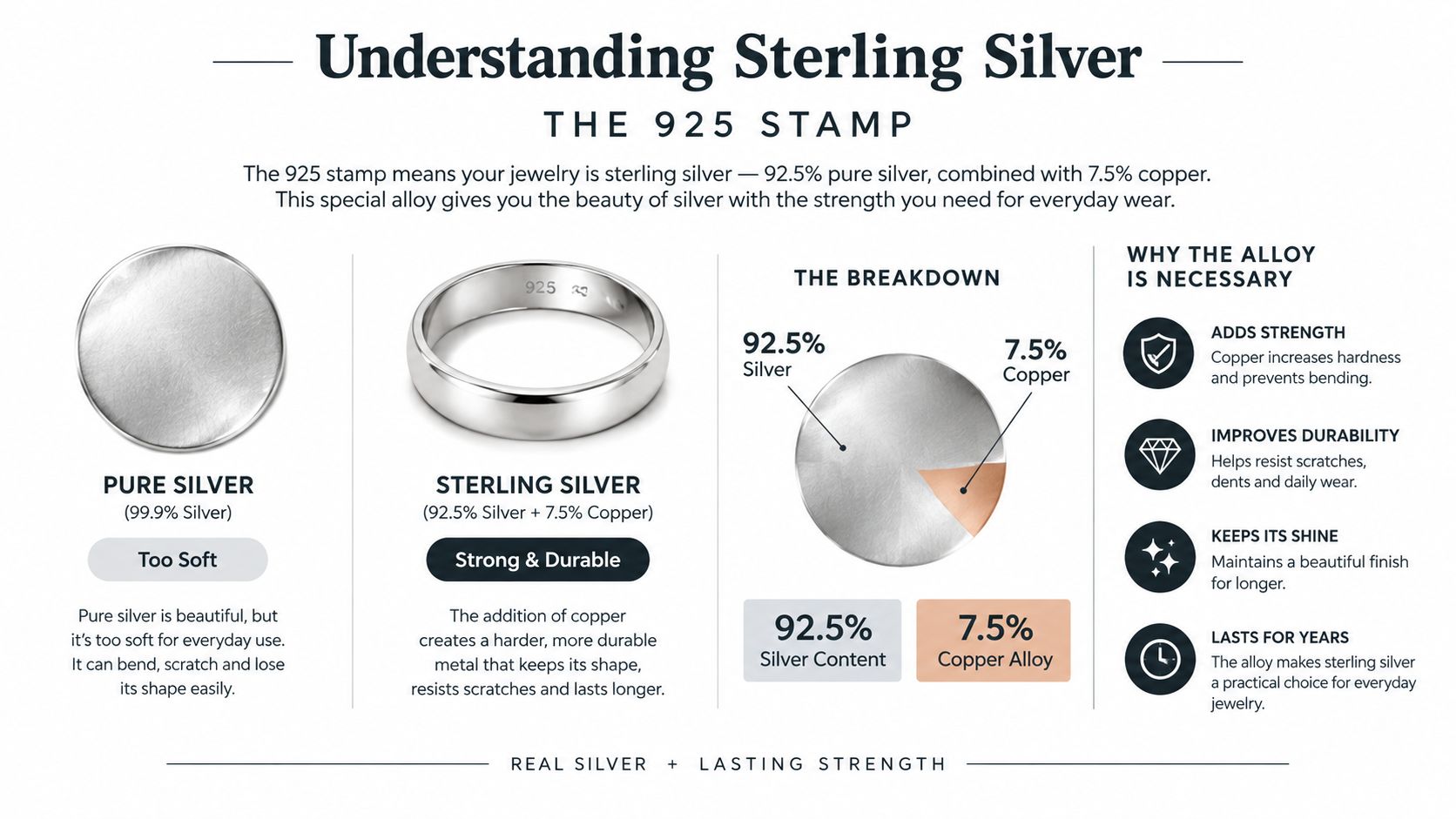
The stamp answers an important question, but it doesn't answer every question. It indicates the silver content of the alloy. It doesn't automatically confirm that the necklace is nickel-free, hypoallergenic, solid throughout, or suitable for every person with sensitive skin.
Compare the silver-tone options
Think of the difference like furniture. Solid sterling silver is similar to a table made from the named wood throughout. Silver-plated jewelry is more like a surface veneer over another material. It can look beautiful, but the outer layer may wear through where the chain rubs against skin, clothing, or other jewelry.
| Material description | What the buyer should understand |
|---|---|
| Solid sterling silver | The necklace is made from sterling silver alloy, with the silver content represented by the 925 mark. It can tarnish, but the material isn't simply a thin silver surface. |
| Silver-filled | A silver layer is mechanically bonded to a base metal. The product page should explain the construction clearly, since the buyer shouldn't assume it is the same as solid sterling. |
| Silver-plated | A thin silver coating covers another metal. Finish wear is a separate longevity concern from normal sterling silver tarnish. |
For skin compatibility, look for an explicit alloy disclosure. If the recipient reacts to nickel or other metals, a 925 stamp alone isn't enough evidence that prolonged skin contact will be comfortable. Check the retailer's materials information, allergy language, and return policy before ordering.
Sterling silver can also darken when sulfur-containing compounds react with silver and form silver sulfide. That dark film is usually a surface-chemistry effect, not proof that the necklace is fake or that its silver content has disappeared. You can learn more about this distinction in the guide to whether sterling silver tarnishes over time.
Matching Stone Hardness to How You Will Actually Wear It
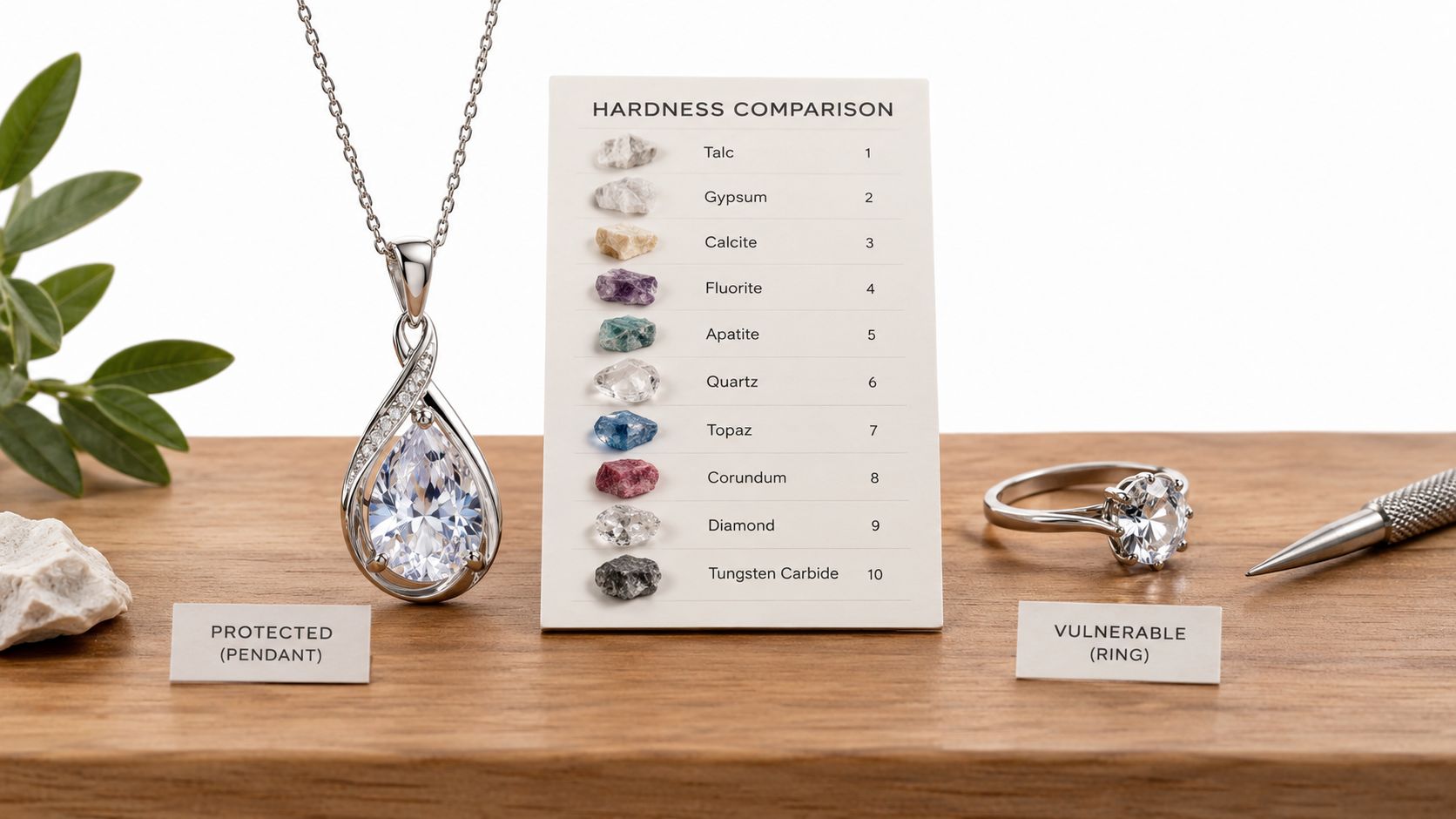
A pendant is less exposed than a ring, but it isn't protected from every impact. It can rub against clothing, hit a desk or countertop, catch on a scarf, or fall when a clasp opens. That's why stone selection should consider both Mohs hardness, which describes scratch resistance, and toughness, which describes how well a stone handles impact or splitting.
Match the stone to the wearer
Ruby and sapphire rank at Mohs 9, making them comparatively suitable for frequent wear. A recipient who wants to keep a September sapphire or July ruby necklace on through many ordinary days has a stone with strong scratch resistance.
Emerald ranks approximately 7.5 to 8. It can still work beautifully in a pendant, but it deserves more care than a ruby or sapphire, especially if the recipient is active or tends to wear jewelry while doing household tasks.
Topaz ranks at 8 but has lower toughness. A strong blow or thermal shock can cause splitting, so its hardness shouldn't be treated as a guarantee against damage.
Pearl ranks only 2.5 to 3. It can scratch easily, which makes pearl a better choice for occasional wear, careful styling, or a recipient who enjoys treating jewelry as a special accessory. These comparisons come from GIA birthstone guidance.
Choose for the routine, not only the color. A soft stone can be the perfect gift for someone who saves jewelry for dinners and celebrations. It may be the wrong match for someone who sleeps, exercises, and works in the necklace every day.
Setting security matters just as much as the stone. A bezel surrounds the edge and can offer useful protection, while prongs expose more of the stone but need periodic inspection. Check the bail, prongs, and attachment points, because a loose mounting can cause stone loss even when the gemstone itself remains undamaged.
Store a softer pendant separately from hard gemstones and metal chains. Avoid ultrasonic or harsh chemical cleaning unless the stone's treatment and setting are known to be safe.
Pendant Styles and Personalization Options
The pendant shape controls the first impression of a birthstone necklace. A round solitaire keeps attention on one central stone and works especially well with a transparent gem. An oval can make the stone feel slightly more elongated, while a heart shape adds a direct romantic or affectionate cue.
A bar pendant creates space for an initial, date, or short inscription. A birth flower design adds a second layer of symbolism, which suits someone who likes nature-inspired jewelry rather than a traditional gemstone alone. For opaque or cabochon stones such as turquoise and some opals, a smooth surface can be more important than a faceted cut.
Compare the main setting choices
- Bezel setting: A rim surrounds the stone. It gives the pendant a clean outline and adds protection around the edge.
- Prong setting: Small metal claws hold the stone in place and allow more light to reach it. The prongs need inspection because a loosened one can release the stone.
- Halo setting: Smaller stones surround the center stone. The design creates more visual detail but also adds more surfaces that can catch on fabric.
Consider the recipient's existing jewelry. A minimalist wearer may prefer a small round or bar pendant on a fine chain. Someone who likes statement pieces may enjoy a heart, halo, or layered birth flower design. You can also pair the birthstone with an initial, either on the front of a bar or on the back of a pendant where the message stays private.
An initial necklace in a cursive style can show how a letter adds identity without replacing the birthstone's meaning. A charm necklace offers another route. The birthstone can represent the recipient, while a second charm represents a child, partner, place, or shared memory.
Check the order details before personalizing
Personalization may affect production time and return eligibility. Read those terms before submitting the order, especially if you're buying close to a birthday. If a gift box add-on or order-note message is available, include those details during checkout rather than assuming they can be added afterward.
Shipping thresholds can also affect how you plan the purchase. EP Fine Jewelry displays a $200 free-shipping threshold in its shopping flow, so check the current store information and cart total before placing an order. The retailer offers personalized jewelry, charm necklaces, gift boxes, order notes, and jewelry care guidance, giving buyers several ways to assemble a present-ready gift.
Chain Lengths, Layering, and Everyday Styling
Chain length changes where the pendant rests on the neckline. The recipient's frame, clothing, and preferred styling all matter, so a familiar length isn't automatically the right one.
- 16 inches: Usually sits higher on the neckline and works well for a small pendant or a close-fitting layered look.
- 18 inches: A versatile everyday choice that generally places a pendant near the upper chest on many adults.
- 20 inches: Creates a lower drop and can work over higher necklines or with a larger pendant.
- 24 inches: Gives a longer, more relaxed look and can make a birthstone pendant stand out over clothing.
Use the recipient's existing jewelry as your best clue. If she usually wears necklaces near the collarbone, a shorter chain may feel natural. If she wears sweaters, button-down shirts, or layered pendants, a longer chain may be easier to style.
Three practical styling recipes
Everyday single pendant: Put one birthstone pendant on a fine cable chain. Keep the pendant light and centered so it works with a T-shirt, blouse, or simple knitwear.
Office-friendly layer: Combine a shorter bar with a personalized disc on a slightly longer chain. Keep the shapes clean and the lengths separated enough that the pieces don't overlap constantly.
Date-night meaning: Pair the birthstone with a charm linked to a shared memory. A heart, initial, or symbolic charm can make the combination feel collected rather than matched from a single set.
Charm necklaces and individual charms also allow the story to grow. A buyer can start with one birthstone and add another meaningful element later instead of trying to include every symbol in the first gift.
Before ordering, check the clasp, extender, and total pendant weight. A secure clasp reduces accidental loss, an extender gives the wearer more flexibility, and a very heavy pendant can pull a fine chain forward or feel uncomfortable during long wear.
Care Routine That Keeps Silver and Stones Looking New
Tarnish is a normal surface reaction in sterling silver. Sulfur-containing compounds, moisture, cosmetics, and friction can darken the surface, but that change doesn't automatically mean the necklace is defective.
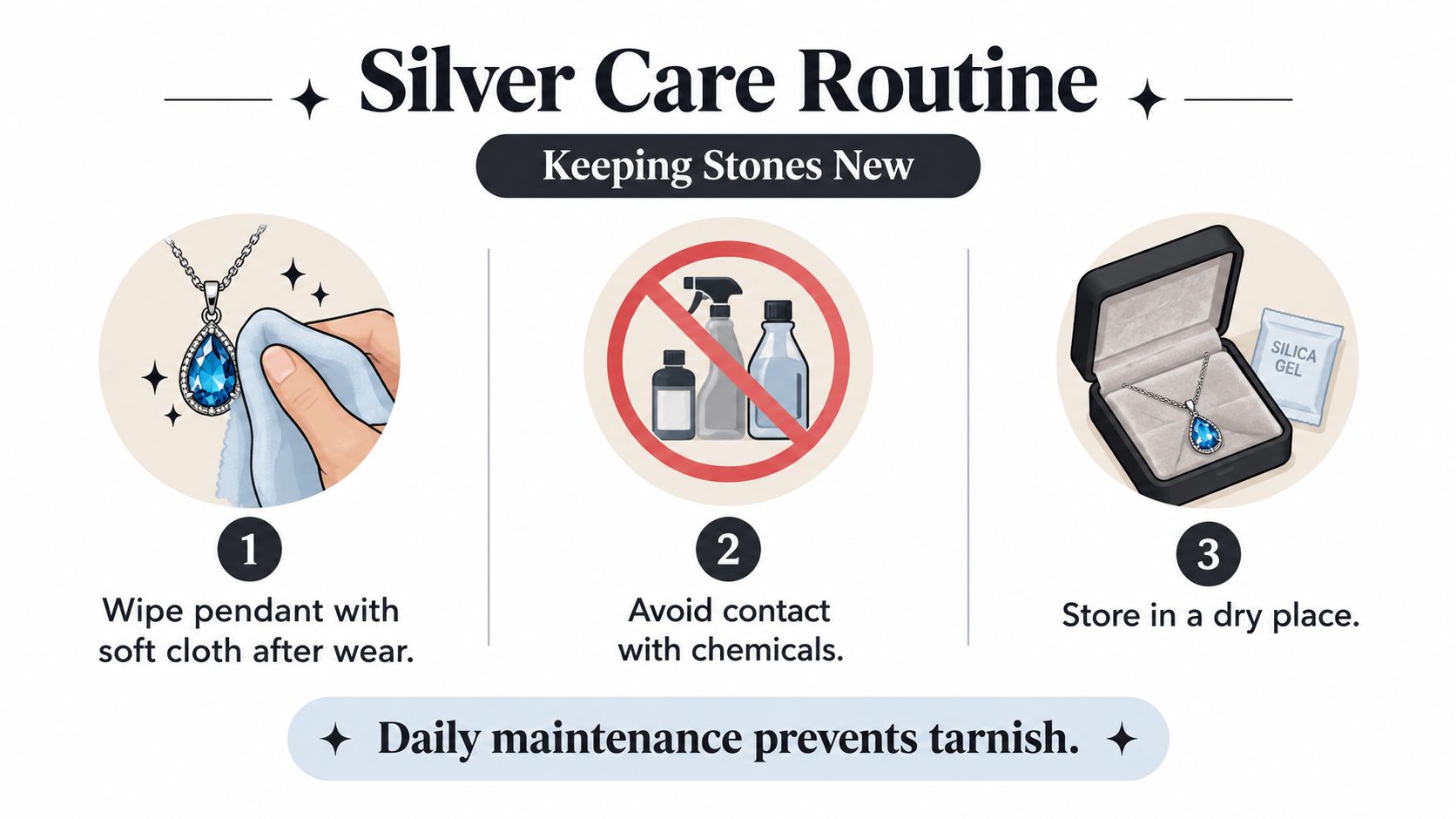
Use a simple decision routine
- After wear: Wipe the chain and pendant with a soft cloth, especially after lotion, perfume, or sunscreen.
- Before exposure: Remove the necklace for swimming, showering, bathing, and exercise. These situations increase contact with water, chemicals, sweat, and friction.
- During storage: Keep it dry in an airtight or low-humidity pouch, separated from harder jewelry that can scratch the metal or stone.
- Before cleaning: Use a soft polishing cloth. Avoid abrasive cleaners near softer stones or decorative finishes.
- Before deep cleaning: Don't use ultrasonic cleaning unless the stone's treatment and setting are confirmed to be safe.
Plated jewelry needs a separate expectation. Its outer silver finish can wear through sooner than solid sterling silver, especially at points that rub against skin or clothing. Care can reduce exposure, but it can't turn plating into solid silver.
Inspect the bail and prongs periodically. If a stone moves, a prong catches on fabric, or the clasp feels weak, stop wearing the necklace until it's checked. EP Fine Jewelry provides a jewelry care instructions resource, and clear care and return policies are useful signs that the retailer expects customers to maintain the piece over time.
Gifting Checklist and Frequently Asked Questions
Before ordering, check the recipient's month and preferred stone, chain length, pendant style, personalization options, gift box availability, order-note message, materials disclosure, shipping timing, and return policy.
What if the recipient has more than one birthstone option? Choose the stone that fits their wardrobe and personality. A quiet wearer may prefer pearl or a simple sapphire, while someone drawn to unusual color may prefer alexandrite, opal, or tourmaline.
Is pearl suitable for a daily-wear gift? It can be meaningful, but its lower hardness makes it better for careful, occasional wear. Give pearl to someone who will remove it before water, exercise, and rough activity.
How can I verify sterling silver online? Look for a clear 925 or sterling silver description, an alloy or allergy disclosure, close product photos, and accessible return terms. A 925 stamp confirms silver content, but it doesn't by itself confirm that the piece is nickel-free.
EP Fine Jewelry offers personalized necklaces, birthstone styles, charm options, gift boxes, order notes, and care guidance for shoppers building a meaningful silver jewelry gift. Review the stone, metal, chain length, and policy details, then visit EP Fine Jewelry to choose a present that fits both the recipient's story and everyday routine.