
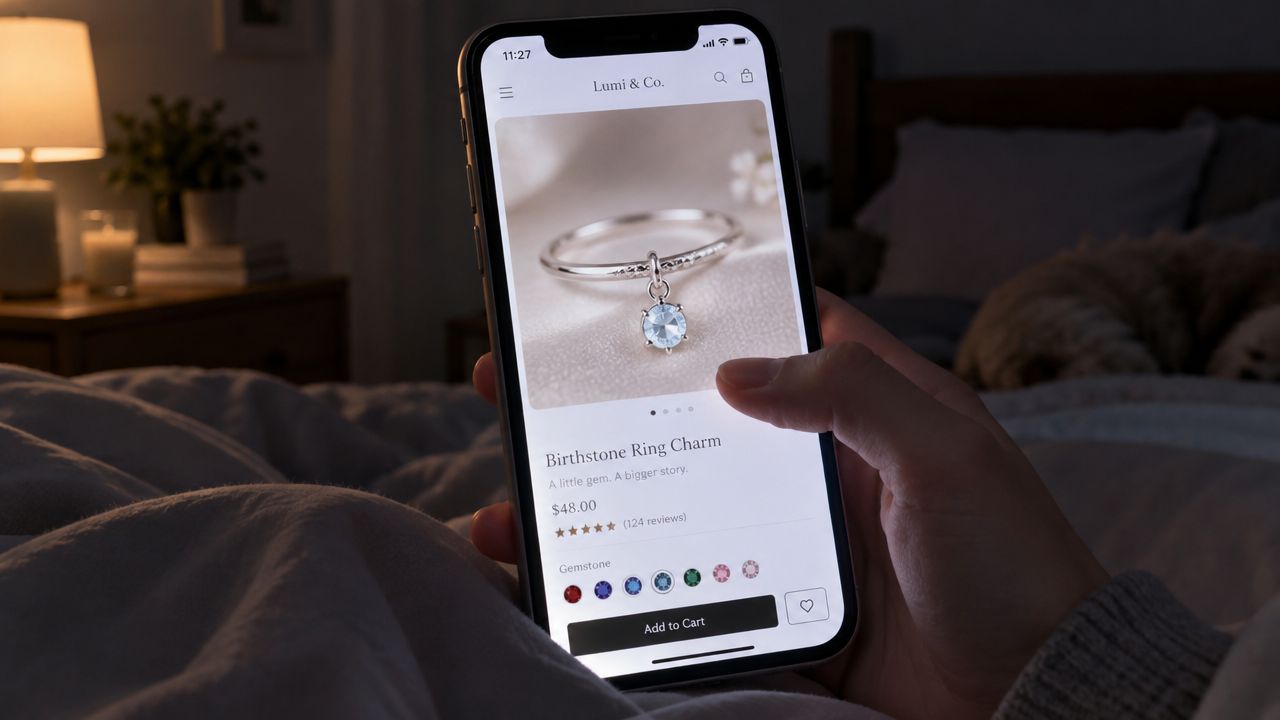
You're scrolling on your phone late at night, looking for a small gift that feels personal without becoming overly formal. Then you find a tiny gemstone charm attached to a ring and pause. Is it a complete ring, an add-on, or something that only works with a special band? A birthstone ring charm can be meaningful and flexible, but only when you understand how it fits, how it wears, and which stone and setting suit the recipient.
Table of Contents
- What a Birthstone Ring Charm Actually Is
- Two Traditions Meet Inside One Small Piece
- Ring Charm Versus Other Birthstone Formats
- Matching Gemstone Durability to Daily Ring Wear
- Choosing the Right Metal and Setting
- Personalization, Stacking, and Modular Styling
- Picking the Perfect Gifting Occasion
- Care, Troubleshooting, and a Quick Decision Checklist
What a Birthstone Ring Charm Actually Is
A birthstone ring charm is a small decorative jewelry piece designed to attach to a ring base. It usually features a gemstone associated with a calendar month, a metal mounting, and a loop or bail that allows it to slide onto a compatible band. Unlike a conventional birthstone ring, it usually isn't a complete ring with a fixed center stone.
Most buyers pair the charm with a separately purchased plain band, chain ring, stackable ring, or charm-ring base. The base acts like a rail, while the charm adds the personal detail. Before ordering, check the band's thickness and the charm's inner loop width. If the opening is too narrow, it won't slide over the band. If it's too loose, the charm may move excessively or sit at an awkward angle.
The two main construction styles
A dangle-style charm hangs below the ring band. It moves as you use your hands, which gives the gemstone a playful, noticeable quality. A bezel-style insert sits closer to the band, sometimes flush within a channel or recessed mount. It looks cleaner and usually presents less of a snag risk.
Look for four structural details:
- Gemstone: The birthstone provides the month-based meaning and most of the color.
- Mounting: The metal holds the stone and determines how exposed it is to impact.
- Bail or loop: This opening connects the charm to the ring base.
- Ring compatibility: The charm must match the band's thickness, shape, and attachment system.
A ring charm offers a different experience from a guide to charm bracelets, because the hand is a smaller, more active styling area. The piece may rotate, catch on fabric, or sit beside other rings, so fit matters as much as appearance.
Practical rule: Treat the charm and the ring base as one system. A beautiful stone won't solve a poor fit.
Two Traditions Meet Inside One Small Piece
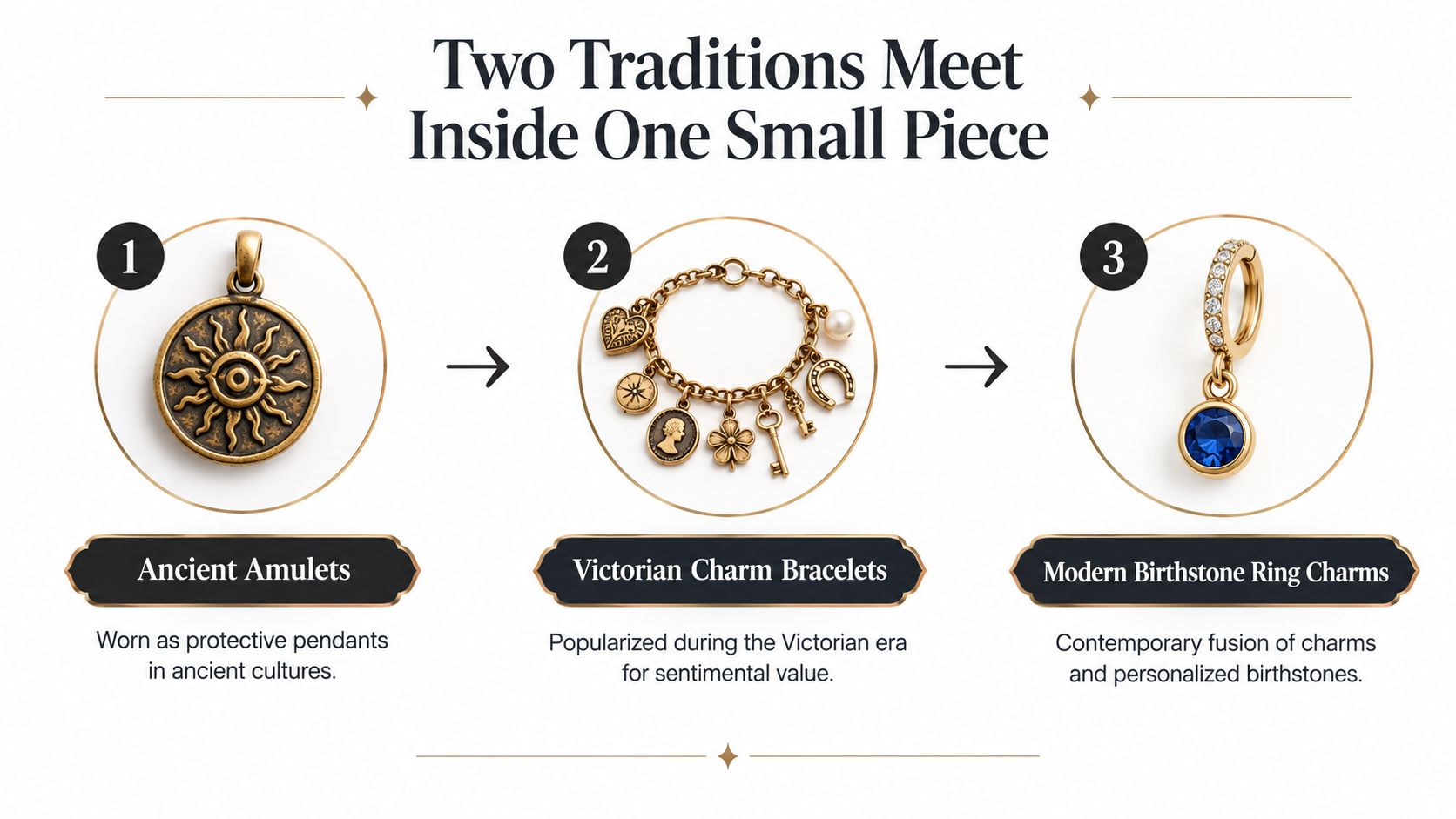
A birthday gift can carry two kinds of meaning at once. A ring charm combines the personal symbolism of a birthstone with the memory-making role of a charm, creating a format designed for the hand rather than a bracelet or necklace.
Both traditions existed before modern jewelry retail. Charms developed from protective amulets made from bone, shell, wood, and stone, later becoming sentimental keepsakes associated with Victorian jewelry. Birthstone customs connected gemstones with birth months, with the familiar organized list taking shape through 18th-century Poland and later standardization in 1912. For a concise account of charm history, see a history of charms, materials, styles, and meanings, while this overview of birthstone traditions explains how monthly gemstone associations developed.
Why the combination feels natural
A charm can mark a person, event, place, or memory. A birthstone adds a calendar link, so the piece can identify a July birthday, honor a relationship, or bring several family members into one design. The ring format makes that meaning visible on the hand, where the charm can become part of a daily stack instead of remaining a separate necklace or bracelet accent.
The two elements also serve different jobs. The gemstone supplies color and month-based symbolism. The charm format supplies a small, changeable keepsake that can be worn alone with a compatible ring base or added to a collection over time. That makes a ring charm more than a birthstone placed on a ring. Its appeal comes from the way the attachment, scale, and position turn a familiar gemstone into a personal hand-worn marker.
The stone does not need to represent a literal belief in healing or luck. Its meaning may be the wearer's birth month, a shared memory, or the relationship behind the gift. That flexibility helps explain why a ring charm can feel intimate while remaining easier to update than a fixed birthstone design.
Ring Charm Versus Other Birthstone Formats
The right format depends on how the recipient wears jewelry, not only on which gemstone represents their month. A standalone birthstone ring offers a finished look immediately. A ring charm offers a smaller visual accent and the ability to change the story later.
A necklace charm usually has more room to swing and display a larger stone. A bracelet charm offers similar modularity, but it may compete with a watch, cuff, or other wrist jewelry. A ring charm keeps the birthstone visible on the hand, though it also experiences more contact with everyday objects.
| Format | Visibility | Modularity | Daily Wear Risk | Typical Price |
|---|---|---|---|---|
| Ring charm | Visible on the hand, with a compact profile | High, if paired with a compatible base | Moderate to high because hands contact surfaces often | Varies by stone, metal, and whether a base ring is included |
| Standalone birthstone ring | Prominent and immediately complete | Lower, because the stone is fixed to the ring | Depends on the stone height and setting | Varies by stone size, metal, and craftsmanship |
| Necklace charm | Easy to display near the neckline | High, especially on a charm chain | Often lower from hand contact, though chains can snag | Varies by charm size, chain, stone, and metal |
| Bracelet charm | Noticeable on the wrist and suited to collections | High | Can rub against watches, cuffs, and other charms | Varies by charm system, metal, and stone |
Choose by the kind of flexibility you want
Select a ring charm if the wearer likes stacking, changing accessories, or collecting meaningful pieces over time. It can hold one month, several family months, or a rotating combination for different seasons and moods. The trade-off is that you must confirm the base ring and accept that the charm may rotate or dangle.
Choose a standalone ring if the recipient wants one polished object with no assembly decisions. A necklace or bracelet charm may be better if they rarely wear rings or prefer larger, freely moving jewelry.
For a month-specific example, compare the ring format with a June birthstone ring. The standalone design centers the stone in one finished piece. A charm version makes the same type of symbolism more modular and less formal.
Matching Gemstone Durability to Daily Ring Wear
A gemstone's suitability for a ring charm depends on three separate qualities. Hardness describes resistance to scratches. Toughness describes resistance to chipping or breaking. Stability describes how the stone responds to heat, light, chemicals, and changes in conditions.
Those qualities don't always point in the same direction. A stone can resist scratches yet still chip if it has a vulnerable edge or internal structure. A charm also sits above or beside the band, so it may receive more knocks than a recessed stone in a low-profile ring.
A practical durability guide
| Birthstone | Mohs Hardness | Toughness | Ring-Wear Rating | Care Notes |
|---|---|---|---|---|
| Ruby or sapphire | 9 | Excellent structural toughness | Strong choice for frequent wear | Mild soap and water may be suitable when the setting and treatment allow it |
| Emerald | 7.5 to 8 | More fragile because natural inclusions can reduce toughness | Wear with protection and care | Prefer a bezel or halo, and avoid ultrasonic cleaning and abrupt temperature changes |
| Opal | 5.5 to 6.5 | More vulnerable to impact and environmental changes | Occasional wear is safer | Use a protective setting and gentler handling |
The gemological guidance in this birthstone jewelry durability guide identifies corundum stones such as ruby and sapphire as strong daily-use choices. It also explains why emeralds need more protection and why opal is a high-risk option for a frequently handled charm.
Other birthstones can still work beautifully, but the setting and lifestyle need to match. If the recipient works with their hands, remove a delicate charm before demanding activities. If the piece is mainly for dinners, celebrations, or occasional styling, a softer stone becomes more practical.
A low-profile bezel can make a delicate birthstone more wearable, but it can't make every stone suitable for constant impact.
A two-stone ring design can also help you compare how different gems behave when they're placed close together. For a ring charm, prioritize a protected seat, smooth edges, and a secure attachment over maximum stone exposure.
Choosing the Right Metal and Setting
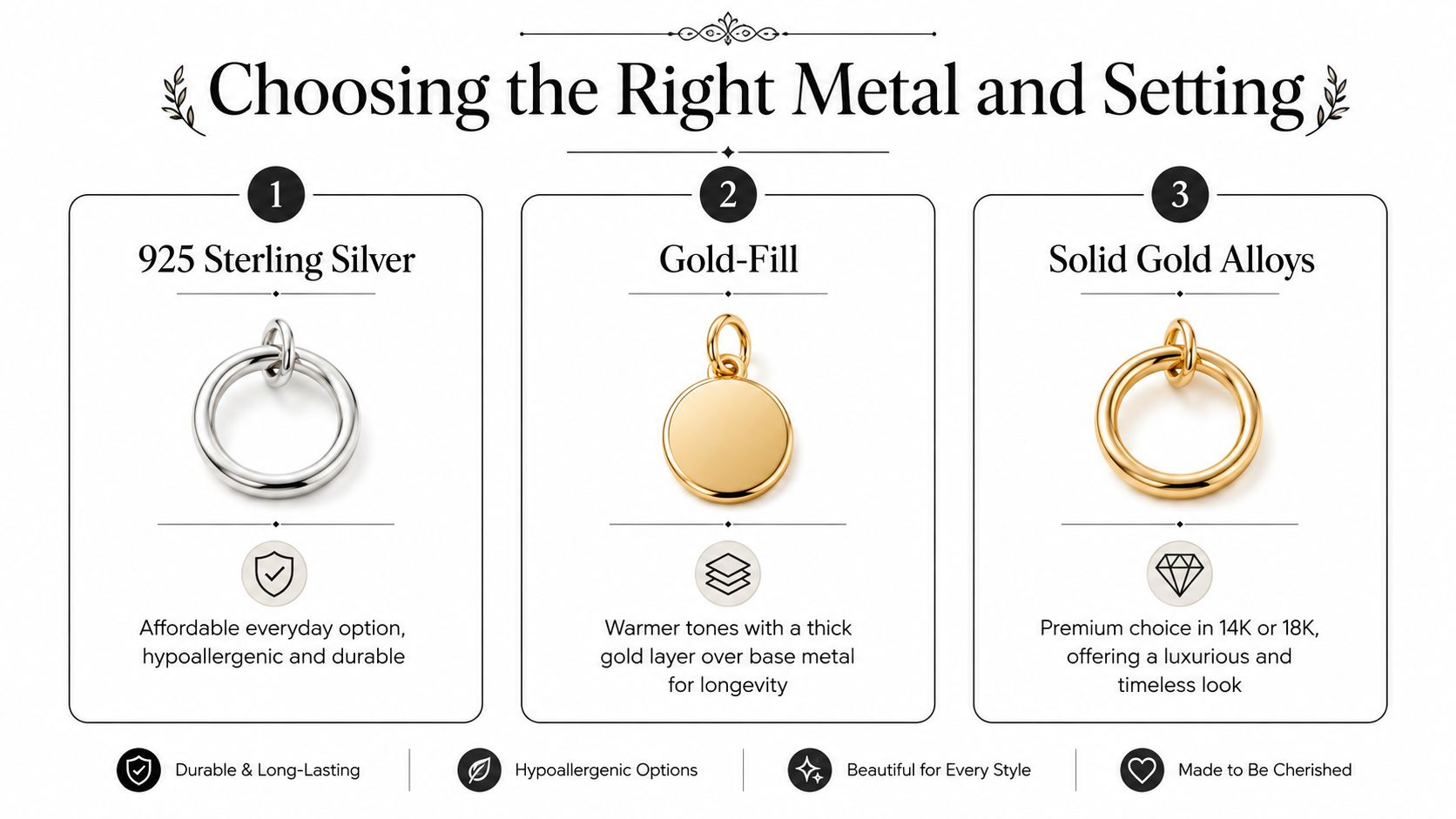
Start with the metal, then evaluate the setting. 925 sterling silver contains 92.5% silver, alloyed with copper for added strength, but it remains softer than gold. Repeated opening, closing, and rubbing can deform thin bails, jump rings, or prongs, especially on a charm that's handled often. The construction implications are covered in this birthstone jewelry care and materials guide.
Silver suits shoppers who want a bright, accessible metal and a cooler color. It can tarnish over time, so routine polishing matters. Gold-fill offers a warmer appearance through a substantial gold layer over base metal, while solid gold alloys provide a premium option with a lasting gold surface. Platinum and stainless steel may appeal to shoppers prioritizing a different balance of durability, color, or skin comfort, but the exact alloy and finish still deserve attention.
Match the setting to the stone
A reinforced bail anchors the charm and reduces stress at the connection point. A thicker jump ring can serve the same purpose when the design uses a separate connector. These details look small, but they carry the repeated motion of a modular ring.
A bezel cup surrounds the stone with metal and shields its edges from side impacts. It's especially useful for emeralds, opals, and other stones that need more protection. A prong setting exposes more of the stone and can return more light, but raised prongs may catch on clothing, gloves, or hair.
A channel-set halo can support smaller accent gems while keeping the profile smoother. For constant wear, a slightly recessed mount generally presents fewer snag points than a tall prong structure. Ask whether the charm can sit close to the band without rubbing against neighboring rings.
For color, match the metal to the recipient's existing jewelry if you can. A mixed-metal stack can look deliberate, but an unplanned mismatch may make the charm appear separate from the ring rather than part of it. More practical guidance on choosing between cool and warm finishes appears in this gold versus silver comparison.
Personalization, Stacking, and Modular Styling
The charm's month is only the starting point. Personalization works best when each detail has a job. An inside-band engraving can carry initials, a short name, or a meaningful date, while the visible charm keeps the design centered on the birthstone.
A small symbol on the charm face can add another layer without competing with the gemstone. Think of a heart for a family gift, a star for a graduation, or a simple letter for a close friend. Keep the visible surface uncluttered if the stone already has a strong color.
Build a stack with a clear story
A modular ring can grow as the wearer's life changes. One charm might represent the recipient's own month. Another can mark a child, partner, sibling, anniversary, or milestone. Several stones can tell a family story, but they don't all need identical shapes or settings.
Use these styling checks:
- Keep the metals related: Match the charm to the base band for a harmonious look, or repeat a second metal elsewhere in the stack so contrast feels intentional.
- Protect visual clarity: Choose stones large enough to read individually, especially when several charms sit together.
- Control movement: Dangle charms add animation, while flush or bezel styles create a quieter profile.
- Repeat one design cue: Similar cuts, matching bezel shapes, or a shared engraving style can unify different months.
A guide to stacking rings can help with spacing and proportion, but the ring charm introduces an extra question: where should the charm sit? Center it for a focal point, place it slightly to one side for an asymmetric look, or use two opposing charms to balance movement.
Minimal styling usually wins when the gift needs to feel refined. One stone in a clean bezel is easy to wear and gives the month a clear role. Layered halos, mixed cuts, and multiple charms suit someone who enjoys expressive jewelry, but too many details can make a small ring look busy.
Picking the Perfect Gifting Occasion
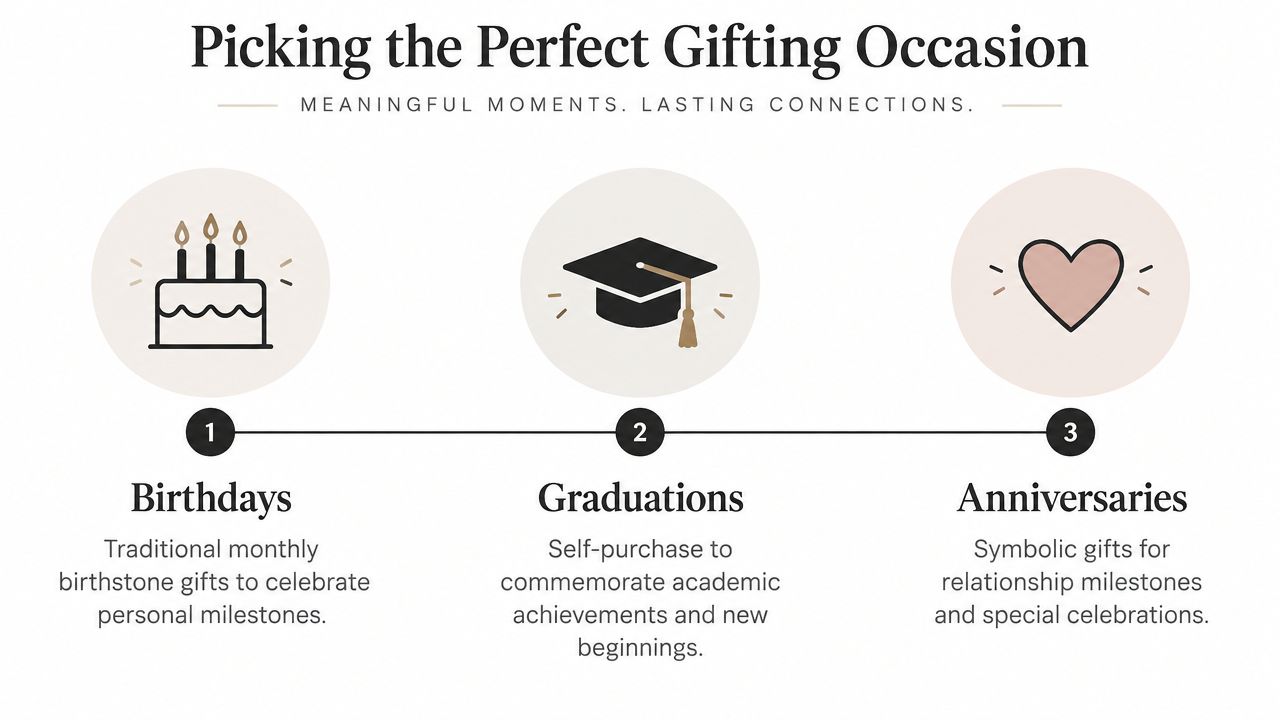
A birthstone ring charm works best when the occasion calls for something personal but not overly ceremonial. Birthdays are the obvious starting point because the month gives you a clear design direction. The recipient's own stone can mark a personal celebration, while a partner's or child's stone can turn the gift into a relationship keepsake.
Match the format to the recipient
For a graduation or first job, a ring charm can serve as a small personal marker that the wearer adds to an existing stack. It feels celebratory without carrying the same expectation as a major statement ring. The recipient can also move it between compatible bands as their style changes.
For a close friend, a ring charm may be more distinctive than another necklace charm, especially if their wardrobe already includes layered pendants. A month connected to a birthplace, shared trip, or memorable event can make the gemstone function like a compact souvenir.
Family gifts benefit from modularity. Siblings can receive related charms, or one recipient can build a set representing children and loved ones. Each addition becomes understandable on its own while still contributing to a larger story.
Consider these occasions:
- Bat mitzvahs and quinceañeras: A birth month charm can mark a significant transition in a format that feels personal and wearable.
- Retirement: The stone can represent the recipient's month while the ring becomes a reminder of a new chapter.
- Recovery gifts: A carefully chosen charm can carry encouragement without making a medical claim about the gemstone.
- Anniversaries: A partner's birthstone or the month of the relationship can add symbolism without making the piece engagement-coded.
The honest limitation matters too. A ring charm isn't ideal for someone who dislikes rings, removes jewelry constantly, or is too young to wear a small loose component safely. In those cases, a necklace or larger fixed piece may be more comfortable.
Care, Troubleshooting, and a Quick Decision Checklist
Start care with prevention. Remove the ring before gym work, swimming, gardening, household cleaning, or contact with chemicals. Store each charm in a soft pouch or separate compartment so exposed metal edges and stones don't scratch neighboring pieces.
After wear, wipe the charm with a microfiber cloth. This removes body oils that can dull the appearance of faceted stones. Durable stones may tolerate mild soap and water, but emeralds, opals, and other inclusion-rich or water-sensitive gems should avoid ultrasonic cleaning and sudden temperature shifts, as outlined in this jewelry care guide. Clean gently unless the seller or jeweler gives specific instructions.
Solve common problems early
- Loose bail: Stop wearing the charm until a jeweler checks the connector. A professional can close or replace the component before the charm falls away.
- Spinning charm: Check whether the loop is too large for the band or whether the base ring is unusually thin. A jeweler may add a stabilizing connector or recommend a better-matched band.
- Cloudy faceted stone: Wipe it first with a clean microfiber cloth. If the haze remains, ask a jeweler to inspect residue, surface damage, or a compromised treatment rather than using aggressive cleaning.
- Sterling silver tarnish: Use a jewelry-safe polishing cloth and light pressure. Avoid polishing directly across a delicate stone or textured finish without confirming the method.
- Bent prong or chipped stone: Set the ring aside immediately. A jeweler can assess the mount, but continued wear can turn a small repair into a lost gemstone.
Sleeping in the ring depends on the design and your comfort. A low-profile, secure charm may be fine for some wearers, but remove it if the setting catches on bedding, the finger swells, or the charm presses against neighboring fingers. Nighttime removal also gives you a chance to inspect the bail and setting regularly.
Your buying checklist
- Confirm the month: Verify the recipient's preferred birthstone if multiple traditions are available.
- Check the lifestyle: Decide whether the ring will face frequent hand use or occasional wear.
- Assess the stone: Prioritize hardness, toughness, and stability together.
- Choose protection: Select a bezel, recessed mount, or reinforced halo for vulnerable stones.
- Measure compatibility: Match the charm loop to the base band's thickness.
- Select the metal: Coordinate with existing jewelry or choose a deliberate mixed-metal plan.
- Review the profile: Avoid tall settings if snagging is likely.
- Plan personalization: Add engraving or a small motif only if it strengthens the meaning.
- Decide on modularity: Choose one charm for simplicity or several for a family and milestone story.
- Prepare the presentation: Confirm packaging, care instructions, and a gift message before checkout.
For a personalized birthstone ring charm, browse EP Fine Jewelry, where you can explore personalized jewelry, charms, rings, and gift-ready options. Choose a stone and setting that fit the recipient's lifestyle, then use the available gift packaging and order notes to make the finished present feel considered from the start.