
You notice it while getting dressed: the necklace you wear every day looks cloudy, your ring has lost its sparkle, or a stone catches on the sleeve of your favorite sweater. Nothing dramatic happened, yet the piece no longer looks or feels quite right.
Jewelry usually changes through repeated small exposures to water, lotion, sweat, perfume, friction, and careless storage. The good news is that jewelry care instructions don't need to become a complicated chore. A gentle cleaning routine, material-aware habits, sensible storage, and regular professional checks can protect both the appearance and the structure of your pieces.
Table of Contents
- Why Jewelry Care Instructions Actually Matter
- The Gentle Cleaning Method That Works for Almost Everything
- Care by Material From Gold to Pearls
- Cleaning Mistakes That Cause Permanent Damage
- Smart Storage and Travel Habits
- When to See a Professional Jeweler
Why Jewelry Care Instructions Actually Matter
A ring worn every day collects residue around its setting. A bracelet rubs against desks, sleeves, and other jewelry. A necklace may rest against skincare products before they have fully absorbed. Each contact seems harmless, but repeated exposure can dull surfaces, wear finishes, and hide early problems such as a loose clasp or moving stone.
That's why care is less about restoring a piece after something goes wrong and more about noticing what your jewelry encounters during ordinary life. Remove pieces before activities that involve water, chemicals, heat, or impact. Wipe them gently after wear, and give each item a place where it won't rub against harder materials.
Sterling silver can change appearance through normal exposure to air and moisture. If your favorite silver piece is beginning to look darker, these sterling silver tarnish care tips can help you understand what you're seeing without mistaking routine tarnish for permanent damage.
A simple ownership system
Think of care in four connected parts:
- Cleaning: Remove surface oils and buildup with the least aggressive method that suits the piece.
- Prevention: Take jewelry off before swimming, showering, exercising, or using products that may leave residue.
- Storage: Keep pieces separate, dry, and protected from friction.
- Servicing: Have settings, clasps, and worn surfaces examined before a small defect becomes a lost stone or broken component.
A daily ring and an occasional pair of earrings won't face exactly the same risks. A charm necklace may combine several metals and stones, so one part can be far more sensitive than the rest. The safest routine always begins by identifying the materials, then choosing care based on the component that needs the most protection.
Jewelry care is a small habit repeated often, not a rescue project after damage has occurred.
The Gentle Cleaning Method That Works for Almost Everything
For many colored gems and everyday jewelry pieces, the safest starting point is deliberately simple. The Gemological Institute of America's jewelry care guidance recommends warm water, mild dish soap, a soft brush, and a lint-free cloth. This method avoids strong chemicals and aggressive friction, which is why it works as a practical baseline for many rings, bracelets, necklaces, charms, and earrings.
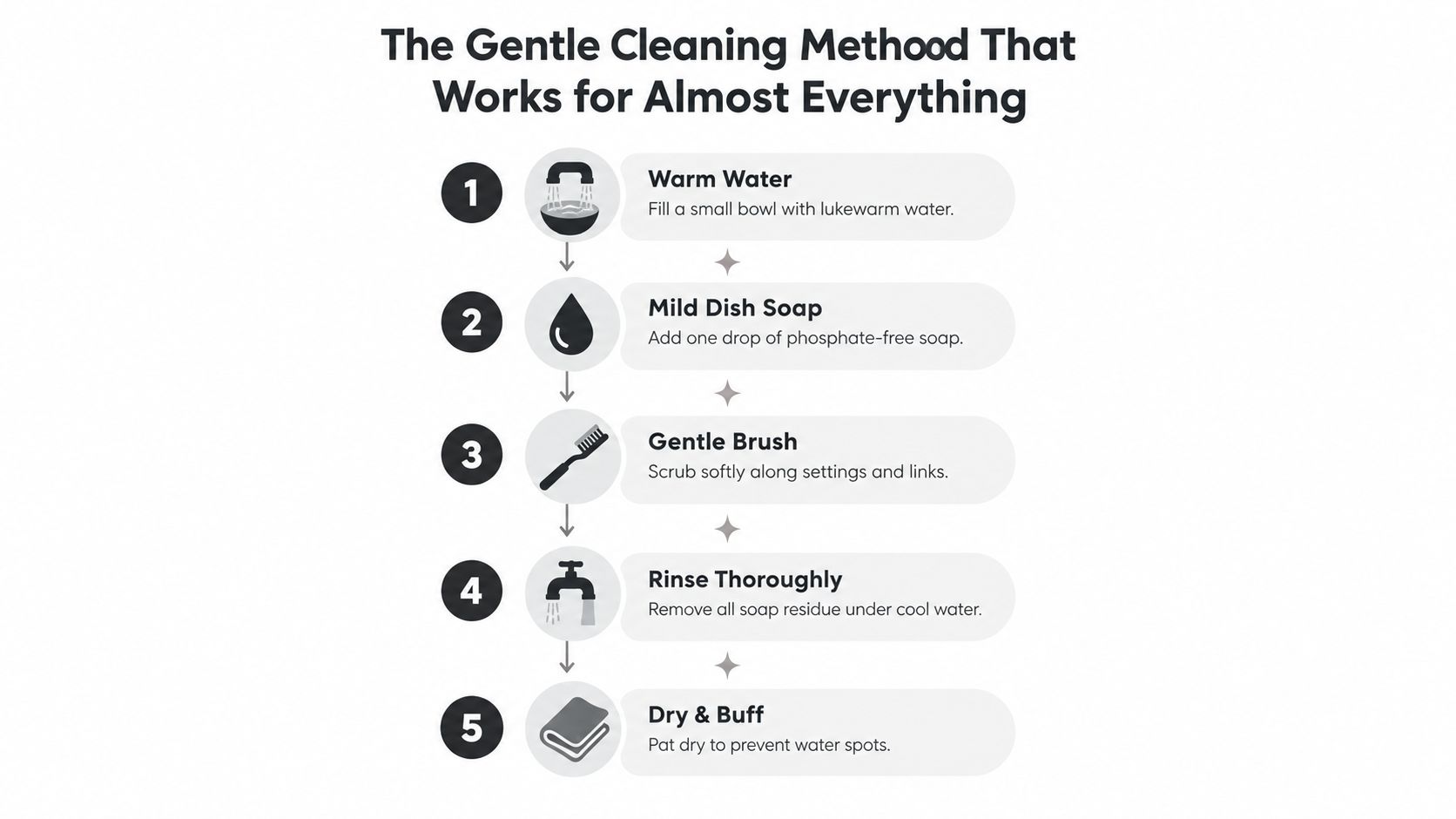
Follow these five steps
- Prepare warm water. Fill a small bowl with comfortably warm water. Avoid very hot water, especially when you don't know how a stone has been treated or mounted.
- Add mild soap. Mix in a small amount of mild dish soap. You only need enough to loosen everyday oils and residue. Harsh detergents can affect finishes and may be unsafe for sensitive materials.
- Brush lightly. Use a clean, soft-bristled brush. Work around settings, links, and the underside of a stone with gentle movements. Scrubbing harder won't make a delicate surface safer or cleaner.
- Rinse carefully. Remove all soap residue with clean water. If you're using a sink, close the drain or place a mesh strainer over it before rinsing. A small clasp or charm can disappear quickly down an open drain.
- Dry completely. Pat the piece with a lint-free cloth, then allow it to finish drying before storage. Remaining moisture can leave marks and is especially unhelpful for silver and pieces with multiple components.
The routine is suitable as a baseline, not a universal permission slip. Before submerging a piece, check whether it contains pearls, opals, porous materials, fracture-filled stones, or delicate components that need a different approach.
Apply the weakest-component rule
The most important decision is not “What is the metal?” It's “What is the most delicate part of this piece?”
A gold chain with a pearl pendant shouldn't automatically receive the same treatment as a plain gold chain. A personalized necklace may combine a durable metal charm with a sensitive stone or decorative inlay. A ring with a hard center stone may still have a plated surface, glued detail, or vulnerable accent component.
Weakest-component rule: Choose the cleaning method that's safe for the most delicate material in the entire piece.
When you're unsure, use a barely damp soft cloth and ask a jeweler before applying a solution or using vibration. A gentler method may take longer to remove buildup, but it reduces the chance that a cleaner safe for one component will harm another. For plated pieces, these gold-plated jewelry care instructions provide a useful material-specific reference.
Care by Material From Gold to Pearls
Material changes the answer. Gold, silver, cubic zirconia, pearls, and opals don't share the same tolerance for moisture, friction, chemicals, or cleaning equipment. Start with the table below, then use the more detailed notes to adapt the routine to your own piece.
Quick Care Guide by Material
| Material | Safe Cleaning | Key Warning |
|---|---|---|
| Gold | Warm water, mild dish soap, soft brush, and lint-free cloth when the design and stones allow it | Gold can scratch, and settings still need inspection |
| Gold-plated jewelry | A soft, slightly damp cloth and restrained handling | Repeated rubbing and strong cleaners can wear the plated finish |
| Sterling silver | A soft cloth or silver-specific polishing cloth for suitable pieces | Air, moisture, and chemicals can encourage tarnish |
| Diamonds and cubic zirconia | Gentle soap-and-water cleaning when the setting is secure and treatments aren't a concern | Hard stones can still chip, loosen, or sit in a vulnerable setting |
| Pearls | Wipe gently with a soft, damp cloth, then dry | Avoid soaking, harsh products, ultrasonic cleaning, and steam |
| Opals | Use a cautious, material-appropriate wipe and keep them away from aggressive cleaning | Porous or sensitive structure can react badly to chemicals, heat, or vibration |
| Mother-of-pearl and other ornamental materials | Use the least aggressive method, usually a soft damp cloth | The surface can be damaged by cleaners that are safe for metal |
Gold jewelry often tolerates the gentle soap-and-water baseline, but its exact care still depends on the stones and construction. A gold-plated ring, including a fashion ring with cubic zirconia, deserves a lighter touch because rubbing can gradually affect the visible finish. Don't polish plated jewelry aggressively or treat it as though the base metal were exposed and ready for heavy cleaning.
Sterling silver naturally needs attention to its surface. Store it in a dry place, keep it away from bathroom humidity, and use a suitable polishing cloth when light tarnish appears. Avoid assuming that a silver-cleaning product is safe for every stone attached to the piece.
Diamonds and cubic zirconia can look dull when residue collects beneath them. Gentle brushing can reach those areas, but the setting matters just as much as the stone. If the piece includes another, more sensitive material, the weakest-component rule takes priority.
Pearls, opals, mother-of-pearl, and similar materials need more restraint. Growing interest in material-specific care products reflects a real ownership problem, mixed-material jewelry is often treated too broadly in general care advice. Recent market coverage of jewelry care products also distinguishes between general cleaners and gentler options for sensitive materials.
For a charm necklace or personalized item, do not clean each component according to its own ideal method while the piece is assembled. Protect the weakest component first. If you cannot identify that component confidently, stop at a soft cloth and seek material-specific guidance. A June birthstone ring, for example, should be cared for according to its actual stone and setting, not just according to the appearance of its metal.
Cleaning Mistakes That Cause Permanent Damage
More cleaning isn't always better cleaning. A powerful machine or strong chemical may remove grime quickly while also loosening a setting, clouding a stone, or damaging a surface that can't be restored at home.
Ultrasonic cleaning is the clearest example. It can be appropriate for durable, untreated stones in intact settings, but it becomes risky when the stone or mounting is vulnerable. Guidance on ultrasonic cleaning and diamond jewelry safety warns about porous organics, fracture-filled stones, opals, pearls, amber, and worn prongs or solder joints.
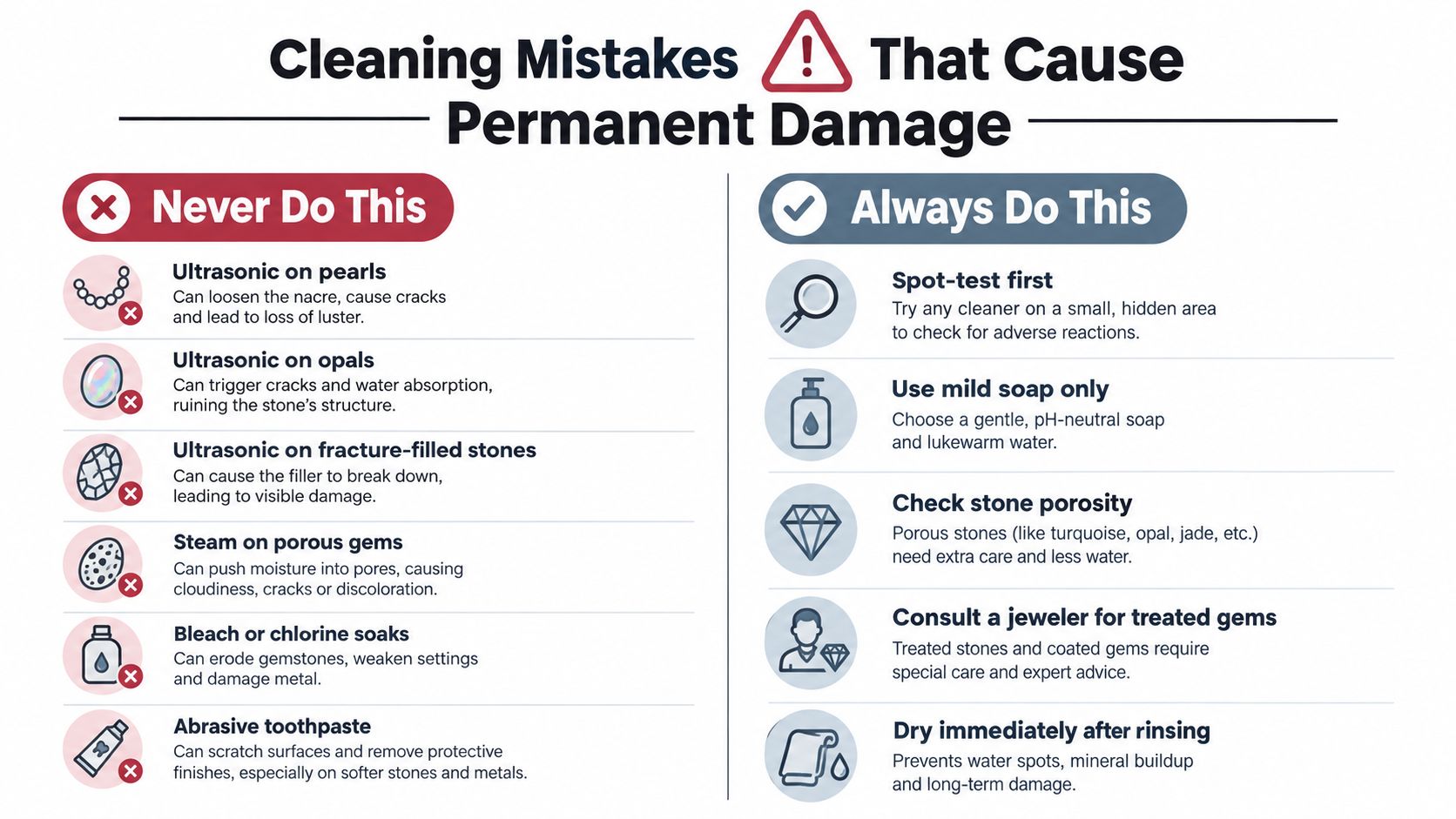
Common shortcuts to skip
- Don't use ultrasonic cleaning blindly. Vibration can worsen pre-existing wear and may loosen stones held by weak prongs.
- Don't use abrasive toothpaste. It may scratch metals and finishes even when the jewelry looks sturdy.
- Don't soak everything in bleach or chlorine. Chemical exposure can weaken some metals and joints.
- Don't steam porous or sensitive gems. Heat and moisture can be unsuitable for materials that absorb or react to them.
- Don't scrub plated finishes. Strong friction can remove the visible layer you're trying to preserve.
- Don't rinse over an open drain. Secure the drain before handling small pieces.
A single unsafe cycle can create irreversible damage. If a ring has worn prongs, a loose stone, or a solder joint that already looks questionable, cleaning won't solve the structural problem. Have the piece assessed first.
Remove jewelry before risky activities
Take off rings, necklaces, bracelets, and earrings before swimming, showering, exercising, using a hot tub, or handling household chemicals. Water and products can leave residue, while impact and sweat can place extra stress on settings and finishes.
If a piece has already been exposed, rinse only when its materials allow it, dry it carefully, and inspect it under good light. For plated jewelry, these gold-plated jewelry longevity guidelines can help you distinguish normal finish wear from a problem that needs assessment.
Smart Storage and Travel Habits
A clean piece can still become damaged in the jewelry box. Chains knot when they move freely, metal surfaces scratch when they rub together, and plated finishes can wear when pieces slide against one another. Storage prevents those problems before a cleaning routine is needed.
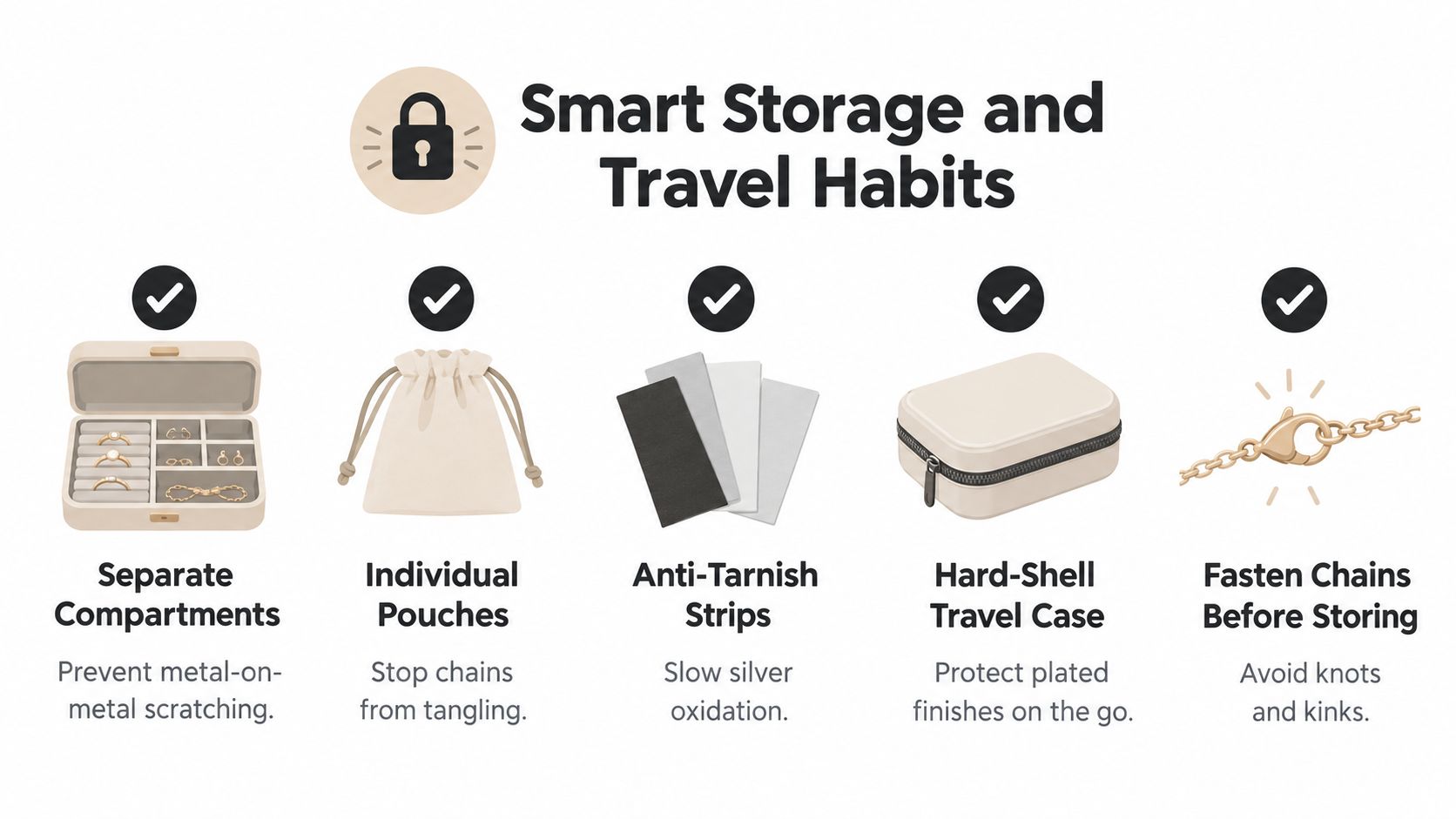
Give every piece its own space
Use an individual soft pouch, a lined compartment, or a divided jewelry box. Fasten necklace clasps before putting them away, and keep bracelets from sharing a tight compartment with rings or charms. Separation matters particularly for pieces with stones or finishes that can mark neighboring surfaces.
Silver benefits from a dry storage environment and an anti-tarnish strip. Keep the box away from a humid bathroom, where steam and changing moisture levels make storage less predictable. A bedroom drawer or closet is generally more practical than a sink-side dish.
Pack for the journey, not just the destination
For a wedding weekend, place each bracelet in its own pouch instead of putting a whole stack into one pocket. For a personalized necklace worn every week, fasten the chain, place it flat or loosely coiled in a soft case, and keep the pendant from pressing against harder items.
A small hard-shell travel case adds protection inside luggage. Valuable jewelry should stay in your carry-on rather than checked baggage, and pieces should be kept separate from toiletries that could leak. After travel, inspect clasps and settings, wipe away surface residue with a suitable cloth, and return each item to its normal storage place.
Before storing or packing, check that you have:
- Separate protection: One pouch or compartment for each piece.
- A secured chain: Fasten clasps to reduce knots and kinks.
- Dry surroundings: Keep jewelry away from bathroom humidity.
- Tarnish support: Use an anti-tarnish strip for suitable silver storage.
- A protected case: Choose a firm travel case when pieces will move inside luggage.
When to See a Professional Jeweler
Home care can remove residue, but it can't safely correct a worn prong, failing clasp, bent mounting, or stone that moves in its setting. Stop wearing a piece when you feel or hear a stone click, see a prong leaning away from the stone, notice a deep new scratch, or find that a clasp no longer closes securely.
Professional inspection is also appropriate when a piece has been exposed to an unsafe cleaner, vibration, impact, or repeated high-wear activity. A jeweler can identify structural wear that isn't obvious when the jewelry is just sitting on a table. Don't keep cleaning a problem that needs repair.
Use a regular service rhythm
Jewelers of America's jewelry care guidance recommends professional cleaning at least annually and checks every six months for loose prongs. The organization also highlights removing jewelry before swimming, showering, exercise, and hot-tub exposure. These intervals are especially useful for rings and other pieces worn frequently, because daily contact can affect settings before the damage becomes visible.
A practical routine looks like this:
- Every day: Remove jewelry before water, exercise, sleep, swimming, and product application when appropriate. Notice changes in shine, fit, clasps, and settings.
- During regular home care: Use the suitable gentle method for the piece, or choose a soft cloth when the material is delicate or uncertain.
- At scheduled service: Ask for cleaning and an inspection of prongs, mountings, clasps, links, and visible wear.
- Immediately after a warning sign: Stop wearing the item and arrange an assessment rather than testing it with more brushing or an ultrasonic machine.
Resizing is another reason to consult a professional. If a ring feels too tight or loose, guidance on whether rings can be sized up can help you understand why design, stone placement, and construction affect the available options.
The safest jewelry care instructions are easy to remember: keep exposure low, clean gently, store pieces separately, follow the weakest-component rule, and ask for professional help when the structure is uncertain. That routine protects the appearance you enjoy and the small parts that keep each piece wearable.
EP Fine Jewelry offers personalized jewelry, charm necklaces, rings, bracelets, necklaces, and earrings, with care guidance to support ownership after purchase. Visit EP Fine Jewelry to explore pieces and choose jewelry you can care for confidently from the start.