
You've found the necklace, checked the chain length, and picked the gift message. Then you open the box and see the chain twisted into a knot, the pendant sliding around in a bed of empty space, or the lid crushed at one corner. A beautiful necklace can look careless when its packaging is the wrong size.
The right jewelry gift box for necklaces has two jobs. It keeps the piece still and protected, then creates a clean, deliberate unboxing moment. The choice comes down to fit, insert design, closure, presentation, sustainability, and whether you should buy a box separately or add one during checkout.
Table of Contents
- Why the Right Box Matters for a Necklace Gift
- Getting the Size and Fit Right First
- Padding and Inserts That Actually Protect the Chain
- Closures and Presentation for the Unboxing Moment
- Eco-Friendly and Reusable Box Options
- Adding a Gift Box at Checkout the Easy Way
- Final Tips for a Picture-Perfect Necklace Gift
Why the Right Box Matters for a Necklace Gift
The night before a birthday, a gift-giver often makes the same mistake. They place a delicate chain inside the prettiest box they can find, add a little tissue paper, and assume the necklace will stay put. By the next morning, the chain has threaded itself around the clasp, the pendant has shifted to one corner, and the tissue has done nothing to stop it.
Necklaces are harder to package than many other jewelry pieces because the chain has a path to follow. It can loop, snag, twist around a pendant bail, or catch on rough edges inside the box. A fragile clasp can also scratch the pendant when the two pieces move together. A box that looks generous on a product photo may be completely wrong once the necklace is inside.
The commercial demand for this format is substantial. The global jewelry packaging market was valued at $3.8 billion in 2025 and is projected to reach $6.2 billion by 2034, with boxes holding the largest product-type share at 32.4%, according to Verified Market Reports' jewelry packaging market data. A necklace gift box sits inside that larger premium presentation market, so you don't need to treat it as an afterthought.
Practical rule: Choose the interior first. The lid, ribbon, and finish matter only after the necklace has a secure place to sit.
The dedicated demand is visible too. Necklace and pendant boxes accounted for approximately 24.3% of jewelry gift box segment revenue in 2025, while another jewelry boxes estimate puts necklace boxes at 20.6% of product-type revenue, as reported in Dataintelo's jewelry gift box market overview. That reflects a simple buying reality: necklaces need packaging designed around chains, pendants, clasps, and removal.
The rest of your decision is practical. Check the box dimensions, inspect the insert, match the closure to the occasion, confirm the materials, and decide whether a store-supplied box gives you a better fit than a box bought on its own.
Getting the Size and Fit Right First
A necklace box should be chosen from the jewelry outward, not from the exterior inward. Start with the necklace itself, then select an interior that controls every moving part.
Measure the necklace before choosing the box
Record three details:
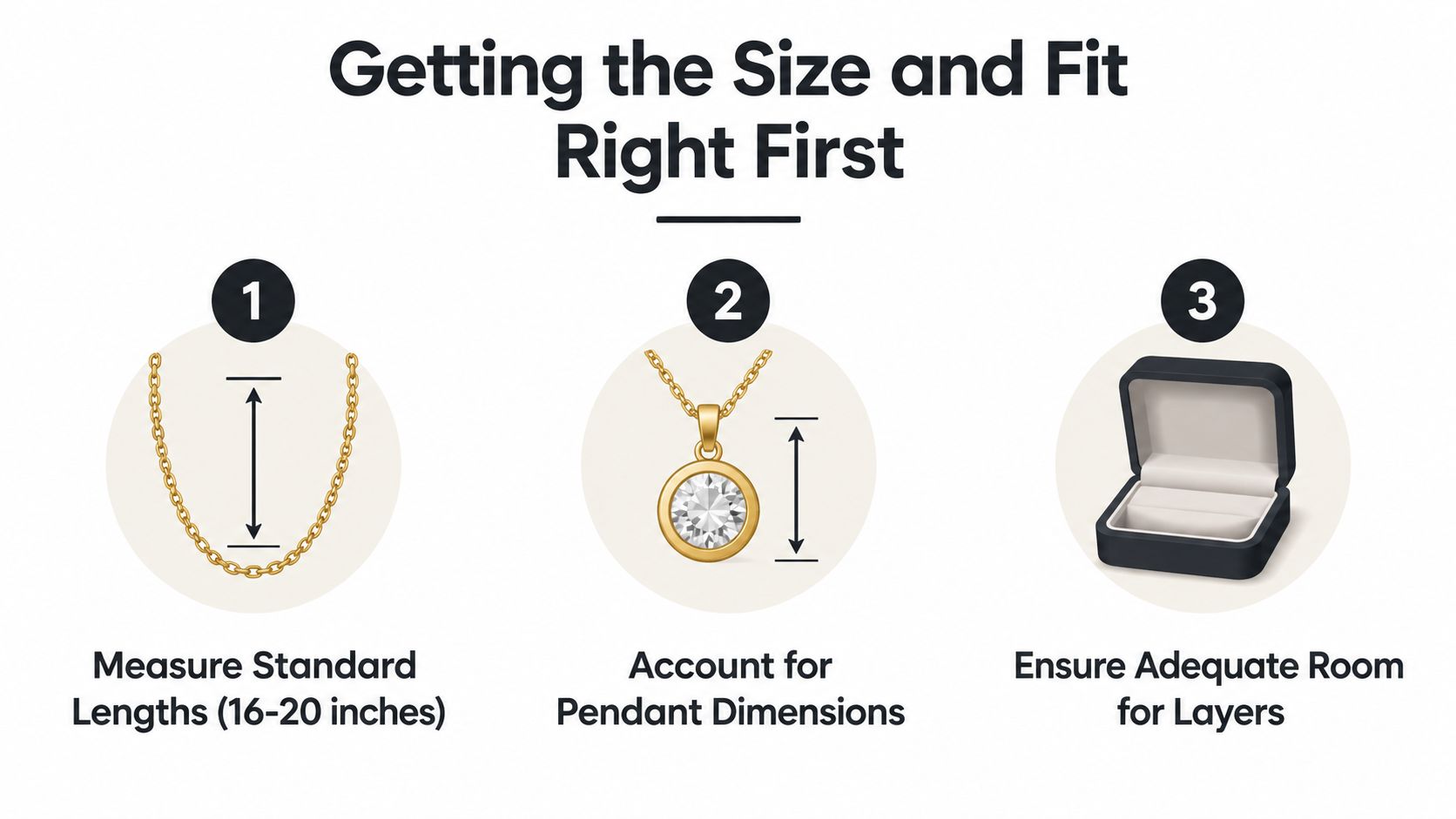
- Chain length: Measure the chain laid flat. A short chain and a longer chain need different routes through an insert. Standard lengths around 16 to 20 inches can behave very differently once folded into a small presentation box. The small cardboard jewelry gift box sizing guide also highlights the need to account for the chain path, clasp pocket, and removal point, rather than relying on a generic box size.
- Pendant dimensions: Measure the pendant's height, width, and depth. Include the bail, the small loop that connects the pendant to the chain. A flat disc needs less depth than a raised stone setting or a dimensional charm.
- Chain thickness: A fine cable chain can sit in a narrow channel. A chunky chain, bead chain, or layered necklace needs more room and a stronger hold. If the channel is too narrow, the chain may press into itself or pull against the clasp.
Look inside the insert
The insert should provide three distinct controls:
- A chain path: This is the channel, groove, hook, or winding route that keeps the chain from looping into itself. A piece of foam with no defined route isn't enough for a fine chain.
- A clasp pocket: The clasp should have its own recess or opening. If it rests against the pendant, it can scratch the surface or create an awkward bulge under the lid.
- A removal point: Look for a notch, ribbon tab, lifted edge, or open section that lets the recipient pick up the chain without digging a fingernail into the insert.
Consider a pendant necklace with a 16-inch chain, a pendant that is wider than the chain, and a clasp that sits close to the pendant when the necklace is folded. The correct insert would hold the pendant in a centered recess, route the chain through a shallow channel around it, place the clasp in a side pocket, and leave a small lift point at the top. A plain rectangular cushion might fit the necklace physically but still allow the clasp to snag during removal.
Compare the fit by necklace type
| Necklace type | Interior fit need | Common pitfall |
|---|---|---|
| Fine short chain | Narrow chain channel and small clasp pocket | Folding the chain into a loose loop |
| Pendant necklace | Centered pendant recess with clearance around the bail | Letting the pendant slide beneath the chain |
| Chunky chain | Wider, deeper route with firm hold points | Compressing links into a shallow groove |
| Layered necklace | Separate paths or a larger structured insert | Packing several chains into one channel |
| Long necklace | Longer fold path with controlled anchor points | Choosing a small box and creating tight bends |
An oversized interior is not a safer choice. Free space gives the chain room to travel, and travel creates tangles. If you can't identify where the chain, clasp, and pendant will sit, skip the box no matter how luxurious the exterior looks.
Padding and Inserts That Actually Protect the Chain
The insert does more protective work than the box covering. A rigid outer shell can still deliver a damaged necklace if the jewelry moves freely inside it.
Choose the insert by necklace structure
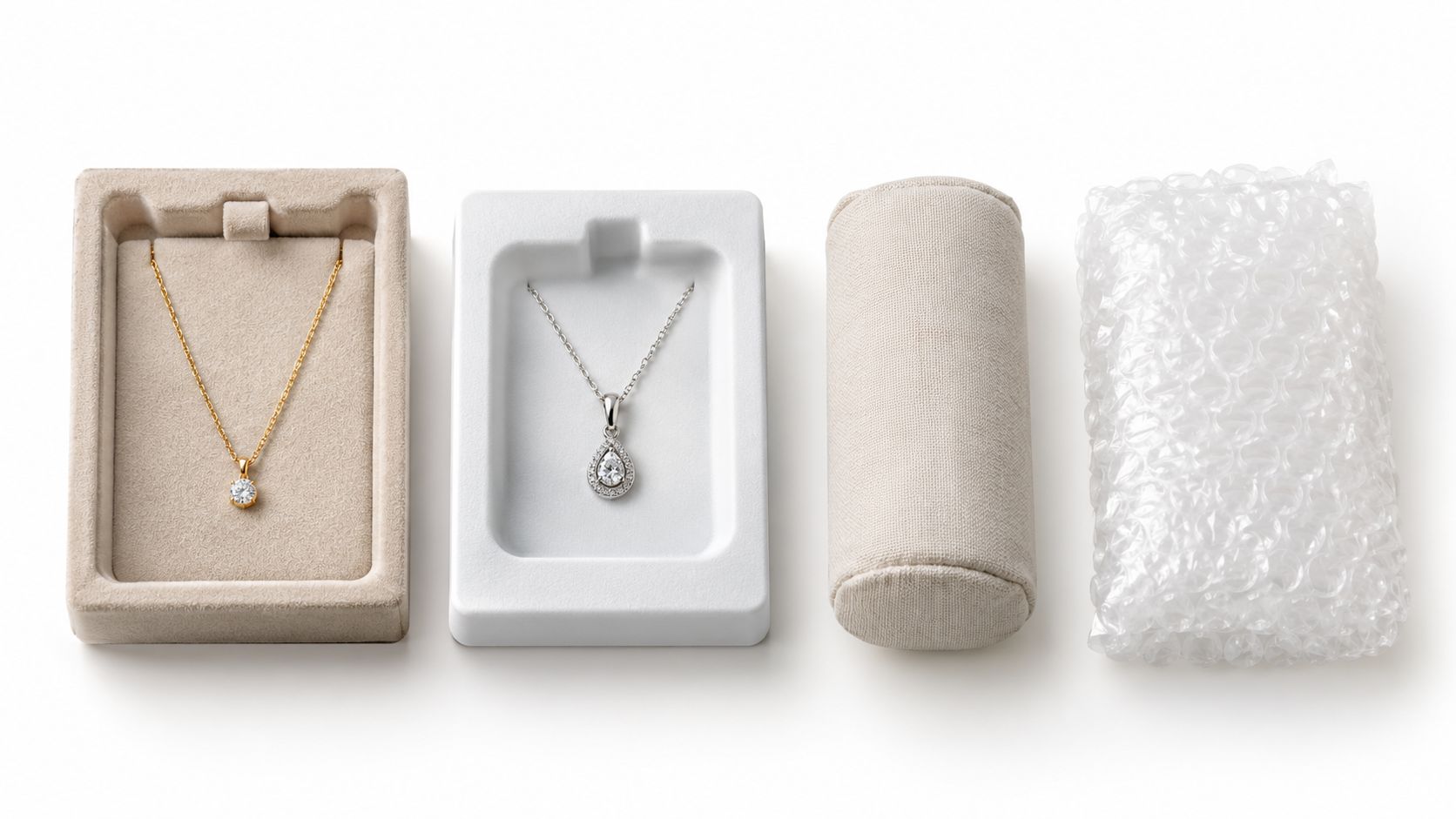
Molded EVA with a velvet lining is my first choice for a pendant necklace. Molded EVA can create a shaped recess that stops the pendant from sliding, while the velvet gives the piece a soft contact surface. This combination works particularly well when the pendant has height, corners, or a stone setting.
Velvet-lined foam suits lighter pendants and everyday chains. It should still include a channel, slit, or anchor point. Velvet alone looks attractive, but it doesn't immobilize a chain.
A fabric cushion roll works for a simple chain with a small or flat pendant. The chain wraps around the roll, which reduces loose loops and makes the necklace easy to see. It isn't the right choice for a large pendant that needs a dedicated recess.
Loose bubble wrap belongs around the inner box or inside the shipping layer, not as the main presentation insert. It cushions impact, but it doesn't provide a reliable chain route. A necklace wrapped loosely can still tangle, and the bubbles can press unevenly against a raised pendant.
For chains, coil-style securing and anti-tangle packaging are more useful than adding soft material. ClickPost's jewelry shipping guidance recommends a snug inner presentation box, an outer corrugated mailer with at least 2 cm of cushioning on every side, coil-style securing, and foam inserts over loose bubble wrap for items prone to dents.
The safest package controls movement twice. The inner insert holds the necklace, and the outer mailer absorbs handling shocks.
Use the inner box for presentation and the outer mailer for transit protection. Don't fill a large mailer with a single small box and assume the void space will protect it. A secure insert is also useful after the gift is opened, because the recipient has a place to store the necklace without throwing away the original packaging. For travel-specific storage ideas, see this guide to storing jewelry when traveling.
If the necklace has a heavy pendant, choose the molded insert. For a plain chain, choose a cushion roll or a structured velvet insert. Avoid a roomy box with soft wrapping as the only restraint, because it solves appearance while leaving the actual tangling problem untouched.
Closures and Presentation for the Unboxing Moment
A closure changes how the gift feels before the recipient sees the necklace. It also affects whether the box stays shut during handling.
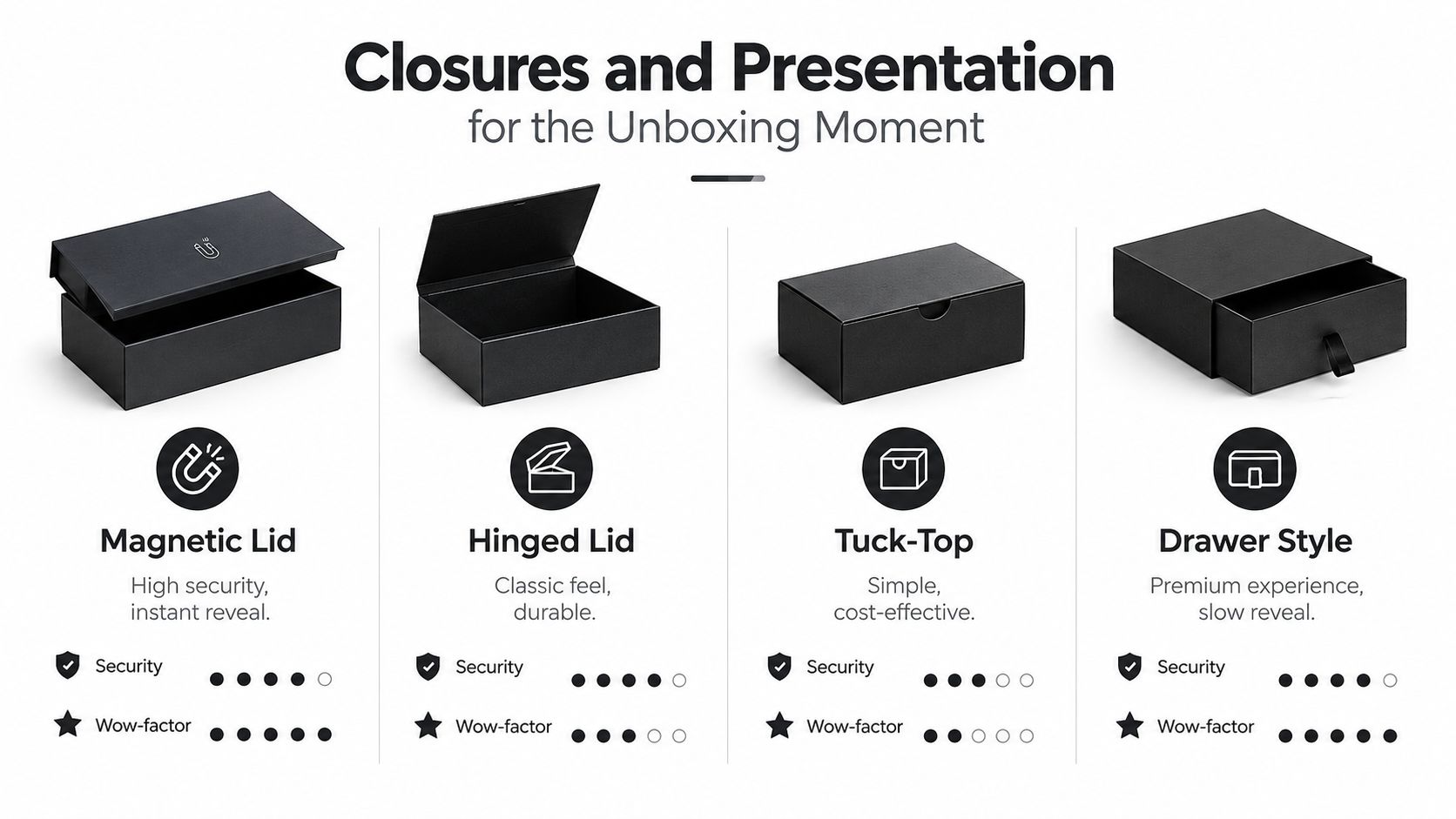
A magnetic lid gives an immediate, clean reveal. It feels appropriate for an anniversary, milestone birthday, or any gift where the presentation is part of the message. A hinged lid has a traditional jewelry-box feel and usually makes the piece easy to display without removing the lid completely.
A tuck-top box is practical and cost-conscious. It works for a casual birthday gift, a small thank-you, or packaging that will be discarded after opening. A drawer-style box creates a slower reveal and can feel especially considered, but the drawer needs enough clearance to open smoothly without catching the insert or necklace.
The closure can't rescue a weak structure. An independent packaging case study reported that replacing a flimsy tuck-top with a 1,200 GSM magnetic rigid box, a high-density molded EVA insert, and velvet lining reduced transit damage from 8.0% to 0.4% over four months. The case study also reported that the package was validated with a six-foot drop before tooling, with the rigid insert preventing sliding and scratching, as described in this jewelry packaging case study.
That evidence points to a useful distinction. A premium closure matters most when the insert and outer structure are equally serious. A magnetic lid on a flimsy shell is theater without protection.
Match the finish to the occasion
For a romantic or formal gift, use a rigid magnetic or hinged box, then add one restrained detail such as a ribbon or sleeve. For a friendly, casual gift, a neat tuck-top box and a handwritten note are enough. The note often does more emotional work than extra layers of packaging. A short message can be planned with this gift message card guide.
Don't confuse a statement piece with a necklace. A product such as the Two Finger Twist Ring has its own fit requirements because it fits on two fingers and should be chosen by the smaller size. That kind of item needs a different insert strategy from a chain, which is another reason a universal jewelry box is rarely ideal.
Eco-Friendly and Reusable Box Options
A sustainable necklace box still needs to protect the chain and suit the recipient's habits. Choose materials with the full package in mind, including the box body, chain path, clasp pocket, pendant clearance, insert, finish, and closure. A box that looks green but tangles the necklace or gets discarded after one use has missed the practical goal.
Before buying, ask what the box is made from, what has been added to it, and whether the recipient will reuse it. The guidance in this jewelry gift box packaging guide is useful when comparing materials and construction.
A recycled paperboard box with a simple paper insert is usually easier to sort and recycle than a heavily decorated rigid box. Foil stamping, plastic lamination, magnets, and foam inserts can complicate disposal or keep individual components out of the same recycling stream. Recycled content alone does not make the finished package easy to recycle.
Compare the main options
Recycled paperboard is the practical choice when reducing waste matters more than creating a keepsake. It can still look polished with a strong fold, clean printing, and a paper insert shaped to keep the necklace from sliding.
Compostable inserts reduce reliance on foam, but follow the maker's disposal instructions. “Compostable” does not mean the insert belongs in every household compost bin. The box body may also contain coatings or mixed materials.
Reusable keepsake boxes make sense when the recipient will store jewelry, pack for travel, or keep small personal items inside. Choose a sturdy format that can handle repeated opening and closing. A decorative box that looks good once creates more waste without offering much value afterward.
Metal tins are durable and reusable, especially for a casual or vintage-inspired gift. They feel less like traditional jewelry presentation, and the interior still needs a soft, secure way to hold the necklace, clasp, and pendant.
Accio's jewelry packaging trend coverage identifies paper, cardboard, repurposed textiles, compostable inserts, keepsake boxes, and metal tins as alternatives to conventional jewelry packaging. It also reports that 73% of premium consumers in North America and Europe placed rising value on sustainability in a 2025 survey, compared with 58% in 2022. Choose materials the recipient can understand, separate, and use.
Ask one practical question: Will this packaging be reused, recycled, or thrown away immediately?
For a necklace mailed to someone who keeps presentation boxes, choose a reusable case. For a thank-you gift opened once, choose compact paperboard with a paper insert. If sustainability matters to the recipient, check whether the insert, magnets, coating, and decorative finish can be separated before buying.
Adding a Gift Box at Checkout the Easy Way
Buying a standalone box gives you more control, but it also creates another fit problem. You have to compare internal dimensions, transfer the necklace safely, and hope the box arrives before the gift date. Adding a box during checkout is simpler when you want the jewelry store to handle the presentation.
Use the store's gift option
At EP Fine Jewelry, the shopping flow includes an optional gift box add-on at checkout. The practical sequence is straightforward:
- Add the necklace to your cart.
- Select the gift box option when it appears in the shopping flow.
- Use the order notes field for a gift message or special handling instruction.
- Review the final order before payment.
This route gives you less choice over the exact box material and closure, but it removes the most important uncertainty: whether the box is intended for that piece. The necklace and packaging are prepared together, so you aren't trying to retrofit a chain into a generic case at home.
Decide whether convenience wins
Choose the checkout add-on when the gift is time-sensitive, you're shipping directly to the recipient, or you don't know enough about inserts to make a confident standalone purchase. Choose a separate box when you need a particular closure, reusable format, or custom interior for a necklace that has unusual dimensions.
The same order flow shows a $200 free-shipping threshold, with details available in this free-shipping threshold information. If you're not ready to choose a physical necklace, a Gift Card (Virtual) is another catalog option with multiple variants, and it avoids the fit question entirely.
Don't bury the message in a separate email. Put it in order notes while you're placing the gift order, then keep the box and note together in the fulfillment process.
Final Tips for a Picture-Perfect Necklace Gift
Use this checklist before you press the buy button. The outside can be gorgeous, but the inside decides whether the necklace arrives and opens properly.
- Check the interior fit: Confirm the chain route, pendant recess, clasp pocket, and removal point.
- Match the insert to the piece: Use a molded insert for a raised or heavier pendant, and a cushion roll for a simple chain.
- Reject loose filler: Tissue and bubble wrap can cushion a shipment, but they aren't a substitute for immobilizing the necklace.
- Match the closure to the moment: Choose magnetic or hinged presentation for a formal occasion, and tuck-top packaging for a simple, low-fuss gift.
- Inspect the material claims: Ask what happens to the foam, magnets, foil, laminate, and insert after opening.
- Use order notes: Add the recipient's name, gift message, or a request to keep the order present-ready.
- Keep the paperwork: Don't place the receipt inside the gift, but retain it in case an exchange is needed.
If you're mailing the gift directly, choose a structured inner box and make sure the outer mailer has cushioning around every side. If you're carrying it on a holiday trip, prioritize a secure closure and a box that won't let the pendant swing inside. If you're hand-delivering it the same day, you can simplify the outer protection but should still insist on a proper chain path.
For a necklace that needs to travel with other items, consider a dedicated personalized jewelry case rather than placing the gift box loose in a suitcase. The case should protect the necklace during transport without forcing the chain into a tight bend.
The final five seconds matter. When the recipient opens the lid and sees the pendant centered, the chain smooth, and the note ready, the packaging confirms that you chose the gift with care.
EP Fine Jewelry offers necklaces, personalized jewelry, and an optional gift box add-on during checkout, with order notes available for gift messages and special handling. Visit EP Fine Jewelry to choose the necklace first, then let the store's gift-ready flow handle the presentation.