
You've found a June birthday gift, and the choice looks simple until you realize that a ring puts a gemstone through more daily contact than earrings or a necklace. The right June birthstone ring should match the recipient's style, but it also needs to match the way they live. A beautiful pearl may be perfect for someone who treats jewelry as an occasion piece, while alexandrite makes more sense for someone who wants to wear a ring constantly.
June gives you meaningful options rather than one predictable answer. Pearl brings history and soft, organic luster. Moonstone offers a mysterious glow, while alexandrite delivers a distinctive color-changing effect and the strongest practical performance for routine ring wear. Choose the stone first, then let the setting, personalization, and care plan support that choice.
Table of Contents
- The Meaning Behind a June Birthstone Ring
- Comparing Pearl and Alexandrite for Everyday Wear
- Choosing the Right Setting and Style
- Personalizing the Gifting Experience
- Essential Care and Maintenance Rules
- Finalizing Your Purchase with Confidence
The Meaning Behind a June Birthstone Ring
A birthstone ring feels more personal than a generic accessory because the gift carries a built-in connection to the recipient. You're not only choosing a color or silhouette. You're choosing a small reminder of their birthday, their identity, and the moment you're celebrating.
Suppose you're buying for a partner who prefers understated jewelry. A simple pearl ring may reflect their taste better than a dramatic gemstone, especially if they enjoy classic clothing and reserved details. For a friend who loves unusual pieces, an alexandrite ring can tell a different story through its changing appearance. The stone becomes part of the message.
June is especially useful for this kind of decision because it has multiple recognized birthstones. The American National Association of Jewelers established pearl and moonstone as June's official birthstones in 1912, then added alexandrite in 1952, as documented by the history of June birthstone jewelry. That gives you three distinct design directions instead of forcing every June gift into one traditional look.
The meaningful choice: Pick the stone that resembles the recipient's personality, then choose a setting that respects its physical limits.
Pearl is the sentimental classic. It's an organic gem with a history reaching far into the past. Pearls are described as the oldest gem on earth, with written records dating to 2206 BC, while archaeological examples include the Susa Pearls necklace from around 420 BC. Those details give a pearl ring a sense of continuity and tradition, especially for milestone birthdays or family gifts.
Alexandrite feels more individual. Its visual character changes with the light, making it a natural fit for someone who dislikes predictable jewelry. Moonstone sits between those ideas, offering a romantic, luminous appearance but requiring careful handling because its toughness is limited.
The best gift doesn't pretend all June stones behave the same way. It acknowledges the difference and turns that knowledge into a more thoughtful purchase.
Comparing Pearl and Alexandrite for Everyday Wear
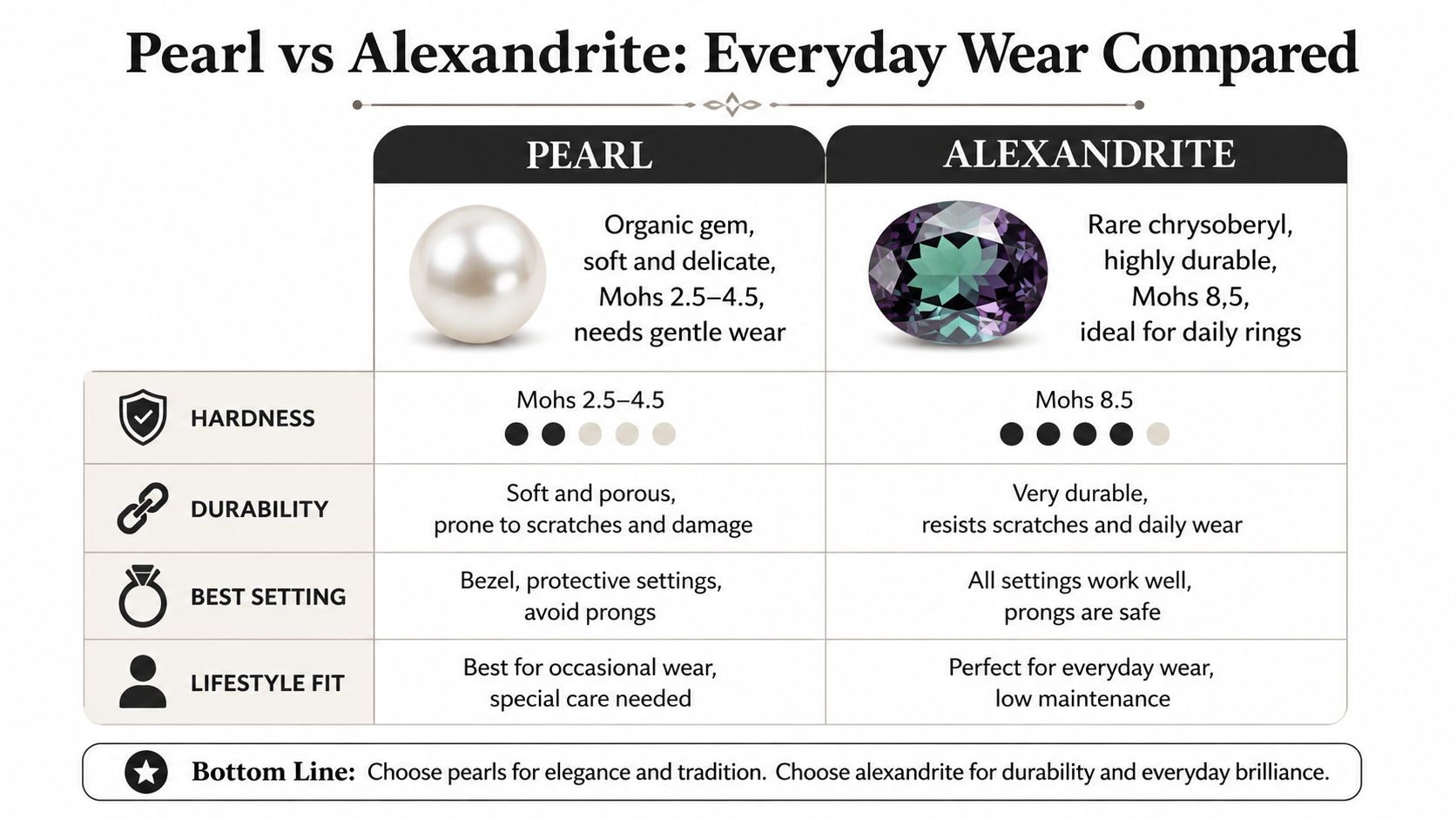
For a ring intended for regular wear, alexandrite is the clear practical recommendation. Pearl wins on tradition and softness of appearance, but alexandrite is much better equipped for the knocks, friction, and accidental contact that rings encounter.
Pearls have exceptional emotional and historical appeal. They were once so rare that Roman law restricted who could wear them, according to this account of June birthstone history. Kokichi Mikimoto's cultured-pearl methods in the 1890s and early 1900s changed access to pearl jewelry, and by the 1920s cultured pearls had largely replaced natural pearls in the market. That shift helped make pearl rings a mainstream choice for June birthdays.
The trade-off is hardness. Pearl measures only about 2.5 to 4.5 on the Mohs scale, and it's sensitive to acids, perfumes, and household cleaners, as explained in this June birthstone care guide. A pearl ring can work beautifully as an occasional-wear gift, but it's a poor match for someone who keeps jewelry on while washing hands, exercising, cleaning, or working with their hands.
Alexandrite measures about 8.5 on the Mohs hardness scale, has excellent toughness, and has no cleavage, according to the Gemological Institute of America's June birthstone guidance. Those properties reduce the risk of scratches and impact failure compared with pearl and usually make alexandrite the more reliable choice for a daily ring.
The practical choice for real routines
Use this distinction when shopping:
| Stone | Main appeal | Ring-wear reality | Best recipient |
|---|---|---|---|
| Pearl | Classic luster and history | Delicate, chemical-sensitive, better for low-impact wear | Someone who enjoys careful, occasional styling |
| Alexandrite | Color-changing visual character | Stronger choice for regular wear, still benefits from protection | Someone who wants a distinctive everyday ring |
| Moonstone | Soft glow and romantic appearance | About 6 to 6.5 Mohs, with poor toughness and cleavage that can lead to chips | Someone comfortable with cautious wear |
If the recipient wants a birthstone ring they can wear without constant anxiety, choose alexandrite. If the emotional meaning of pearl matters more and the recipient will reserve it for special occasions, pearl remains an excellent gift. A lab-created or natural stone decision is separate from this durability question, so review the difference between lab-grown and natural jewelry before finalizing the stone.
Choosing the Right Setting and Style
The setting determines whether a June gemstone looks protected or exposed. It also controls how comfortably the ring fits into the recipient's routine. A soft stone in an aggressive, high-profile setting is a design mistake, even if the ring looks impressive in a product photograph.
Match protection to the gemstone
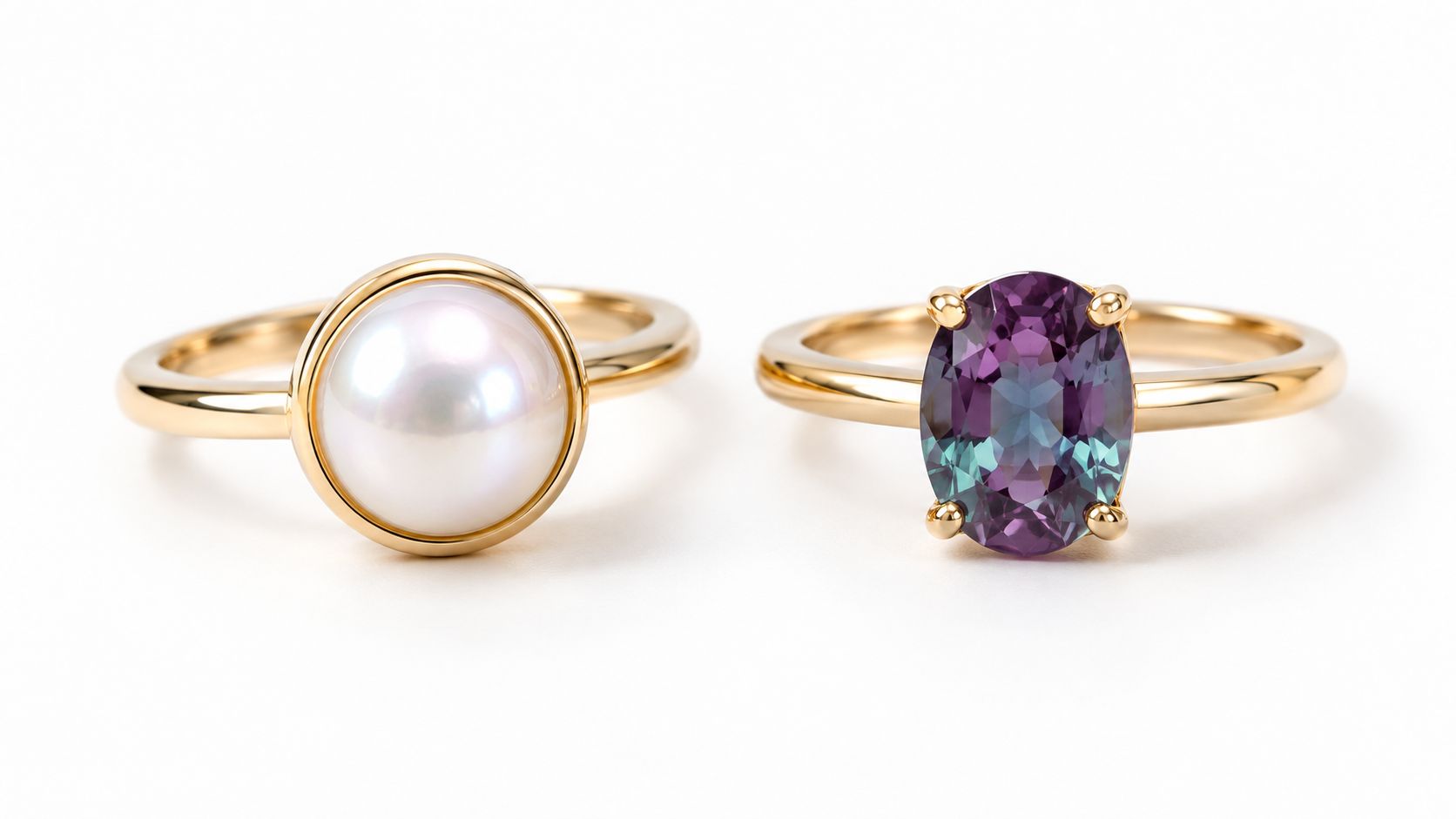
For pearl, favor a low-profile design that keeps the stone close to the finger. A bezel can provide the strongest visual protection by surrounding the edge, while a secure low setting limits contact with clothing, countertops, and nearby objects. Avoid a tall pearl center with long, exposed prongs. Prongs can hold the stone in place, but they won't remove the pearl's vulnerability to scratches or chemicals.
Moonstone needs similar caution. Its hardness is higher than pearl's, but its poor toughness and cleavage make impact a concern. Choose a protective setting, rounded edges, and a design that doesn't leave a broad section of the cabochon exposed to direct blows.
Alexandrite gives you more freedom, but don't treat it as indestructible. A bezel or low-prong setting remains a smart choice because it reduces edge abrasion and shields the center stone during daily contact. For a more open design, select prongs that hold the stone securely without creating unnecessary exposure around vulnerable edges.
Design around the recipient's style
A pearl ring suits clean silhouettes, warm gold, and understated bands. It can look polished with office clothing or elegant with formal wear, but its styling should remain deliberate rather than careless.
Alexandrite deserves a design that lets the eye reach the stone. An oval or cushion shape can create a strong focal point, while an open gallery allows light to enter from different directions. The color-change effect is most interesting when the ring moves between daylight and indoor incandescent lighting, so avoid settings that make the stone look buried or overly enclosed unless protection is the priority.
For custom proportions, engraving, or a design built around the wearer's habits, review customized ring options. Ask the jeweler how the setting protects the stone, how high it sits above the finger, and whether the band will interfere with adjacent rings.
Here's a visual guide to the relationship between gemstone choice and ring construction:
Before ordering, check four things:
- Stone exposure: Is the gem likely to strike a hard surface?
- Setting security: Are the prongs even, or does the bezel cover the vulnerable edge?
- Wear position: Will the ring sit on the hand used for work?
- Style balance: Does the protective construction still look like something the recipient would choose?
A thoughtful setting doesn't hide the gemstone. It gives the gemstone a realistic chance to stay beautiful.
Personalizing the Gifting Experience
The ring is only part of the gift. A meaningful purchase can lose its impact if the recipient receives it in ordinary packaging with no explanation of why you chose that stone. Presentation turns a product into a moment.
Start with the recipient, not the checkout page. Consider whether they prefer classic pearl styling, unusual color effects, soft moonstone, or a more expressive statement silhouette. Then browse a dedicated personalized jewelry gifts collection when you want the piece to carry an additional personal detail.
Build a simple gift story
Your message doesn't need to be long. Mention the birth month, the reason you chose the stone, and how you hope they'll wear it. For example, you might explain that pearl reflects their timeless style, or that alexandrite appealed to you because it looks different in changing light.
Order notes are useful for more than greetings. You can include a gift message, request special handling, or clarify that the order is intended for a birthday. Write the note before you forget. A clear instruction helps the retailer understand the experience you're trying to create.
An optional gift box can also remove the last-minute stress of wrapping. Add it during checkout when available, especially if the ring is shipping directly to the recipient. Present-ready packaging keeps the unboxing coherent, and it means you won't need to improvise with a small box that doesn't protect the jewelry properly.
Personalization should support the stone
Don't add details that compete with the birthstone. A pearl usually benefits from restraint, such as a refined band or a discreet engraving. Alexandrite can handle a more individual treatment, including a sculptural band or an unusual metal profile, as long as the setting still protects the center.
A strong gifting sequence looks like this:
- Choose the stone: Base the decision on wear habits and personality.
- Select the setting: Protect the gem without losing its visual character.
- Add the message: Explain the personal reason behind your choice.
- Choose packaging: Use the gift box option if you want a ready-to-present arrival.
- Review the order: Check sizing, notes, delivery details, and return information before paying.
The best personalization feels intentional, not crowded. One meaningful message and a well-matched setting can say more than a ring overloaded with decorative details.
Essential Care and Maintenance Rules
Care requirements should influence the purchase before the ring arrives. Pearl needs the strictest routine because its surface is soft and vulnerable to chemicals. Alexandrite is substantially tougher, but it still deserves protection from sharp blows, harsh products, and careless storage.
Rules for pearl rings
Use the last on, first off rule. Put perfume, hairspray, makeup, lotion, and other personal products on first. Once those products have dried, wear the ring. Remove it before applying more products or handling household cleaners.
After wearing the ring, wipe the pearl gently with a soft, slightly damp cloth. Don't soak it, scrub it, or use abrasive materials. Keep it in a separate soft compartment because harder gemstones can scratch the pearl while the pieces move around in a shared jewelry box.
Pearl care rule: If you wouldn't put the product on your skin immediately before wearing the ring, don't let it touch the pearl.
Remove pearl rings before swimming, bathing, exercising, washing dishes, or doing manual work. These activities combine moisture, chemicals, friction, and impact. That combination is exactly what a delicate organic gem doesn't need.
Rules for alexandrite and moonstone
Alexandrite can be cleaned with a soft cloth and gentle soapy water, followed by careful drying. Avoid exposing it to strong chemicals, and remove the ring before activities involving hard impact. Its durability makes it suitable for more regular use, but routine maintenance still protects the setting and preserves the stone's appearance.
Moonstone requires a cautious approach closer to pearl care than alexandrite care. Its 6 to 6.5 Mohs hardness, poor toughness, and cleavage mean a sharp strike can cause cracking or edge chipping. A protective setting helps, but it doesn't make careless wear safe.
For broader cleaning guidance, use this at-home jewelry cleaning guide. A piece such as the Two Finger Twist Ring, made with 18K gold plating and CZ and designed to fit across two fingers, also deserves removal before manual work because its shape extends across more hand movement than a conventional band.
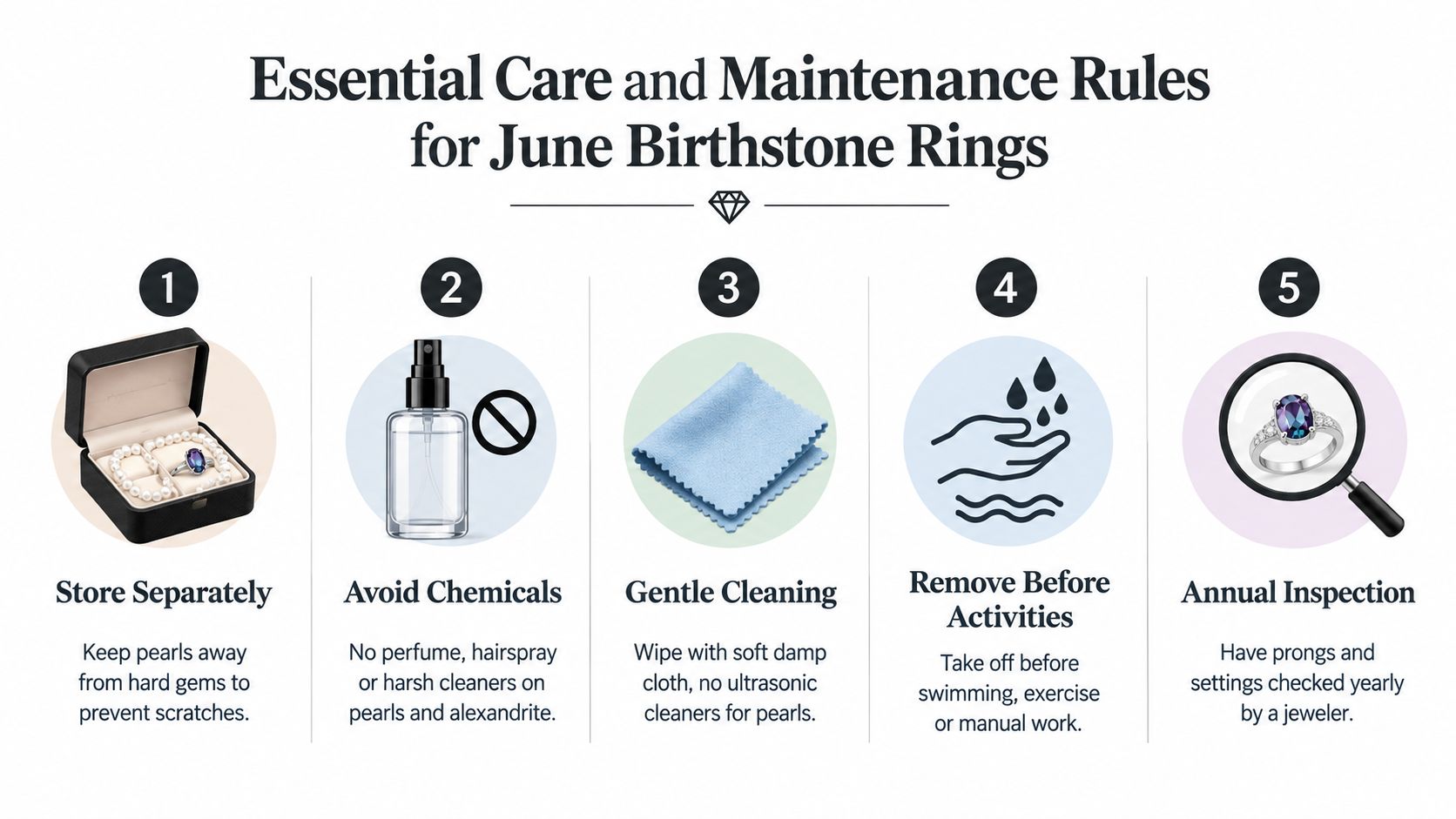
Keep this maintenance checklist visible:
- Separate storage: Keep pearls away from hard gems.
- Chemical avoidance: Keep perfume, hairspray, and harsh cleaners away from pearls and alexandrite.
- Gentle cleaning: Use a soft damp cloth, and don't use ultrasonic cleaners for pearls.
- Activity removal: Take the ring off before swimming, exercise, or manual work.
- Setting inspection: Have prongs and settings examined by a jeweler regularly.
Care isn't complicated, but it must be consistent. A June birthstone ring stays meaningful when the owner understands what the stone can and can't tolerate.
Finalizing Your Purchase with Confidence
A confident purchase follows a clear order. Decide how the ring will be worn, choose the stone that fits that routine, select a protective setting, confirm the size, and then review the retailer's delivery and return information.
Start with wear frequency. For a ring that should remain on the hand through ordinary daily life, alexandrite is the strongest June option because its hardness, toughness, and lack of cleavage provide a more forgiving foundation. For a special-occasion ring, pearl can be the more emotionally resonant choice. Moonstone works when the recipient appreciates its glow and accepts the need for cautious wear.
Check the ring before checkout
Confirm these details before you pay:
- Size: Ask discreetly, compare an existing ring, or use this guide to finding ring size.
- Setting: Look for a low profile, secure prongs, or a bezel suited to the gemstone.
- Material: Verify the listed metal and any plating or gemstone details.
- Gift preparation: Add a gift box and write the order note if the ring is shipping directly.
- Policies: Read shipping, returns, FAQs, and care information before placing the order.
EP Fine Jewelry provides a dedicated Personalized collection, ring categories, gift box add-ons, order notes, FAQ content, and Jewelry Care guidance. Its checkout supports American Express, Apple Pay, Discover, Mastercard, Shop Pay, and Visa. The store also displays a free-shipping threshold of $200, so review the current cart message and shipping policy rather than assuming delivery terms.
Make the final decision simple
Choose pearl when the recipient values tradition and will wear the ring carefully. Choose alexandrite when daily use and distinctive color change matter most. Choose moonstone when the soft glow is the central attraction and the wearer can avoid impact.
Then make the gift feel deliberate. Include a short message, use present-ready packaging, and explain why the stone fits the recipient. The gemstone may begin the conversation, but the thought behind the purchase is what makes the ring memorable.
EP Fine Jewelry offers personalized jewelry, ring designs, gift packaging, order notes, and care guidance that can support a considered June birthday gift. Visit EP Fine Jewelry to compare ring styles, review personalization options, and choose a June birthstone ring that matches the recipient's lifestyle.