
You've just taken off a favorite necklace, ring, or pair of earrings, and the gold finish already looks a little less bright than it did when you first wore it. That doesn't necessarily mean the piece is ruined. Cosmetics, sweat, friction, moisture, and residue can all change how the surface looks, while actual plating loss is a more permanent problem.
Learning how to care for gold plated jewelry starts with understanding what you're protecting. Gold-plated jewelry has a thin layer of gold over another metal, so the finish needs gentler treatment than solid gold. A few changes to your routine can reduce abrasion, keep residue from building up, and help you enjoy each piece for much longer.
Table of Contents
- Why Gold Plated Jewelry Needs Special Care
- Your Daily Routine for Lasting Jewelry
- How to Gently Clean Your Gold Plated Jewelry
- Smart Storage to Prevent Damage and Tarnish
- Troubleshooting Tarnish Fading and Other Issues
- Your Gold Plated Jewelry Questions Answered
Why Gold Plated Jewelry Needs Special Care
Gold-plated jewelry gets its color and shine from a surface layer of gold applied over a base metal. The base may be brass, copper, silver, or another jewelry metal, but the visible finish depends on the outer gold layer remaining intact. That construction makes plated jewelry more accessible than solid gold, but it also means the surface can wear down where your piece rubs against skin, clothing, desks, bags, clasps, or other jewelry.
The wear usually happens gradually rather than through sudden breakage. High-contact points, such as ring shanks, bracelet edges, and clasp areas, often show changes first because repeated rubbing removes tiny amounts of the finish. Water, sweat, cosmetics, and cleaning products can add chemical stress, making the surface look dull or uneven before the underlying metal becomes visible.
Set realistic expectations
Plating thickness and wearing habits make a major difference. Standard plating around 0.5–1.0 µm is commonly estimated to last about 6–12 months with daily wear, while heavier plating around 1.5–2.5 µm may last roughly 1–2 years, according to this gold-plated jewelry lifespan guide. These are practical benchmarks, not guarantees, because a ring worn constantly usually experiences more friction than a necklace worn occasionally.
The same principle applies when you're comparing pieces or deciding whether a favorite item needs gentler treatment. This guide to how long gold-plated jewelry lasts can help you think about plating thickness, frequency of wear, and exposure together rather than judging durability from color alone.
Practical rule: Treat the gold finish as a delicate surface, not as a solid block of metal. Preventing repeated contact is easier than repairing worn plating.
Care isn't about keeping a piece locked away. It's about choosing when to wear it, when to remove it, and how to handle it afterward. With those habits in place, your jewelry can stay attractive well beyond its expected wear window.
Your Daily Routine for Lasting Jewelry
The easiest routine to remember is last on, first off. Finish your skincare, fragrance, makeup, and hair routine before you put on jewelry. When you're ready to change, remove the jewelry before you start washing, exercising, or applying more products.
Perfume, lotion, sunscreen, makeup, and hairspray can leave films on the surface. Those products may contain ingredients that interact with the finish or trap moisture and particles against it. The safest order is to apply them first, wait about 5 minutes for them to set, and then put on your jewelry, as outlined in this gold-plated jewelry protection guide.
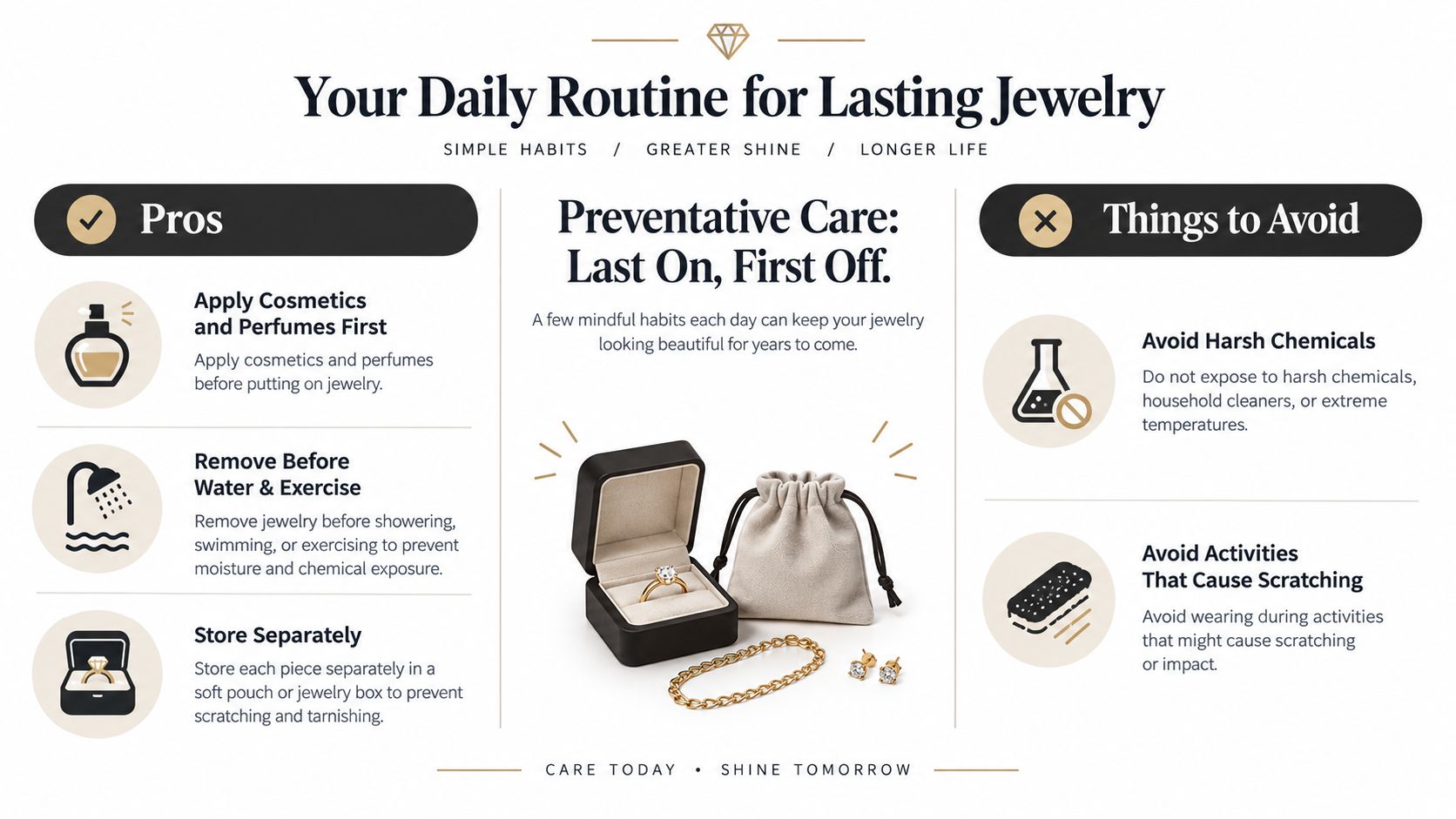
Remove it before moisture and friction
A shower exposes jewelry to water, soap, steam, and repeated movement. Water can work into links and settings, while soap leaves residue that dulls the surface. Steam and prolonged warmth make it easier for moisture and product residue to remain in small crevices. The issue isn't one brief splash. It's repeated exposure combined with rubbing and buildup.
Swimming is especially unsuitable because water treatment chemicals can be aggressive toward jewelry finishes. Exercise creates a different problem. Sweat brings moisture and salts to the surface, while movement causes bracelets, rings, and chains to rub against skin and clothing.
Take jewelry off before:
- Showering or bathing: Soap, steam, and soaking create repeated surface exposure.
- Swimming: Treated water and prolonged moisture can shorten the finish's useful life.
- Exercising: Sweat and movement increase moisture and abrasion.
- Sleeping: Body movement presses jewelry against skin, bedding, and itself.
- Household cleaning: Cleaning products can leave chemical residue or attack the finish.
A personalized item, such as a gold personalized bar necklace, deserves the same routine as any other plated piece. Personal meaning doesn't make the coating more resistant, so remove it before activities that create moisture or friction.
Give each piece a short reset
After wearing jewelry, look for visible moisture or residue. A soft, lint-free microfiber cloth can remove surface oils with light strokes. Don't buff aggressively, and don't use a tissue or paper towel, since rough fibers can create friction across the finish.
Then return the piece to a dry, separate storage place. This small reset prevents residue from sitting on the surface until your next wear.
How to Gently Clean Your Gold Plated Jewelry
Cleaning should remove residue, not polish away the finish. If a piece looks dull after contact with skin products, sweat, or everyday dust, start with the mildest method. A soft microfiber cloth, clean water, and a small amount of pH-neutral soap are usually more appropriate than a strong jewelry cleaner.
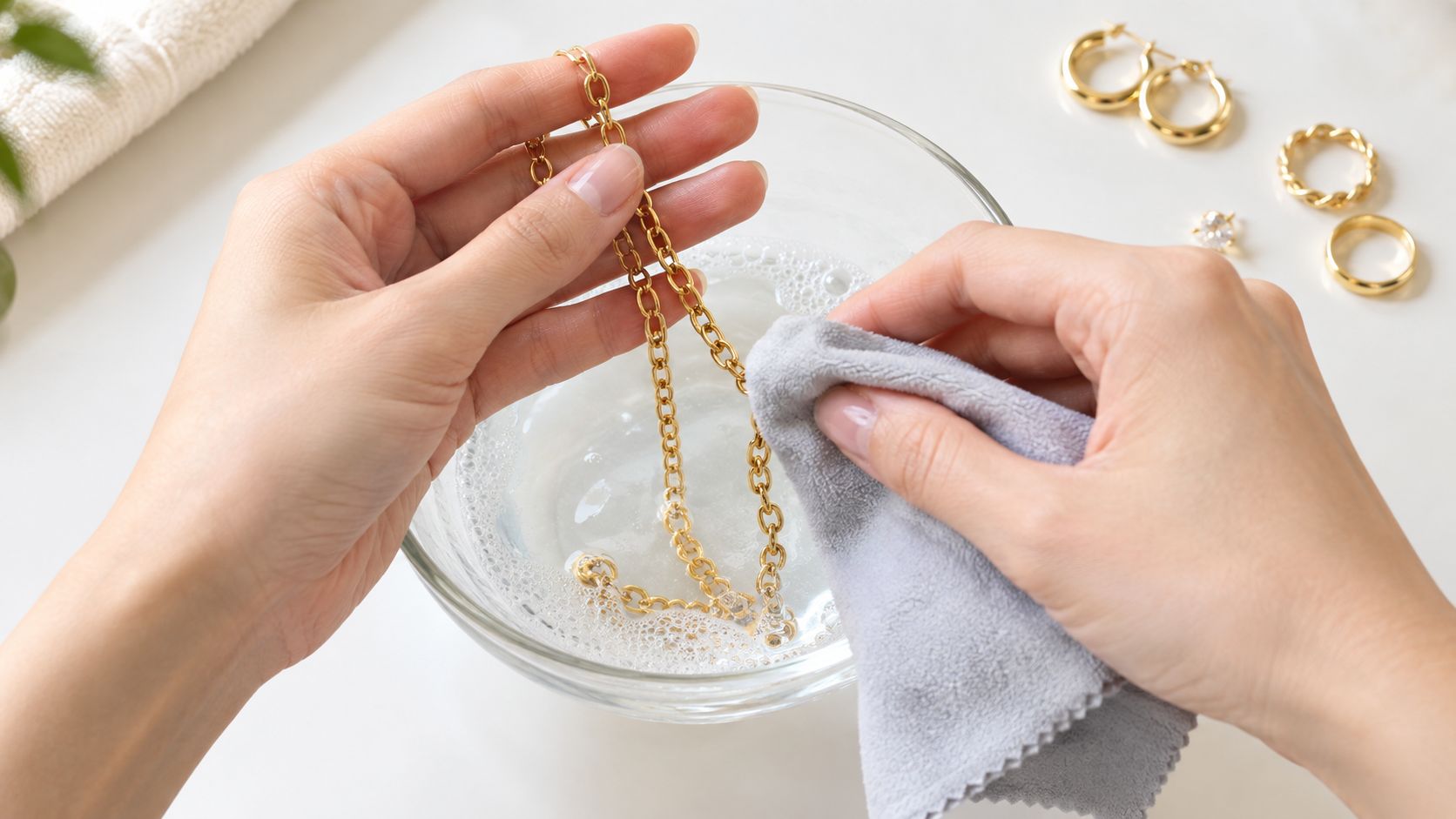
Follow a light-touch method
- Prepare the solution. Add a few drops of mild, pH-neutral soap to lukewarm water in a clean bowl. The water shouldn't be hot, and the mixture doesn't need to be concentrated.
- Clean briefly. Dip the jewelry for a short time rather than leaving it submerged. A quick exposure helps loosen residue without creating unnecessary soaking.
- Wipe gently. Use a soft, lint-free microfiber cloth. Move lightly over the surface, especially around links, settings, and the back of the piece. Avoid scrubbing.
- Rinse quickly. Use clean water to remove soap residue. Keep the rinse brief and support small pieces so they don't fall into a drain.
- Dry completely. Pat the jewelry with a fresh microfiber cloth, then let it finish air-drying in a dry place before storage.
A delicate design, such as the Two Finger Heart Twist Ring, benefits from this restrained approach. Twisted sections and contact points can collect residue, but pressing a brush into those areas can create more wear than the dirt itself.
Cleaning test: If a light wipe improves the color and removes residue, you were probably dealing with surface buildup. If the gold color is missing and another metal is visible, more cleaning won't restore it.
Never use a polishing cloth intended for solid gold or silver on plated jewelry. Those cloths can contain polishing compounds or create enough abrasion to remove the thin gold layer. Also avoid baking soda, vinegar, toothpaste, abrasive powders, harsh chemical cleaners, stiff brushes, and ultrasonic cleaners. Each may be too aggressive for a plated surface, particularly around ring bands and clasp edges.
This video can help you visualize a gentle cleaning approach. Keep the method light even if the piece looks heavily soiled.
If the piece contains stones, glued elements, or delicate moving parts, avoid prolonged soaking and use extra care around settings. When you're unsure, stop after wiping and ask a jeweler rather than escalating to a stronger cleaner.
Smart Storage to Prevent Damage and Tarnish
Jewelry can wear while it sits in a drawer. A ring tossed beside bracelets may be scratched by their edges. A chain left in a pile can snag, kink, and rub against itself. Humid air can also leave moisture on the surface, while dust and residue remain undisturbed until the next time you wear the piece.
Storage controls three problems at once: friction, humidity, and air exposure. It won't reverse plating loss, but it can prevent avoidable surface damage between wears.
Separate contact points
Store each plated piece in its own soft pouch or in a fabric-lined compartment. Necklaces can lie flat or hang where they won't rub against metal edges. Rings should have their own space, especially if they have raised designs or stones that can catch neighboring pieces.
A bathroom isn't a good long-term storage location because showers create recurring humidity. Choose a cool, dry place away from direct moisture. If your home is humid, an enclosed jewelry box with an anti-tarnish pouch can provide more protection than an open dish.
Small zip-top bags can work for individual pieces when you press out excess air before closing them. Make sure the jewelry is fully dry first. Trapping moisture inside a sealed bag creates the opposite result.
For gift planning, the Gift Card (Virtual) is listed with 7 variants across option1, option2, and option3. Whatever piece someone chooses, including separate storage with the gift makes the care routine easier to follow from the beginning.
Prepare before travel
Travel adds new friction because jewelry often moves inside luggage, toiletry bags, or a shared pouch. Use individual soft pouches, close chains before packing them, and keep jewelry away from liquids. Don't place pieces loose beside keys, cosmetics, or hard accessories.
The same separate-storage approach is useful in a jewelry travel storage guide. Pack only what you expect to wear, and keep the storage pouch in a protected part of your bag rather than an outer pocket where it can be compressed.
Troubleshooting Tarnish Fading and Other Issues
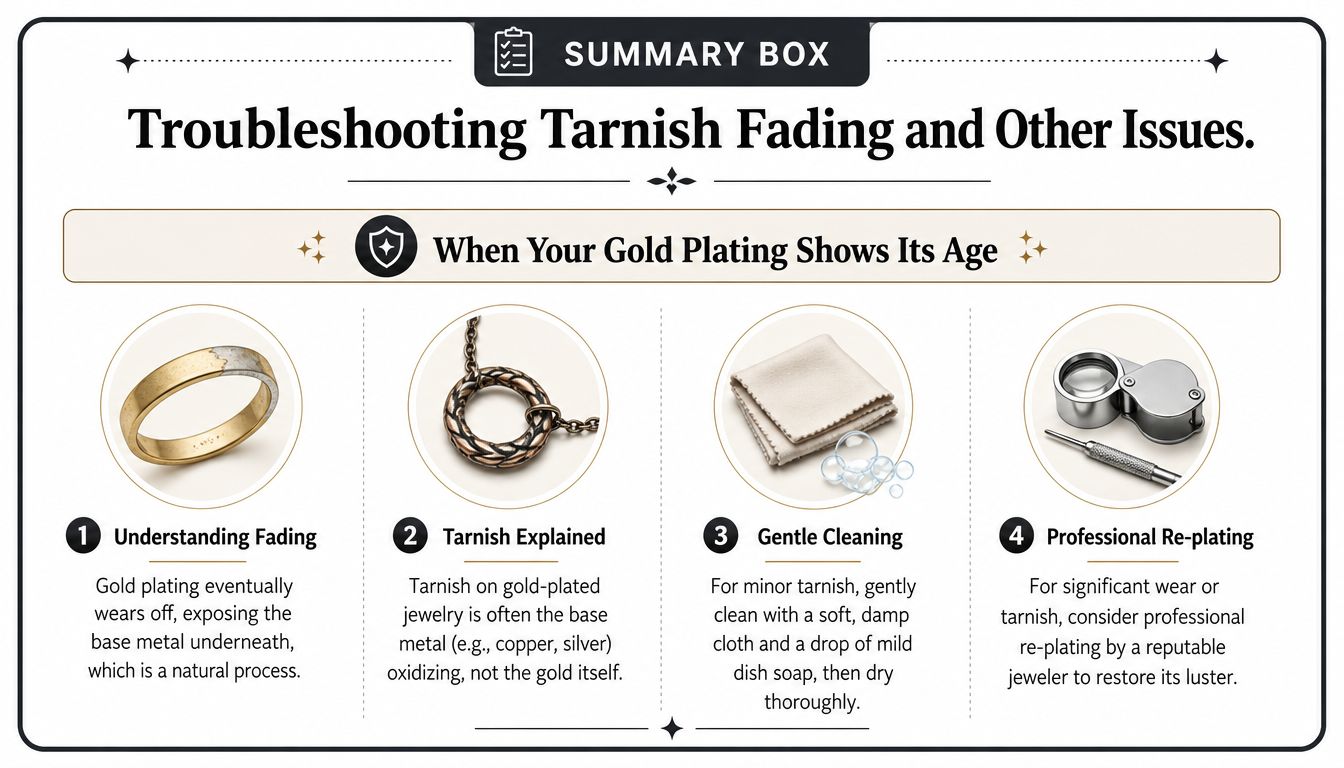
A piece that looks darker or uneven needs diagnosis before treatment. The visible change may be residue, a smudge caused by contact and sweat, tarnish from the base metal, or actual loss of the gold layer. Those problems can look similar at first, but they don't respond to the same solution.
Gold smudge is often linked to mechanical abrasion and sweat chemistry, and it may come off with careful cleaning. The dermatology record on gold smudge and skin contact also supports separating temporary surface discoloration from possible metal sensitivity. If wearing the piece causes persistent irritation, stop wearing it and seek medical advice rather than repeatedly cleaning the jewelry.
Inspect before you scrub
Use a bright light and examine the areas that experience the most contact. Look at the underside of a ring, the clasp, bracelet edges, and places where a chain rests against skin. A light film that changes after a gentle wipe is more likely surface residue. A different-colored patch that remains after cleaning may indicate exposed base metal.
Tarnish on plated jewelry often comes from the underlying metal reacting with air or moisture after the coating becomes thin. That doesn't mean the gold itself has become dirty. Scrubbing harder can enlarge the worn area.
Use this quick decision guide:
- Dull but still evenly gold: Wipe gently with a dry microfiber cloth, then use the mild soap method if residue remains.
- Dark or greenish surface in a small area: Clean cautiously and inspect again when fully dry.
- Silver, copper, or brass-colored metal showing through: Treat it as plating loss, not dirt.
- Itching, redness, or recurring irritation: Stop wearing the piece and consider a medical evaluation.
- Worn finish on a meaningful piece: Ask a reputable jeweler whether professional replating is suitable.
Know when cleaning can't help
Cleaning removes material sitting on top of the finish. It can't recreate gold that has already been abraded away. Professional replating involves preparing the existing surface and applying a new gold layer, but whether it makes sense depends on the piece's construction, condition, sentimental value, and the jeweler's assessment.
A jeweler should also check clasps, settings, and any areas that may need repair before replating. If the base metal is exposed, avoid trying to disguise it with polish or abrasive products. Those methods can make later professional work more difficult.
For questions about the underlying metal, this guide to sterling silver tarnish provides useful context, but the practical diagnosis remains the same. First identify whether you're seeing removable residue or permanent surface wear.
Your Gold Plated Jewelry Questions Answered
Can I use a standard polishing cloth?
Usually, no. Polishing cloths designed for solid gold or silver can be abrasive or contain compounds that remove more than surface dirt. On plated jewelry, use a clean, soft microfiber cloth and minimal pressure instead.
Is replating worth it?
It depends on the item rather than the finish alone. Replating may be reasonable for a piece with strong sentimental value, an unusual design, or a sound setting that you want to keep wearing. For a frequently worn item with extensive mechanical damage, ask a jeweler to assess the total condition before committing to the service.
How is gold-filled different from gold-plated?
Gold-filled jewelry has a substantially thicker gold layer that is pressure-bonded to its base metal. That structure generally makes it more durable than a thin plated finish, though it still benefits from protection against chemicals, moisture, and abrasion. Always check the maker's material description, because “gold-filled” and “gold-plated” describe different constructions.
Can I wear plated jewelry every day?
You can, but daily wear requires stricter habits. A necklace may experience less contact than a ring, while bracelet edges and ring shanks can rub against surfaces throughout the day. Remove the piece for water, sweat, sleep, and product application, then store it separately.
For example, the Two Finger Twist Ring is described as an 18K gold-plated and CZ statement ring that fits on two fingers. Its listed measurements include size 6/7 and size 7/8, with sizing based on the smaller size, so fit and contact points are especially important when deciding how often to wear a design like this.
What should I do if my skin reacts?
Remove the jewelry and clean the skin gently. If irritation persists, recurs, or becomes uncomfortable, seek medical evaluation. A visible smudge and a skin reaction aren't automatically the same problem, so don't assume more polishing will solve it.
EP Fine Jewelry offers personalized jewelry, necklaces, rings, earrings, bracelets, charms, and related care information through its online store. Visit EP Fine Jewelry to browse pieces, review the available care guidance, and choose jewelry you'll feel confident maintaining with these simple habits.