
You're standing in front of the mirror with three gold necklaces still resting on their display cards. One is short, one seems too close to the first, and the pendant on the longest chain keeps sliding into the middle. The problem isn't that you lack style. You're trying to make several separate pieces behave like one outfit without a clear decision rule.
Successful gold necklaces layering comes down to a few choices you can repeat: length, spacing, scale, texture, and metal tone. Once those choices are made in the right order, the stack stops looking accidental. You don't need a large jewelry collection, and you don't need to copy a crowded Pinterest arrangement that only works when nobody moves.
Table of Contents
- Why Gold Necklace Layering Works
- The Long History of Layered Gold Necklaces
- Getting the Lengths Right
- Matching Pendants, Chains, and Clasps
- Easy Layering Formulas You Can Wear Today
- All Gold or Mixed Metals
- Personalized and Charm Layers That Mean Something
- Quick Checklist for Your First Layered Stack
Why Gold Necklace Layering Works
Gold necklace layering works because the pieces share a visual language. Warm gold tones connect different chain shapes and pendant designs, so the eye reads the group as one composition rather than three unrelated accessories. The vertical movement also guides attention from the collarbone toward the center of the outfit, creating more dimension than a single necklace can provide.
Start with the neckline, not the jewelry box. A short chain can soften the edge of a crew neck by adding a bright line above the fabric. A longer pendant gives a V-neck a visual anchor. On a scoop neckline, three graduated layers can follow the curve of the skin while still creating a downward line.
The role of metal and finish
Yellow gold tends to look especially natural against warm undertones because both carry a similar golden warmth. That doesn't mean skin tone should limit your choices. White gold, rose gold, and mixed finishes can work beautifully when the contrast is deliberate. For the easiest first stack, use one dominant metal and let the chain shapes provide the variation.
The finish matters, too. Three highly polished pieces may look bright but flat, while a combination of smooth, textured, and lightly reflective surfaces gives the eye more to notice. You're building rhythm, not collecting every available design.
Practical rule: Make one change at a time. If the first layer is delicate, vary the length before you dramatically change the width or pendant size.
Use these three starting rules at the mirror:
- Separate the lengths: Keep a visible gap between neighboring chains rather than allowing them to sit in one crowded band.
- Assign each piece a job: One layer frames the collarbone, one supplies the focal point, and one creates length.
- Keep the shortest layer closest to the voice: It should sit high enough to define the neckline without pressing tightly against the throat.
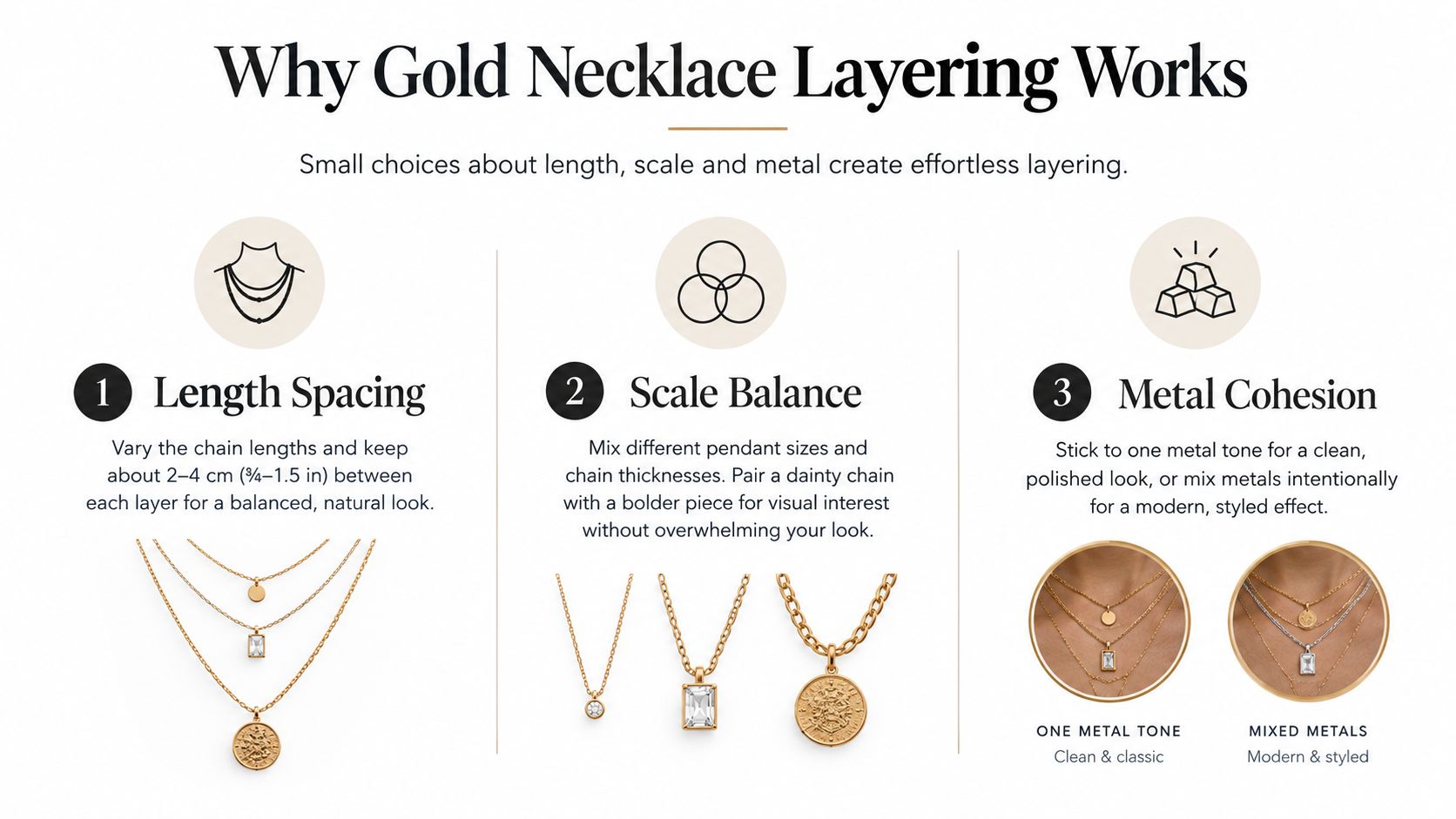
The important shift is simple: don't ask whether every necklace looks beautiful on its own. Ask whether the three pieces occupy different visual spaces and support the same outfit.
The Long History of Layered Gold Necklaces
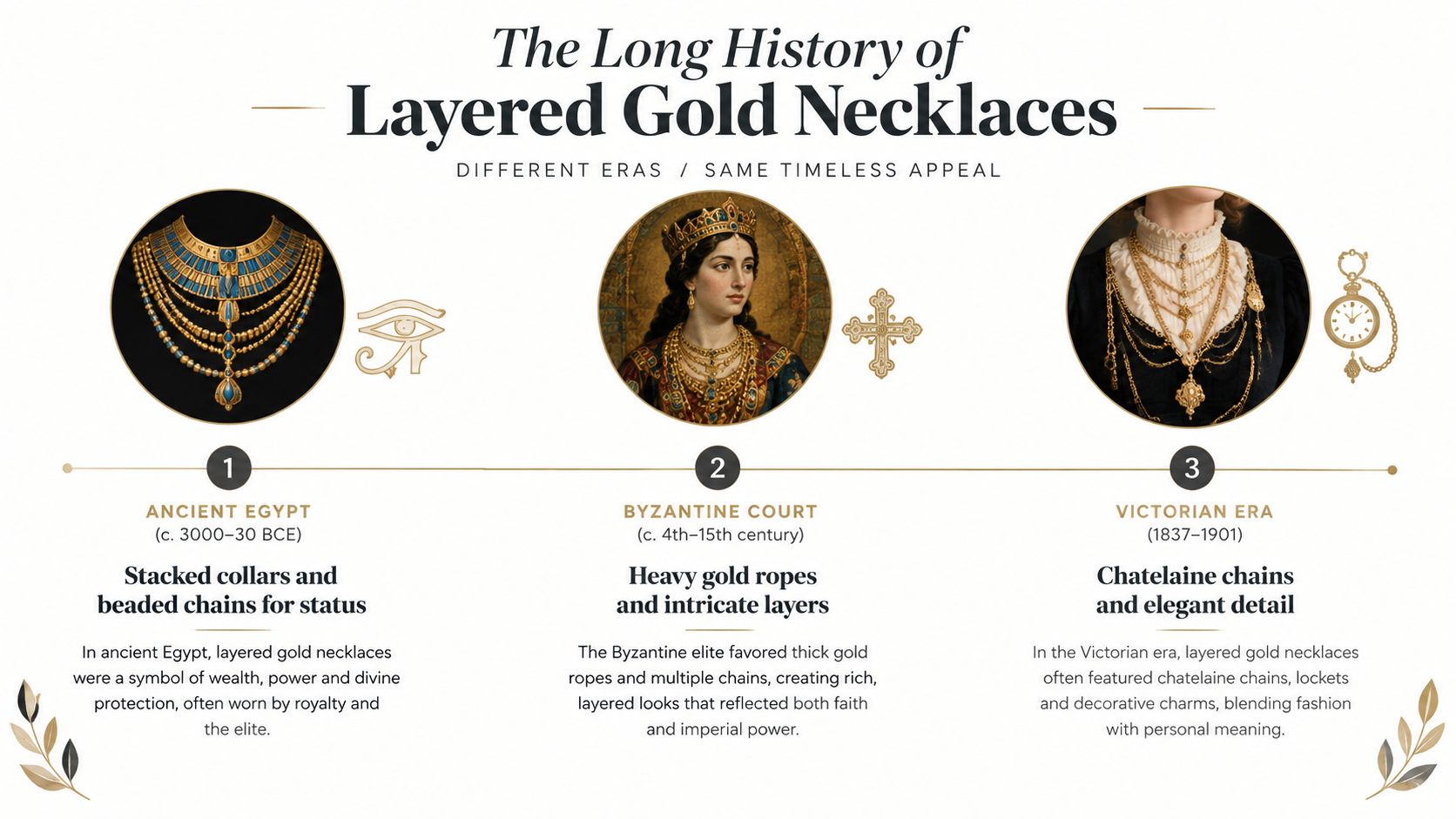
Layered gold necklaces feel modern because today's styling is relaxed and highly personal, but the underlying idea has a long history. Layered gold necklaces were documented in ancient Egypt and later in the Roman Empire, where stacked pieces could communicate status, wealth, and spirituality, as described in this history of layered gold necklace styling.
The look changed as clothing and jewelry changed. During the Renaissance, layered chains returned as ornate fashion. Tudor dress also used multiple necklaces together, with one necklace sometimes attached to clothing instead of fastened directly around the neck. That detail matters because it shows that layering has never depended on one fixed necklace formula. People have always adjusted jewelry to the structure of the clothes they wore.
Why the look keeps returning
Modern fashion writers often trace the contemporary layering effect to the 1920s, when longer necklaces and wrapped pearl strands created multiple rows that resemble today's stacked styling, according to the same documented overview of layered gold necklaces. The style has continued to move between bold and restrained expressions. One era may favor elaborate chains, while another pairs a fine chain with a small personal pendant.
That continuity makes layering more useful than a short-lived micro-trend. The materials and proportions can change, but the visual grammar stays familiar: varied lengths, distinct roles, and enough space for each piece to be seen.
Commercial interest also confirms that this is more than a styling idea. Market-oriented reporting recorded strong demand for layered gold necklace categories, including 5,559.4 units for women in December 2024 and a related gold-only variant reaching 10,198 units in sales that month, with the figures reported in layered jewelry trend data. You can treat those holiday spikes as evidence of sustained shopper attention, not as a reason to overfill your own neckline.
Getting the Lengths Right
Length is the first technical decision because it determines whether the chains have their own zones. Jewelry guides commonly recommend 1 to 2 inches of vertical separation, with 2 inches often serving as the cleanest default, according to this necklace layering length guide. The gap reduces overlap, lets pendants move independently, and makes the stack look intentional.
A reliable progression uses a short, middle, and long layer. The exact fit depends on your neck, body, pendant size, and neckline, but the following structure gives you a practical starting point:
| Length (inches) | Where It Falls | Best Neckline | Recommended Pendant |
|---|---|---|---|
| 14–16 | Collarbone or just above it | Crew, scoop, open collar | Small, light pendant |
| 18 | Below the collarbone | Scoop, V-neck, open blazer | Medium or focal pendant |
| 20–22 | Upper chest toward the sternum | V-neck, button-down, low scoop | Bare chain or light drop |
| 20–24 | Lower chest, depending on fit | Open blazer or deeper neckline | Slim elongated pendant |
The necklace length chart can help you compare individual lengths before you buy. Use it as a reference, then test the actual necklace on your body because pendant weight and chain construction can change where the piece settles.
Match the stack to your neckline
A 14 to 16 inch chain frames the collarbone and works well as the closest layer. An 18 inch necklace is the flexible middle position, while a 20 to 24 inch necklace creates elongation and gives a pendant room to move. A 14, 18, and 22 inch arrangement is often easier to separate than three chains clustered around the same measurement.
Crew necks usually benefit from a clean short layer or a longer pendant worn over the fabric. V-necks give each necklace a natural path downward. If two pieces sit too close, skip a length instead of forcing both into the stack. Identical lengths are especially frustrating because the eye can't separate them and the chains compete for the same space.
If you can't pinch a visible gap of skin between two chains when they're worn, the spacing probably needs adjustment.
For a home measurement, place a soft tape at the nape of your neck and guide it down to the point where you want the necklace to end. Measure around the neck if you're checking a collarbone chain, and measure the actual drop point for a pendant. Then allow for the clasp, pendant weight, and the way the chain sits rather than relying on the advertised length alone.
Matching Pendants, Chains, and Clasps
Every piece in a layered stack needs a role. The shortest layer usually establishes the neckline, the middle layer controls the focal area, and the longest layer creates a frame that draws the eye downward. Trouble starts when all three pieces try to be the focal point at once.
A short 14 to 16 inch necklace can carry a pendant in the 6 to 12 mm range, especially when the pendant rests neatly at the collarbone. A flat cable or rolo chain gives that pendant a stable foundation. Choose a lobster or spring ring clasp that feels secure during daily removal, particularly if the piece is worn often.
The middle layer should usually be the quietest. An 18 inch paperclip, box, or bead chain can add texture without introducing another pendant. Keeping this layer light prevents the stack from collapsing into one heavy cluster. A small clasp at the nape also keeps the back of the arrangement discreet.
Let the longest piece create structure
A 20 to 22 inch chain can act as the visual frame for the face and neckline. Snake and figaro chains have enough presence to hold their shape, while a smaller drop pendant can add movement without overwhelming the center layer. If the pendant is too large, it may pull the chain into the same space as the middle piece.
Chain width needs a similar hierarchy. A delicate base, a medium middle layer, and a more substantial anchor can create balance, as outlined in this guide to matching necklace lengths and chain weights. You don't need every chain to become wider as it gets longer, but the longest piece should have enough structure to avoid disappearing or twisting around the lighter strands.
| Layer Position | Chain Style | Pendant Scale | Clasp Type |
|---|---|---|---|
| Shortest | Flat cable or rolo | 6–12 mm | Lobster or spring ring |
| Middle | Paperclip, box, or bead | None or very small | Small lobster clasp |
| Longest | Snake or figaro | Small drop, under 8 mm | Slim spring ring |
Mix textures more readily than widths. A smooth snake chain beside a cable chain can create contrast without making the stack look top-heavy. Finish and clasp style should support the same impression. If one piece looks highly polished and formal while the others are matte and casual, the stack may feel assembled rather than styled.
For a reference point on stronger chain construction, compare the visual weight of a Cuban link chain necklace with your finer pieces before placing it at the shortest position. A bold chain can work, but it needs quieter layers around it.
Easy Layering Formulas You Can Wear Today
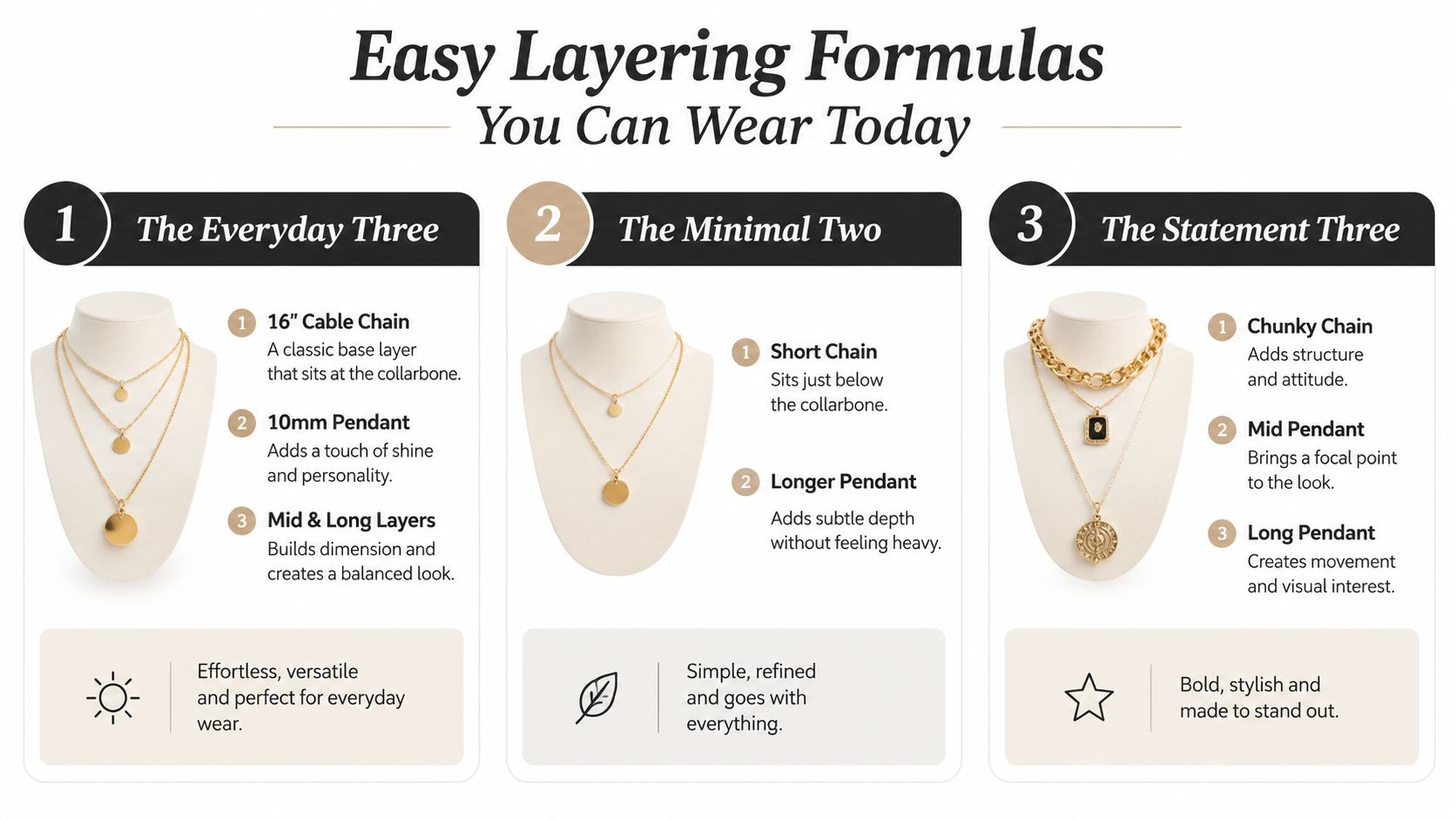
A formula removes guesswork. Instead of placing every necklace on the table and hoping the arrangement works, decide whether you want an everyday line, a central statement, a quiet pairing, or a sentimental mix.
The Everyday Three
Use a 16 inch cable chain with a 10 mm coin, an 18 inch paperclip chain without a pendant, and a 22 inch snake chain with a slim bar drop. Matching 14k yellow gold keeps the three different textures visually connected. The coin provides identity near the collarbone, the paperclip adds a light structural middle, and the bar gives the longest layer a clean finish.
This combination works especially well with an open button-down, scoop neckline, or simple knit. If the coin and bar begin to meet while you move, shift the longest chain lower with an extender or replace the middle layer with a lighter texture.
The Bold-Center Formula
For a stronger neckline, place a 16 inch Cuban link with a 12 mm medallion closest to the collarbone. Balance it with an 18 inch flat herringbone and a 22 inch fine cable. The herringbone supplies shine without adding another large pendant, while the fine cable at the bottom keeps the arrangement from becoming visually dense.
This is the formula to use when the outfit is plain and the necklace should do more work. Keep earrings simple, and check the Cuban link while walking. If its weight pulls the other chains toward it, move it to the center instead of the shortest position.
The statement piece should have support, not competition.
The embedded demonstration below offers another visual reference for arranging layered pieces:
The Minimalist Pair and Romantic Stack
The Minimalist Pair uses a 16 inch delicate cable with a tiny initial pendant and a bare 20 inch cable. It suits a V-neck T-shirt or open blazer when you want definition without a full three-piece stack. If you like restrained jewelry across your ears as well, these clean proportions can sit comfortably beside a minimalist ear stack.
The Romantic Stack combines a 14 inch beaded chain with a heart charm, an 18 inch rope chain, and a 22 inch elongated paperclip with a locket. Because the heart and locket both carry meaning, the rope chain should remain unadorned. That single quiet middle layer gives the sentimental pieces enough breathing room.
All Gold or Mixed Metals
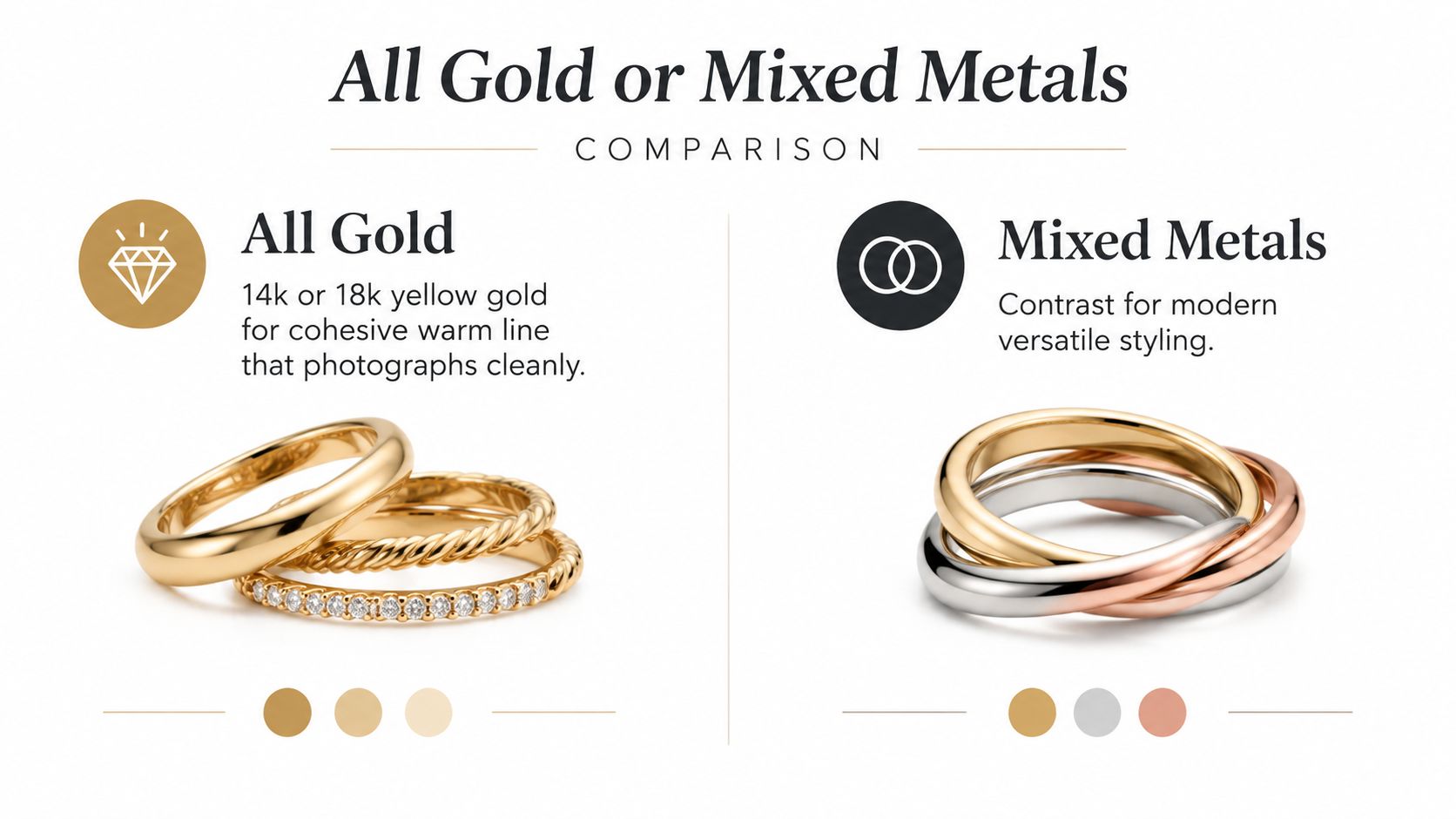
Choose an all-gold stack when you want the most cohesive result. Matching yellow gold across the layers creates one continuous warm line and works particularly well with beige knits, cream clothing, denim, and polished evening outfits. It's also the safer choice for gifting when you don't know whether the recipient already owns yellow gold pieces.
All-gold layering is especially useful when the necklaces were purchased at different times. Similar color and finish make separate purchases look coordinated, even when the chain textures differ. For a clean photograph, keep the focal pendant in the center or longest position and let the shorter layers remain simpler.
When contrast improves the outfit
Mixed metals make more sense when the clothing or other accessories already introduce contrast. Silver bag hardware, cool-tone earrings, a steel watch, or a denim-heavy outfit can give a contrasting necklace a clear reason to be there. Inherited jewelry also deserves flexibility. A sentimental silver piece doesn't need to stay in its box just because the newer necklaces are gold.
For an easy composition, let gold lead and use one contrasting layer as an accent. Placing the contrasting piece at the longest position gives it room to read as a grounding line rather than a competing focal point. If the silver or rose gold piece has a large pendant, reduce the scale of the other layers so the combination doesn't become visually crowded.
The guide to mixing gold and silver jewelry offers useful context for combining metal colors without losing cohesion. Apply the same principle to necklaces: repeat the contrast elsewhere through earrings, a ring, a watch, or hardware so it looks intentional.
A mixed-metal stack should answer a practical question: does the contrast help you wear more of what you own? If yes, use it. If it only adds another competing detail, stay with one metal family.
Personalized and Charm Layers That Mean Something
A personalized necklace changes the stack from decoration into a record of something important. An initial disc, nameplate, date, zodiac symbol, birthstone, travel charm, or family motif can become the piece that gives the arrangement its direction. The rest of the necklaces should frame that meaning instead of trying to tell separate stories.
Place the most important personalized piece in the center or longest position, depending on its size and shape. A small initial may read clearly near the collarbone, while a script name or locket often needs more space below the middle layer. If the piece disappears between chains, don't add another pendant. Move it to a clearer zone.
Keep the symbols connected
Choose a shared theme before adding charms. Initials and family symbols can work together naturally. Travel charms can sit beside a simple bar or coin. Birthstones can add color, but a stack with several unrelated symbols may look more like a jewelry tray than a finished outfit.
Shopping details matter more with personalized pieces because they're harder to exchange or resize. Check the chain length, clasp construction, spelling, engraving placement, and the maker's stated production window before ordering. If you're buying a gift, confirm the recipient's preferred chain length rather than assuming a standard fit.
For a name or message intended to sit at the center of a stack, a personalized gold bar necklace can provide a clean focal shape without competing with textured chains.
Protect the focal piece
Store personalized necklaces flat in separate compartments so letter fills and engraved surfaces don't rub against other metal. Remove them before showering, swimming, exercising, or applying perfume. Solid gold and gold vermeil are generally better choices for a daily focal layer than a plated piece if you want the surface and engraved edges to remain presentable over time.
A gift-ready stack also benefits from restraint. Choose one meaningful focal necklace, one supporting chain, and one optional longer frame. The recipient can wear the focal piece alone, then add the other layers when they want a fuller look.
Quick Checklist for Your First Layered Stack
Use this as a reference card before you buy or style:
- Start with the shortest layer: Choose a 14 to 16 inch piece for the collarbone.
- Step outward gradually: Use distinct lengths, such as 16, 18, and 22 inches, rather than near-identical chains. The spacing guidance is supported by this necklace layering guide.
- Give every necklace a role: Assign one base, one middle texture, and one focal or anchor piece.
- Balance thickness: Pair a delicate chain with a medium chain and, only when needed, a more substantial statement layer.
- Match pendant to chain: A heavier pendant needs a chain with enough structure to support it.
- Check the clasp: Make sure the clasp closes securely and feels comfortable at the nape.
- Choose your metal plan: Stay all-gold for cohesion, or make mixed metals deliberate.
- Prevent tangles: Remove the stack nightly and store each necklace flat in a divided tray.
- Maintain the finish: Wipe pieces with a soft cloth after wear and check clasps regularly.
- Test before leaving: Photograph the stack in natural light, then adjust the spacing until each chain has its own visible zone.
Start with two pieces rather than five. Wear them around the house, watch where they settle when you move, and adjust the longer necklace before adding a third.
Build your own meaningful stack with personalized necklaces, charm pieces, and everyday jewelry from EP Fine Jewelry. Browse pieces that can be worn alone or combined by length, texture, and story, then choose gift-ready options and add a personal message when the occasion calls for it.