
You're halfway through choosing a gift when the listings start to blur together. One gold personalized bar necklace costs less than a dinner, another costs several hundred dollars, and both look almost identical on the product page. You're left wondering whether the cheaper finish will still look good after regular wear, whether the engraving will be readable, and whether the chain will suit the person receiving it.
The easiest way to make a confident choice is to separate the purchase into three layers: material first, personalization second, then chain and care. That order prevents a beautiful engraving from distracting you from the more important question of how the necklace is made and how it'll be worn.
Table of Contents
- Finding the Right Gold Personalized Bar Necklace
- Solid Gold Versus Plated Options Explained
- Engraving Formats That Work Best on a Bar
- Chain Styles Lengths and Sizing Choices
- How Long a Personalized Bar Necklace Lasts
- Daily Care Tips for Lasting Shine
- Your Quick Decision Checklist Before You Buy
Finding the Right Gold Personalized Bar Necklace
A gold personalized bar necklace can make a thoughtful gift because its flat surface gives an engraver a clear area for a name, date, initials, or short message. The straight profile also suits many styles. It can stand alone or layer neatly with other necklaces. Necklaces hold the largest share of personalized jewelry at 34.2%, according to The OG Grace, which helps explain why this format appears so often in gift collections.
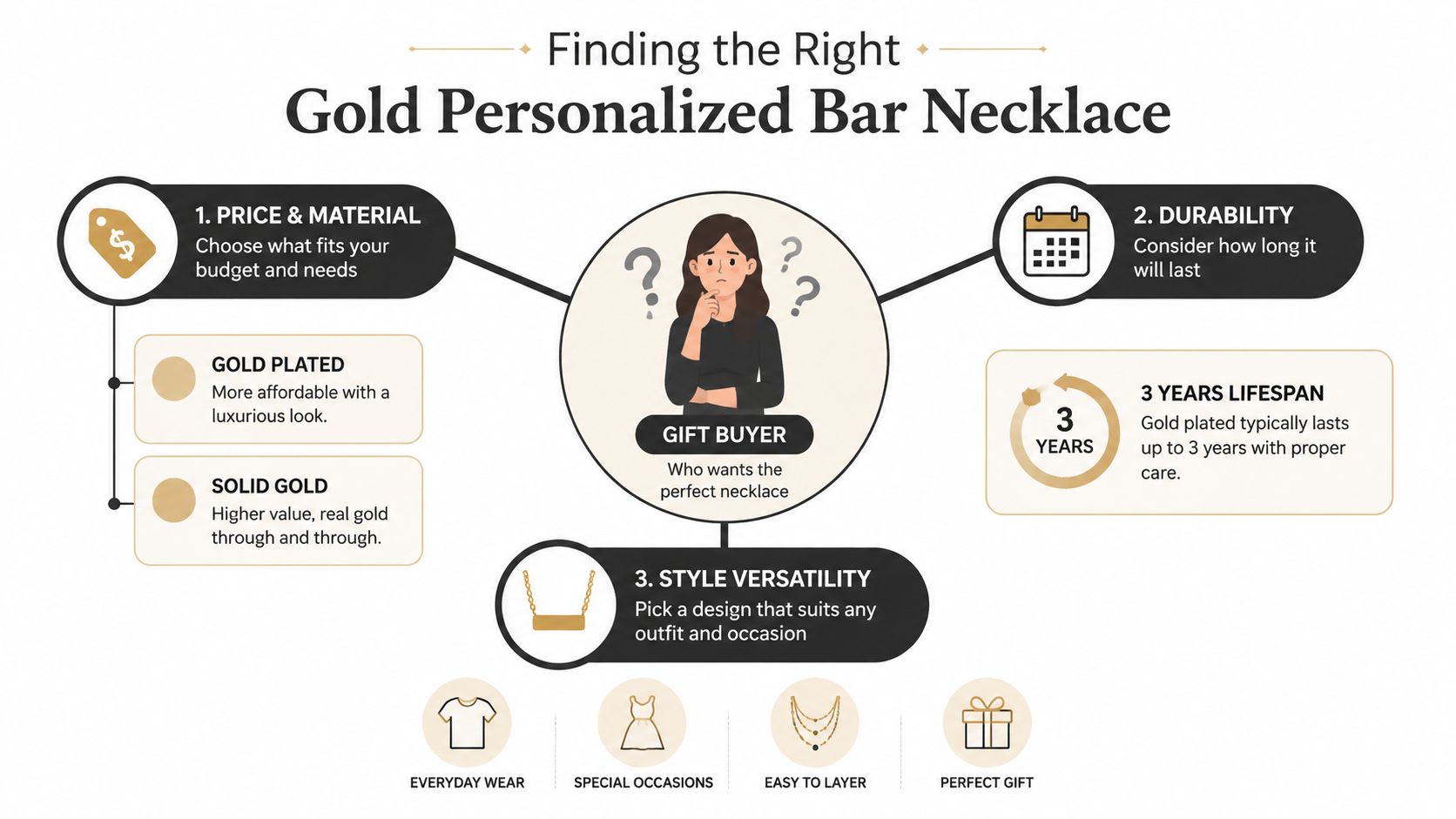
Build the decision in three layers: material first, personalization second, then chain and care. This order keeps the engraving from distracting you from durability and everyday comfort.
Before comparing fonts, answer three practical questions:
- What's your budget ceiling? Decide whether you want a temporary fashion finish or a piece intended for longer ownership.
- Who'll wear it? A narrow bar may suit someone who prefers delicate layers, while a wider pendant may fit a bolder wardrobe.
- How often will it be worn? Daily use makes metal quality, clasp construction, and care instructions more important than they are for occasional wear.
Why the order matters
Material determines how well the necklace handles moisture, friction, and time. Engraving adds the personal meaning, the chain affects how the bar sits against the body, and care helps preserve the finish. Each choice supports the next, like selecting a frame before deciding where to hang a photograph.
Personalized jewelry has grown beyond a small niche, giving shoppers many custom options. Market estimates place the global category at about USD 38.6 billion in 2025, with a projection of roughly USD 81.4 billion by 2034 at a CAGR of 8.7%. These are projections, not promises about an individual necklace, so product specifications still deserve the closest attention.
For a starting selection, browse personalized necklaces from EP Fine Jewelry. Then check the material, engraving limits, chain length, and care instructions before ordering.
Solid Gold Versus Plated Options Explained
The difference between gold types comes down to how much genuine gold is present and how it is applied to the base metal. That distinction affects color, durability, price, and how the necklace may fit into someone's routine.
Solid gold is gold throughout the piece, although jewelry gold is mixed with other metals for strength. A solid 14k necklace contains a higher proportion of alloy metals than 18k, which generally makes 14k the harder, more practical choice for frequent wear. 18k gold has a richer yellow color, and some buyers with sensitive skin prefer it because it contains a greater proportion of gold, though individual reactions vary.
Gold-filled jewelry has a substantial gold layer bonded to a base metal. Vermeil uses sterling silver underneath a gold coating, while gold-plated jewelry has the thinnest surface layer among these four categories. The label describes the construction, so reading the exact wording helps you compare pieces fairly.
What changes after the first day
A plated bar can look almost indistinguishable from solid gold when it arrives. Repeated contact with skin, clothing, the clasp, and nearby links gradually tests the surface. Once the coating wears through, the underlying metal may show, often in uneven patches.
Solid gold can scratch or develop a softer finish, yet a jeweler may be able to polish it later. Its material runs through the piece, so everyday rubbing does not expose a different metal beneath a surface layer. That makes solid gold a practical choice for someone planning to wear a personalized bar for years. Plated jewelry can suit a buyer who prioritizes appearance and affordability, especially for occasional wear.
| Gold Type | Composition | Expected Lifespan | Price Range |
|---|---|---|---|
| Solid gold | Gold alloy throughout | Long-term ownership with proper care | Higher-priced |
| Gold-filled | Bonded gold layer over base metal | Long-term use with thoughtful care | Mid-range |
| Gold vermeil | Gold over sterling silver | Finish eventually wears with friction | Mid-range |
| Gold-plated | Thin gold surface over base metal | Shorter wear life, depending on exposure | Lower-priced |
Price varies by retailer, karat, weight, chain, and workmanship. Listings under $50 are commonly associated with plated fashion pieces, while solid gold bar necklaces can cost $300 or more, as reflected in the buying ranges described in the brief. Use price as a reason to inspect the specifications, rather than as proof of quality by itself.
Material check: Look for exact wording such as solid 14k gold, gold-filled, vermeil, or gold-plated. “Gold tone” does not confirm that a gold layer exists.
Before choosing a plated necklace for daily wear, read this guide to how long gold-plated jewelry lasts. The right material depends on the wearer's habits. Solid gold suits an heirloom-minded gift, gold-filled or vermeil offers a middle path, and plating works when appearance, affordability, and occasional wear matter most.
Engraving Formats That Work Best on a Bar
The pendant's shape sets the limits. A narrow rectangle can hold a thoughtful message, but it can't display a long sentence comfortably without making the letters too small to read.
| Engraving format | Best use | Main advantage | Watch for |
|---|---|---|---|
| Single name | A partner, child, or pet's name | High readability | Confirm the spelling |
| Full name | A formal or family gift | Clear and complete | Needs more width |
| Date or Roman numerals | A wedding, birth, or milestone | Marks a moment discreetly | Check number formatting |
| Initials or monogram | A classic personal touch | Subtle and compact | Confirm the letter order |
| Symbol plus short word | A private message | Simple visual meaning | Tiny symbols need clean execution |
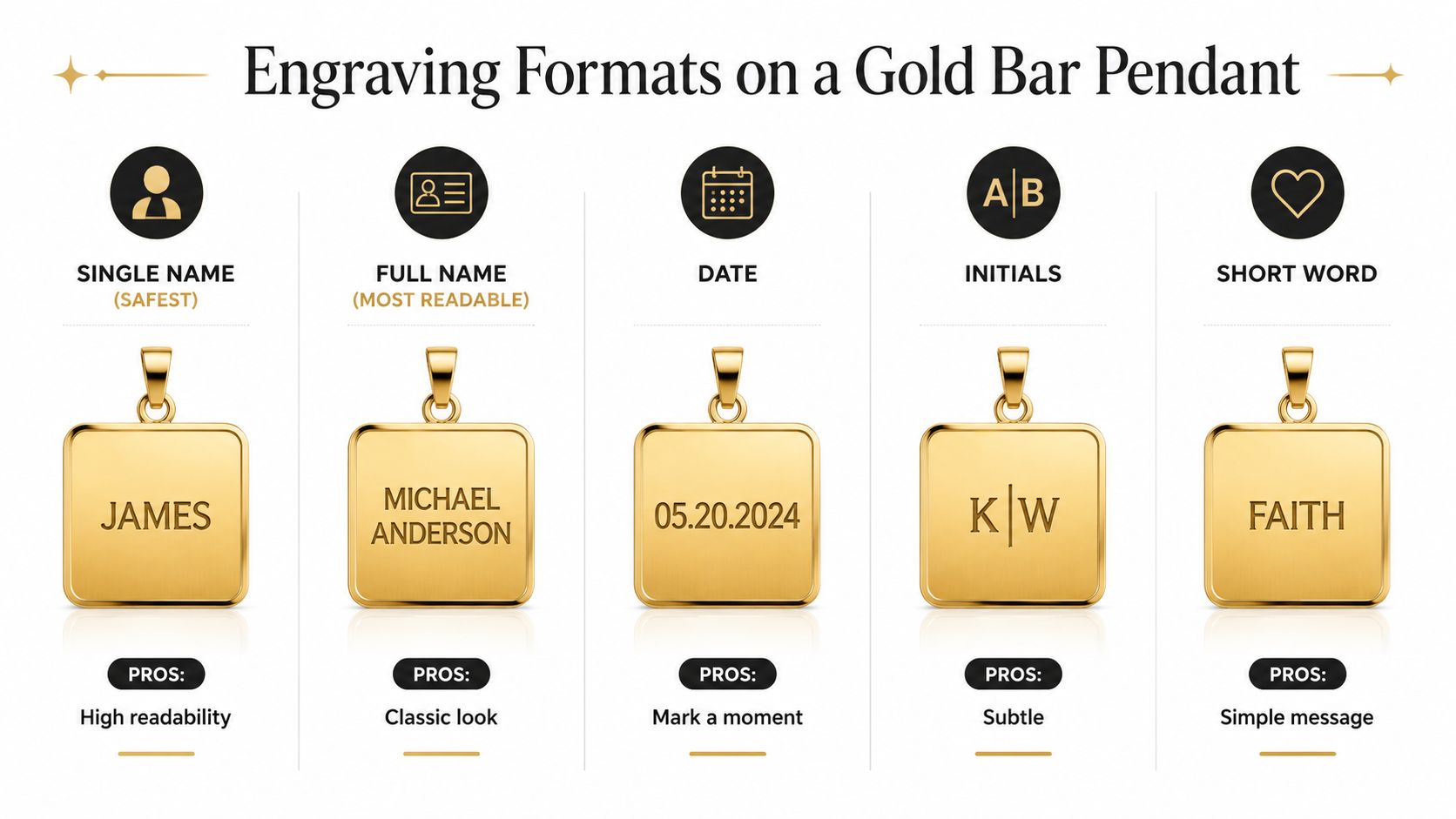
A single name is usually the safest choice for readability. A full name feels more formal, but it needs enough room to avoid cramped lettering. For a monogram, ask the seller how the letters are arranged. Traditional monograms may use the first, last, and middle initials in a different order from a simple sequence of initials.
Coordinates and Roman numerals appeal to buyers who want meaning without spelling everything out. A location can represent a first home, wedding venue, or favorite place. A date can commemorate an event while remaining visually understated. Symbols such as a heart, infinity sign, or small star pair well with a short word, especially when the bar is narrow.
Let the surface guide the message
Bars under 30mm can struggle with text longer than 12 characters, according to the practical sizing guidance in the brief. Cursive fonts also become harder to read at small sizes. If the wearer values instant legibility, choose a clean print font and leave enough empty space around the engraving.
Laser engraving creates a permanent surface mark, but its long-term clarity depends on depth, placement, and friction. Gold is relatively soft, so repeated rubbing, scratching, or later polishing can soften fine details. A protected engraving with suitable depth generally remains clearer than delicate lettering placed on an exposed, high-friction surface, as explained by this guide to laser engraving durability.
For a name or message with emotional value, read the seller's proofing policy carefully. A guide to engraved jewelry design can also help you compare how text and symbols behave on different jewelry surfaces.
A short visual example can make font and spacing easier to judge:
Chain Styles Lengths and Sizing Choices
The pendant gets the attention in a product photograph, but the chain is what the wearer sees and feels throughout the day. A good bar pendant can look unbalanced if its chain is too delicate for the pendant's weight or too ornate for its clean shape.
Match the chain to the wearer
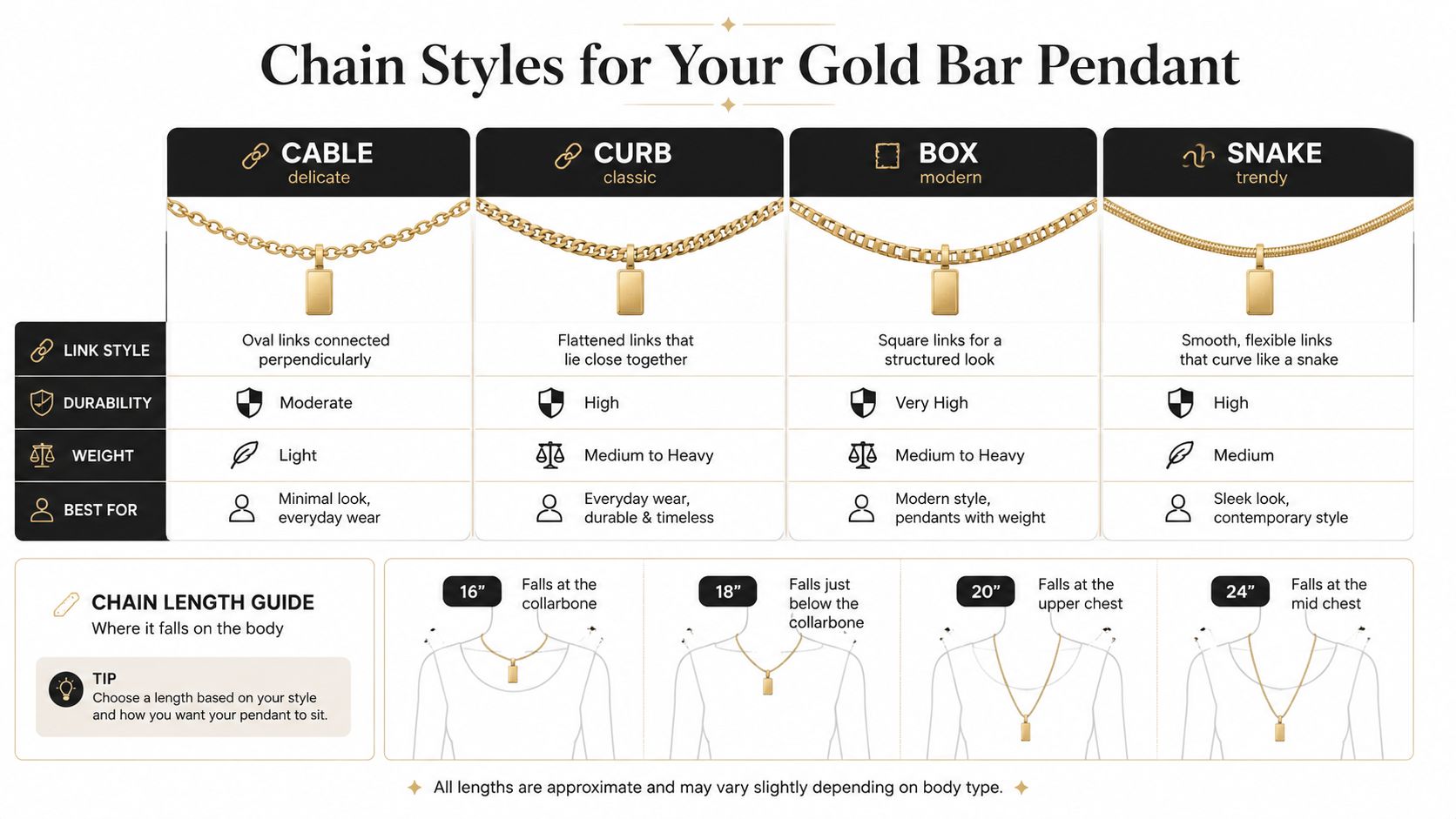
A cable chain is the everyday classic. Its linked construction works with casual clothes and simple layers. A box chain has a more geometric, polished appearance, which suits someone who likes modern or structured styling. A snake chain has a smooth surface and dressier movement, while a rolo chain uses rounded links and can give a bar pendant a slightly bolder presence.
The supplied visual guide also compares cable, curb, box, and snake styles, so check whether the necklace listing uses one of those names or a different term for a similar link design.
Choose the drop point
Length changes where the bar sits on the body:
- 16 inches: A choker-style position high on the collarbone, useful for layering.
- 18 inches: An everyday length that generally rests just below the collarbone.
- 20 inches: A lower drop toward the sternum, often comfortable on taller frames.
- 22 inches: A statement length that works with open necklines.
- 24 inches: A longer layering piece that can sit over sweaters or higher necklines.
An 18-inch or 20-inch chain often complements a bar pendant because the pendant sits low enough to remain visible without disappearing into the neckline. The best choice still depends on the wearer's existing necklaces, neck size, and wardrobe. Measuring a necklace they already wear is more reliable than guessing from a product photo. This necklace length chart can help you compare drop points before checkout.
Bar thickness changes the mood too. A 2mm bar usually reads delicate, while a 4mm bar looks bolder and more unisex. Match the chain's visual weight to the pendant. A substantial bar on an ultra-fine chain can look accidental, while a tiny engraved bar on a heavy chain may lose its refined balance.
How Long a Personalized Bar Necklace Lasts
Durability begins with the material choice, not the engraving. Solid 14k gold can last a lifetime with suitable care and may become an heirloom. Solid 10k gold is generally harder because it contains more alloy metal, while 18k gold offers a richer color but needs sensible handling because gold is relatively soft.
Gold-filled jewelry can maintain its gold layer for roughly five to ten years, while gold vermeil typically holds its color for about two to five years with regular wear. Standard gold-plated pieces commonly begin fading within three to twelve months, depending on coating thickness, body chemistry, and exposure. These ranges are estimates from the provided buying guidance, not guarantees, and the durability source explains why wear varies so widely.
| Gold Type | Average Lifespan | Where Wear Shows First | Best For |
|---|---|---|---|
| Solid 10k gold | Decades with care | Surface scratches and softened polish | Frequent wear |
| Solid 14k gold | Lifetime potential | Scratches, clasp wear, and occasional polishing marks | Everyday or heirloom use |
| Solid 18k gold | Long-term ownership | Surface marks from handling | Rich color and careful wear |
| Gold-filled | Roughly 5 to 10 years | Friction points and clasp areas | Mid-range daily use |
| Gold vermeil | Roughly 2 to 5 years | Edges, back of pendant, and chain contact points | Occasional or moderate wear |
| Gold-plated | Roughly 3 to 12 months before fading may begin | Clasp, chain links, and bar edges | Fashion or occasional use |
Where the finish wears first
Plating erodes through friction, not because a certain amount of calendar time has passed. The clasp rubs against skin and clothing, the back of the bar moves against the chest, and chain links near the collarbone repeatedly contact the body.
Perfume, sunscreen, perspiration, and acidic skin can speed up visible finish changes. Chlorine and saltwater deserve special attention. One care guide notes that chlorine and saltwater can degrade plating 3 to 5 times faster than freshwater, particularly at exposed, high-friction areas, as discussed in this guide to name necklace care and trends.
Wear expectation: Choose plating when you're happy with a shorter fashion cycle. Choose solid gold when replacing the necklace would undermine the meaning of the gift.
The practical comparison is simple. A lower-cost plated bar may be suitable for occasional events, while a solid gold piece makes more sense when the wearer plans to keep it on rotation for years.
Daily Care Tips for Lasting Shine
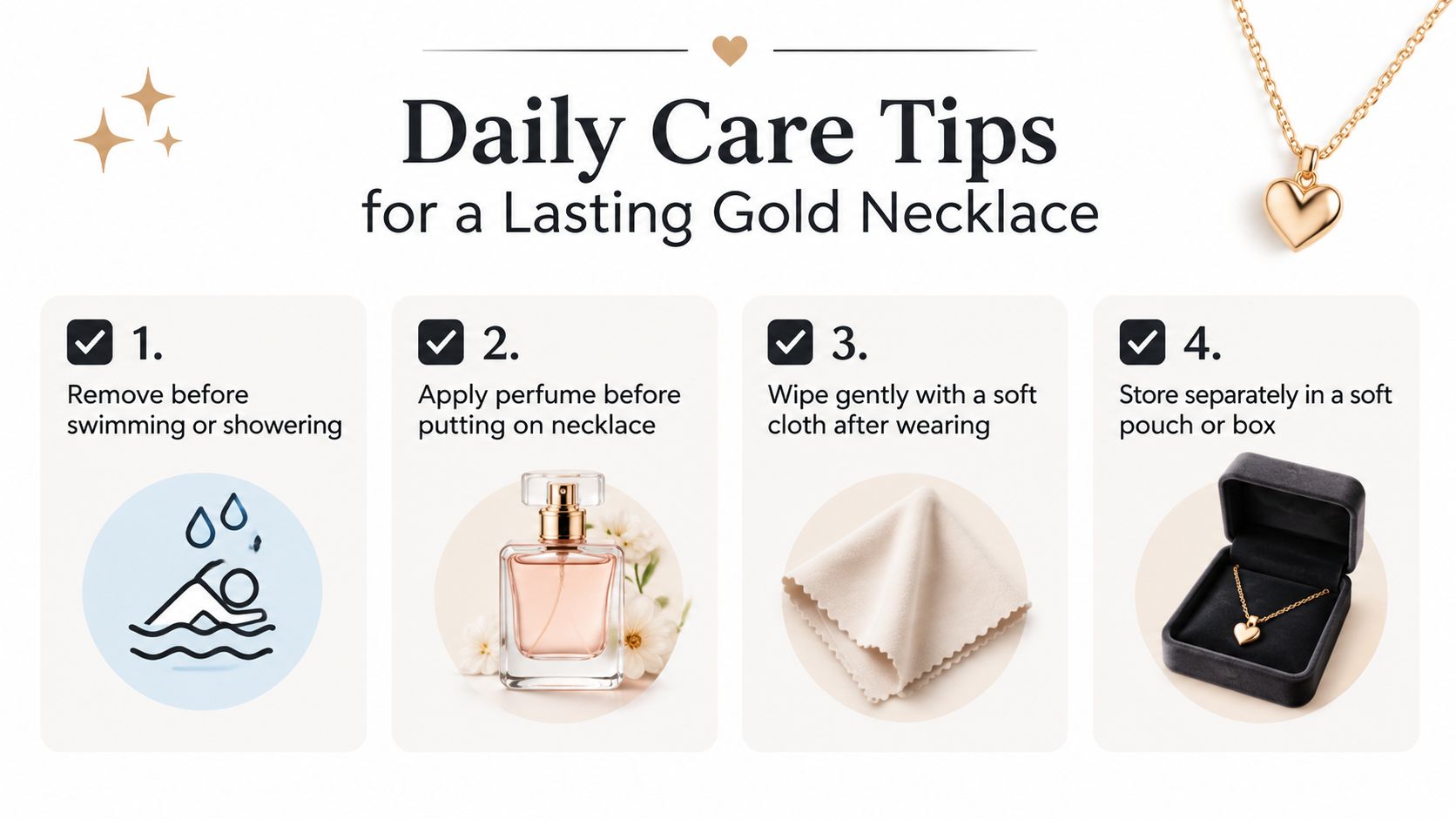
Care should match the gold type. The most important habit is removing the necklace before swimming in a pool or hot tub, exercising, applying lotion or perfume, showering, or sleeping. Chlorine, perspiration, and repeated chemical exposure can affect both the finish and the joints that hold the necklace together.
A recent care guide notes that gold-plated jewelry more commonly suffers from plating wear than traditional tarnish. As the thin outer layer erodes, the base metal may show through, especially around clasps, links, and pendant edges.
A gentle weekly clean
Use warm water, a small amount of mild dish soap, and a soft microfiber cloth. Let residue loosen in the water, then rinse carefully and pat the necklace dry. Avoid abrasive cloths, toothpaste, polishing compounds, and aggressive brushes. These can scratch solid gold and remove plating from vermeil or fashion pieces.
For solid gold, a jewelry cloth can restore some surface shine when used gently. An annual professional check of the clasp and jump rings is sensible for a frequently worn piece. Plated and vermeil necklaces need more restraint because the gold layer is thin. Don't scrub stubborn residue or put these pieces in an ultrasonic cleaner. A short soak is safer than forceful rubbing.
Protect the necklace between wears
Store the bar flat in a soft pouch or lined jewelry box. Keep it separate from other pieces so the pendant doesn't scrape against harder metal or become tangled in a chain. A separate compartment also makes it easier to spot moisture before it causes problems.
The same cautious approach applies to other gold-plated jewelry, including the Two Finger Twist Ring, which is listed as 18K gold plated with CZ and designed to fit across two fingers. Follow the care instructions for the specific item rather than assuming every gold-colored piece can handle the same treatment.
For more at-home guidance, use this jewelry cleaning method. The quick routine is easy to remember: on, off, rinse, dry, store.
Your Quick Decision Checklist Before You Buy
A personalized necklace is easier to compare when you stop judging the photograph and check the specifications. Use these four filters at checkout.
Material and skin comfort
- Read the metal description: Confirm whether the piece is solid gold, gold-filled, vermeil, or gold-plated.
- Check the karat: 14k generally offers a practical balance for regular wear, while 18k has a richer color.
- Consider sensitivity: If the wearer reacts to certain metals, look for the core metal and alloy information rather than relying on the word “gold.”
Engraving and readability
- Count the characters: Keep the message short enough for the bar's actual dimensions.
- Choose clarity over decoration: Clean lettering is easier to read than very fine cursive on a narrow pendant.
- Verify every detail: Check spelling, initials, date formatting, and any monogram order before submitting a personalized order.
Chain and fit
- Measure a familiar necklace: Compare its length with the listing's measurement instead of estimating from a model photograph.
- Match visual weight: A wider bar needs a chain that doesn't look flimsy beside it.
- Think about clothing: Choose a higher length for layering and a longer drop if the wearer often wears open necklines or sweaters.
Care and purchase policies
- Plan the routine: Ask whether the wearer will remove the necklace for swimming, exercise, perfume, and sleep.
- Check the return policy: Personalized items may have different return conditions because they're made to order.
- Review fulfillment details: Confirm engraving proofing, shipping timing, gift packaging, and order-note options before payment.
The best choice balances upfront cost, intended wear, and emotional importance. A plated necklace may be perfectly reasonable for occasional use, while solid gold makes more sense for a daily keepsake that should stay in the wearer's collection for years. Once you've selected the material, message, chain, and care expectations, the purchase becomes a clear set of trade-offs rather than a guess based on a product photo.
EP Fine Jewelry offers a dedicated personalized necklace collection, gift box options, order notes for messages, and jewelry care and policy information to support the buying process. Visit EP Fine Jewelry to compare personalized jewelry options and choose a piece that fits the wearer's style and care habits.