
The most popular advice about gold or silver is also the least useful: choose the tone that suits your skin and stick with it. That rule belongs to a jewelry market where shoppers treated metal color as a permanent identity. In 2026, buyers are combining silver, yellow gold, white gold, rose gold, and platinum in the same look, while high gold prices are forcing a harder question: what will this piece cost to own, maintain, replace, and wear regularly?
My advice is direct. Don't choose one metal for your entire jewelry collection. Buy gold selectively for pieces that justify its higher cost and long-term role, then use well-made silver for personality, experimentation, layering, and trend-led designs. A mixed-metal wardrobe gives you more styling range and protects your budget better than treating every purchase as a lifetime commitment.
Table of Contents
- Rethinking the Gold or Silver Debate
- Understanding Purity and Alloy Standards
- Evaluating Durability and Skin Sensitivities
- Navigating Price and Market Value
- Mastering Maintenance and Daily Care
- Choosing the Right Metal for Every Category
- Building a Versatile Mixed-Metal Wardrobe
Rethinking the Gold or Silver Debate
Gold remains the stronger choice for pieces expected to hold their role for years. It is scarce, durable in the right alloy, resistant to tarnish, and widely recognized as a store of value. The UNCTAD gold review states that around 180,000 tonnes of gold have been extracted since discovery, with roughly 90% mined after the California gold rush began in 1848. Because gold lasts, much of the metal mined throughout recorded history still exists above ground.
That accumulated stock changes the purchase. Gold supply comes from current mining, recycling, official holdings, inherited jewelry, and investment bars. You are buying a material with an established history of reuse, not something that loses all relevance once it becomes a finished piece.
Silver serves a different purpose. Statista's silver and gold production estimates place global silver production at about 25,000 metric tons in 2024, compared with about 330 metric tons of gold. Estimated silver reserves were about 640,000 metric tons, while gold reserves were roughly 64,000 metric tons. That broader supply base helps keep silver practical for larger jewelry collections, experimental designs, and industrial use.
High gold prices in 2026 make this distinction harder to ignore. The World Gold Council's 2025 jewelry demand data reports global gold jewelry consumption at a five-year low of 1,542 tonnes, while demand value reached a record US$172 billion. Buyers are purchasing less weight while spending more. Gold therefore needs a clear job in your wardrobe, especially when mixed-metal styling lets one collection combine yellow gold, white gold, silver, and rose gold.
A daily ring, sentimental pendant, occasion earrings, and fashion charm face different wear, replacement, and styling demands. Choose the metal according to that role.
Buyer's rule: Treat gold as a strategic purchase. Use silver for design freedom, layering, and lower material cost, provided you accept its greater care needs.
The useful question has changed: which metal earns its place in this specific piece?
Understanding Purity and Alloy Standards
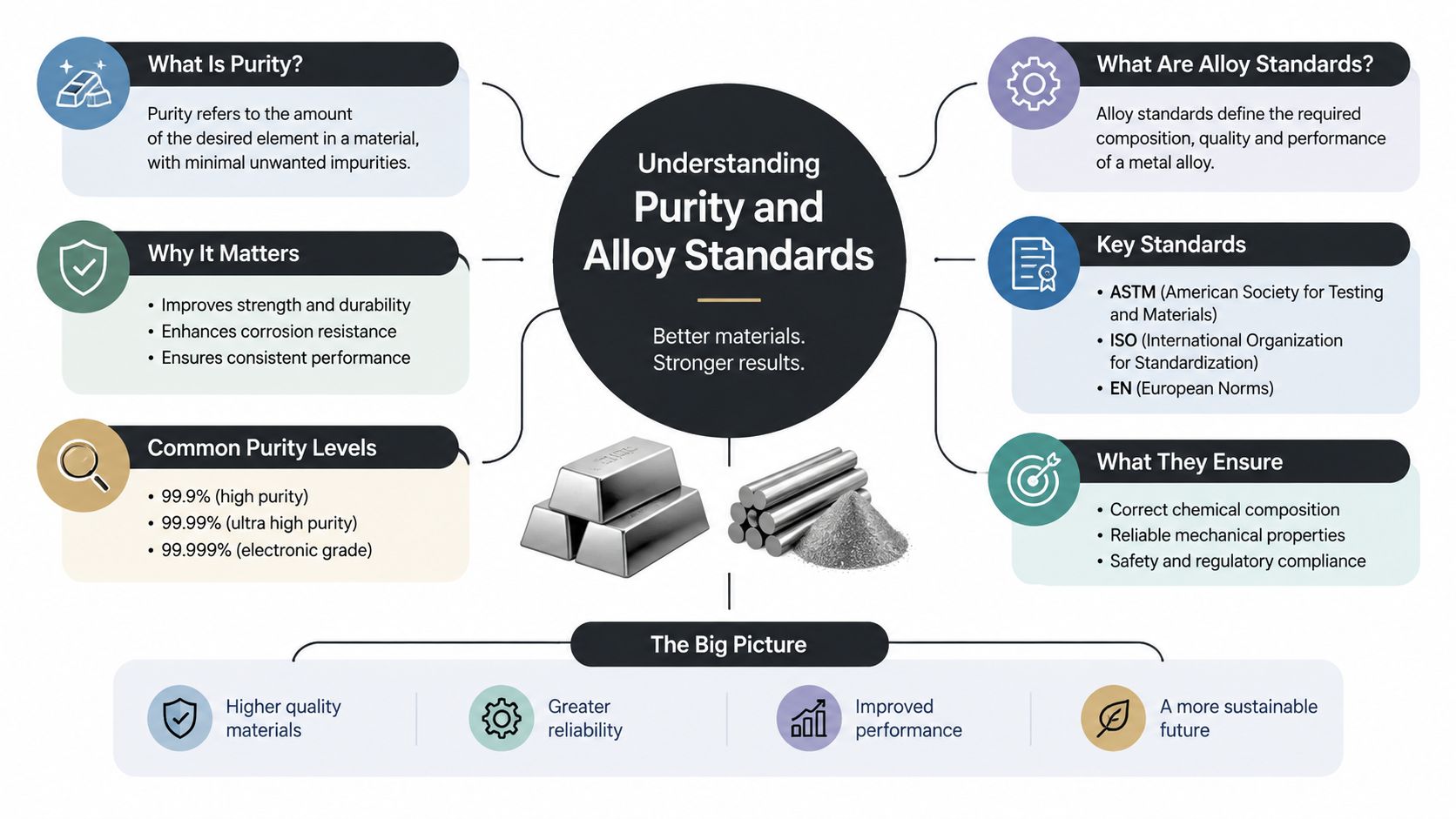
Before comparing appearance or longevity, check the metal specification. A polished finish can make an inexpensive piece look convincing at first glance, but the stamp or product description tells you what you're buying.
Gold karats describe the gold content
Gold purity is commonly expressed in karats. The Federal Trade Commission jewelry guide explains that 18K gold contains 18 parts gold out of 24, while 14K gold contains 14 parts gold out of 24. The remaining material consists of alloy metals that change the piece's color, hardness, weight, and wear behavior.
A higher-karat alloy usually gives you a richer yellow appearance because it contains more gold. It can also be softer, so a high-karat ring may show marks or deformation sooner under hard daily use. A lower-karat alloy contains more strengthening metals, which can make it more practical for active wear, although the exact behavior depends on the design and alloy formula.
Look for a karat mark such as 14K or 18K, and read the seller's description carefully. “Gold-colored,” “gold-tone,” and “gold-plated” don't mean the same thing as a solid gold alloy. Plating can be attractive and useful, but its surface finish will eventually respond to friction and exposure differently from the underlying metal.
Sterling silver has a clear standard
The FTC identifies sterling silver as 92.5% pure silver. A piece marked 925 therefore contains a standardized silver alloy, typically strengthened with copper or another alloying material. Pure silver is too soft for most practical jewelry applications, so the added alloy gives sterling silver the structure needed for rings, chains, charms, and earrings.
That copper content is useful, but it also helps explain why sterling silver can tarnish. The alloy reacts with substances in the environment and on the skin, so a neglected piece can darken even when it was genuine sterling silver from the start. Tarnish doesn't automatically mean poor quality.
For shoppers considering a bright white finish, ask whether the piece is rhodium plated and how the seller expects you to maintain it. This guide to rhodium-plated sterling silver is useful because plating can alter both the appearance and the care routine.
Read the stamp, then read the finish: “925,” “14K,” and “18K” describe purity or alloy content. They don't, by themselves, describe plating, surface treatments, gemstone security, or construction quality.
Personalized jewelry deserves extra scrutiny because names, dates, and initials often create fine edges or recessed details that collect residue. A correct purity mark is the starting point, not the complete quality assessment.
Evaluating Durability and Skin Sensitivities
Durability depends less on the metal's reputation than on the match between alloy, design, and lifestyle. A slim ring receives impact from keyboards, doors, bags, and countertops. A pendant usually faces much less direct force. Choosing gold or silver without considering that difference is how buyers end up paying for repairs or replacements.
Match the alloy to the job
Sterling silver is a practical choice for necklaces, charms, earrings, and many bracelets. It has enough structure for everyday designs, but it can scratch, bend, or develop marks when used in thin components or exposed to repeated impact. A delicate silver charm necklace shouldn't be judged by the same standard as a substantial gold band.
Gold alloys vary significantly. Higher-karat gold generally has a richer color and a higher gold content, but it may be softer. 14K gold is often the more sensible daily-wear compromise for rings and bracelets because the alloy includes more strengthening metals than 18K gold. That doesn't make every 14K design indestructible. A thin shank, delicate clasp, or lightly supported gemstone can still fail if the construction is weak.
For active wear, remove jewelry before sport, cleaning, swimming, or manual work. Water itself isn't the only concern. Chlorine, cleaning agents, perspiration, impact, and trapped moisture can all affect the finish, the alloy, or the setting.
If you're comparing lower-karat gold for routine wear, consult this explanation of whether 10K gold is suitable. The relevant decision isn't whether a metal is “strong.” Ask whether the piece's thickness, clasp, prongs, and intended use are appropriate.
Take skin sensitivity seriously
Skin reactions usually relate to the alloy or surface treatment, not to the metal color alone. Two pieces that look nearly identical can feel completely different if they use different alloy formulas or plating systems. Earrings deserve particular care because pierced skin can react quickly to irritating materials.
Ask the seller for the material specification when you have sensitive skin. Don't rely on a vague “hypoallergenic” label unless the product page explains what the jewelry is made from. For earrings, prioritize clearly identified materials and secure backs. For rings and bracelets, inspect areas where moisture, soap, and friction can remain against the skin.
For sensitive wearers: Buy from a seller that identifies the base metal and finish. If the description is unclear, the risk isn't worth guessing.
Choose gold when the piece has emotional importance, receives constant wear, or holds a gemstone that needs a dependable setting. Choose silver when you're testing a style, building a charm combination, or buying a larger statement shape that you may not wear every day.
Navigating Price and Market Value
Record-high gold prices make the usual “gold looks luxurious, silver costs less” comparison incomplete. You are choosing between different ownership models. Gold carries a higher entry cost but can suit a small collection of pieces worn for years. Silver gives you more room to experiment, while demanding closer attention to tarnish, storage, and replacement risk.
Silver also has a distinct commercial role. The Silver Institute's market research tracks supply, demand, prices, and trade because silver serves both jewelry makers and industrial users. That dual demand can affect market pricing differently from gold, so silver is not a cheaper version of the same purchase.
Gold vs Silver Market Profile
| Buying factor | Gold | Silver |
|---|---|---|
| Market reference | The LBMA Gold Price provides an international reference for unallocated gold delivered in London | The LBMA Silver Price provides the equivalent reference for silver |
| Retail price structure | Higher metal value often makes labor, design, gemstones, finishing, shipping, and retailer margin a larger absolute outlay | Lower metal cost leaves more budget for larger forms, detailed design, and layered combinations |
| Best use of budget | A selective wedding band, signature chain, or heirloom-style piece | Style testing, charms, statement shapes, and frequent wardrobe changes |
| Main ownership concern | Overpaying for branding or decorative markup instead of metal quality and construction | Underestimating cleaning, storage, and the cost of replacing neglected pieces |
| Mixed-metal role | Supplies warmth and visual weight, especially in a single focal piece | Adds contrast and flexibility without requiring an all-silver collection |
Benchmark prices help you compare similar pieces, but they are not retail quotes. Jewelry prices include workmanship, design, gemstones, finishing, shipping, and the retailer's costs. Compare like with like: purity, weight, construction, stone quality, and whether the piece is solid metal or plated. A low-priced item can still carry a high design markup, while a plain piece may offer better material value.
Spend for ownership, not headline value
Gold earns its cost when the piece has a clear job in your collection. Choose it for a wedding band, a signature chain, or jewelry you expect to wear through changing trends. Gold does not tarnish like sterling silver, and solid gold can remain dependable for years. Still, reject a luxury label that adds prestige without better purity, workmanship, setting security, or design.
Silver offers a stronger style-to-budget ratio. It lets you try personalized details, oversized silhouettes, and layered combinations without concentrating your budget in one item. The compromise is care. If you will not clean and store silver properly, the lower purchase price can lose its advantage through neglect and replacement.
Mixed-metal styling changes the calculation. A silver base with one gold focal piece can make an existing wardrobe work harder, giving you contrast without buying every item in gold. Match the metals through a repeated detail, such as a chain tone, ring stack, or watch finish, rather than buying a complete new set.
Gold plating requires a separate cost check. Read this guide to how long gold-plated jewelry lasts before treating a surface finish like a solid-gold purchase. Rings and bracelets receive frequent friction, so plated jewelry can require replacement sooner than a solid alloy. Choose plating for lower-contact pieces or short-term styling, and reserve solid gold for jewelry expected to carry long-term wear.
Mastering Maintenance and Daily Care
Maintenance is part of the purchase price, even when it doesn't appear on the receipt. Silver asks for more regular attention because tarnish can develop. Gold is easier to store, but softer alloys and polished surfaces still collect scratches, dents, and residue.
Build two simple routines
For sterling silver, wipe the piece after wear with a soft, lint-free cloth. If the surface has darkened, use a silver polishing cloth designed for silver, then remove residue from crevices with gentle cleaning. Avoid aggressive polishing around engraving, oxidized details, delicate plating, and fragile stones.
For gold, use mild soap, warm water, and a soft brush when the piece needs deeper cleaning. Rinse carefully, pat dry, and inspect the setting before putting it away. Never scrub a high-polish surface with a rough cloth or apply a silver polishing product to gold.
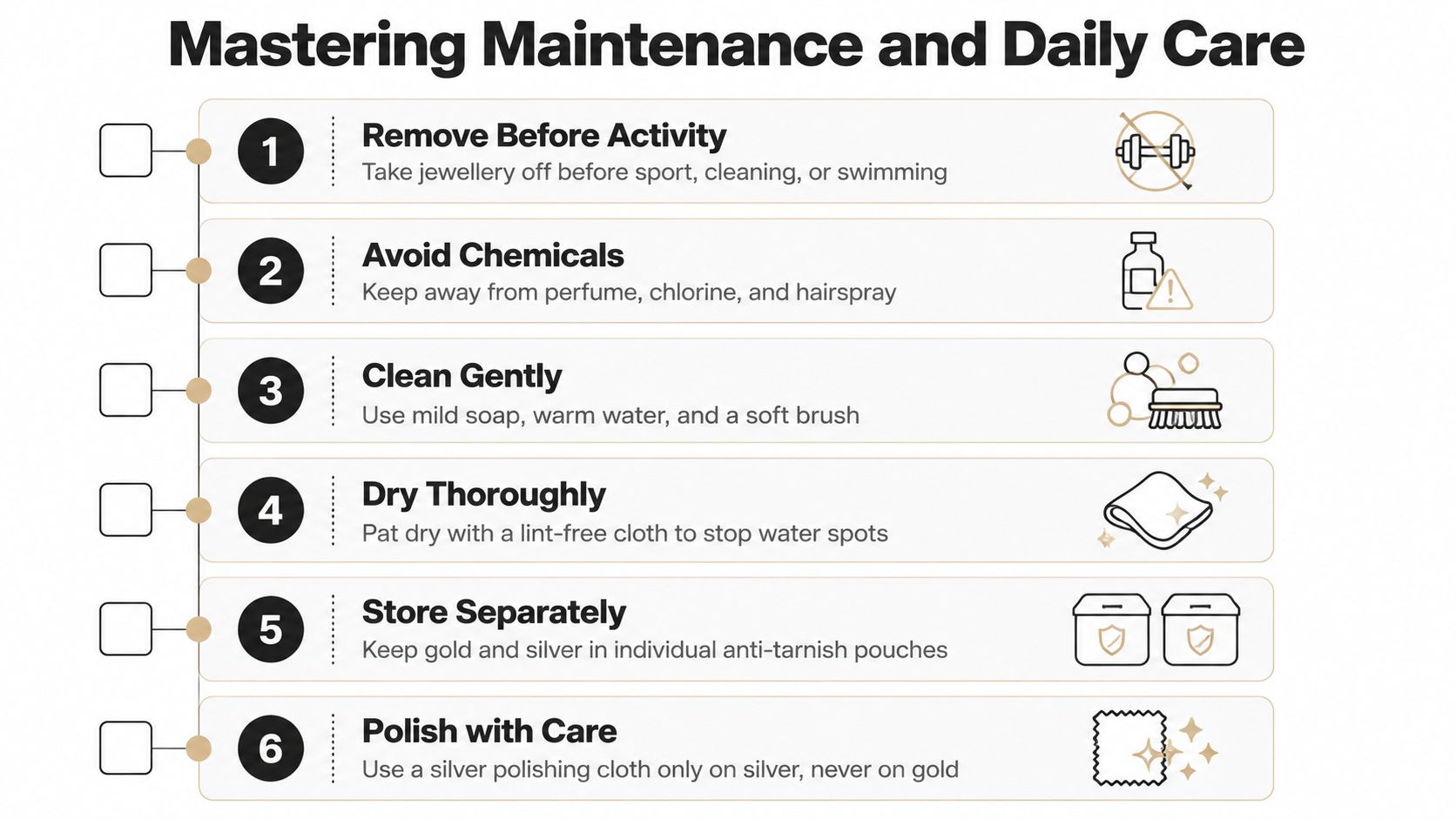
A practical weekly rhythm looks like this:
- Remove jewelry before activity: Take it off before exercise, cleaning, swimming, or tasks that create impact.
- Keep chemicals away: Apply perfume, hairspray, lotion, and cosmetics before putting jewelry on.
- Clean gently: Use mild soap, warm water, and a soft brush when the material and finish allow it.
- Dry completely: Pat each piece dry with a lint-free cloth, especially around clasps and engraved areas.
- Store separately: Keep gold and silver in individual pouches or compartments to limit scratching and tarnish transfer.
- Polish selectively: Use a silver polishing cloth only on suitable silver surfaces, never as a universal jewelry cloth.
The EP Fine Jewelry jewelry care guide is a useful reference for home cleaning decisions. Follow the product maker's instructions when a piece includes plating, gemstones, enamel, or intricate personalization.
Know when home care stops being sensible
Stop polishing when tarnish doesn't lift easily or when the finish appears uneven. Repeated rubbing can remove surface treatments and soften crisp engraved details. A professional jeweler should handle loose stones, bent prongs, damaged clasps, deep scratches, and pieces with sentimental value.
Storage rule: Separate pieces by metal, and separate chains from heavy charms. Most preventable damage begins when jewelry rubs together in a crowded box.
Choosing the Right Metal for Every Category
The strongest recommendation changes by jewelry category. A ring takes more punishment than a necklace. An earring sits in sensitive skin. A charm is handled repeatedly, while a pendant usually hangs with limited contact. Think in terms of stress, exposure, and replacement risk.
Rings and bangles
Choose solid gold for a ring you'll wear constantly, especially when it carries a gemstone or represents a major personal milestone. A practical gold alloy and a substantial construction can make repair and maintenance more manageable over the long term. Inspect the band thickness, setting, and underside rather than focusing only on karat.
Silver works well for statement rings, seasonal designs, and pieces you'll rotate. It's also a sensible choice when you want a large visual presence without putting the entire budget into one small item. Take silver rings off for cleaning, lifting, gardening, and water-heavy tasks.
Bangles and bracelets need a similar split. Solid gold suits a daily signature bracelet. Silver suits stacked styling, personalized details, and designs you want to combine without matching every piece.
Necklaces and charms
Necklaces are generally kinder to jewelry than rings because they experience less direct impact. Silver is especially effective for charm necklaces, layered pendants, and personalized pieces where you want to change the arrangement over time. Check the chain, jump rings, and clasp, because those small components often determine whether the piece stays secure.
Gold makes more sense for a chain you wear continuously or a sentimental pendant that shouldn't be treated as disposable. A gold chain can serve as a stable foundation, while silver charms add contrast and allow you to update the look.
Personalized jewelry also benefits from a metal choice that matches the design's emotional role. Choose gold for a name, date, or initial piece you expect to keep close for years. Choose sterling silver when you're creating a more flexible, giftable, or trend-responsive design.
Earrings
For earrings, comfort and skin tolerance come before color. Choose clearly specified materials and avoid wearing any piece that causes persistent irritation. Gold can be the more dependable choice for a daily stud or small hoop when the alloy suits your skin, while silver can work well for occasional earrings and fashion-led shapes.
Heavy statement earrings require careful construction in either metal. The issue isn't only whether the metal is gold or silver. Check the post, backing, weight distribution, and closure. A beautifully finished earring that pulls uncomfortably won't become a favorite just because the metal is more expensive.
Building a Versatile Mixed-Metal Wardrobe
A mixed-metal wardrobe is more practical than a single-metal collection because it gives each piece a job. Use gold as an anchor, silver as a source of contrast, and personalized charms as visual connectors. You don't need every item to match. You need repeated shapes, textures, or motifs to make the combination feel intentional.
Start with one reliable foundation. That might be a gold chain, a silver bangle, or a pair of simple studs. Add the opposite metal through a pendant, charm, ring, or watch detail. Keep one feature consistent, such as link style, finish, gemstone color, or scale.
Layering works best when the metals don't compete for identical space. Try a fine gold chain with a longer silver pendant, or place a silver charm on a gold chain. Stack bracelets with different widths rather than piling identical shapes together. A two-tone ring can bridge the palette without requiring every necklace and bracelet to match.
The EP Fine Jewelry guide to mixing gold and silver is relevant if you're building combinations rather than shopping for a single isolated piece. EP Fine Jewelry offers personalized jewelry, charms, necklaces, rings, bracelets, and earrings, including silver and 14K gold options, so shoppers can browse by category while planning a coordinated collection.
Shop in stages. Buy the piece that fills a real gap, check the material and finish, and consider care before adding another. If you're ordering online, review shipping and return policies, use the available secure payment options, and consider whether the store's free-shipping threshold changes the sensible timing of your purchase. At EP Fine Jewelry, orders of $200 qualify for free shipping, according to the store information provided.
The best answer to gold or silver is usually both, but not indiscriminately. Choose solid gold where durability, sentiment, and continuous wear justify the expense. Choose sterling silver where variety, personalization, and styling flexibility matter more. That's how you build a collection that works in real life rather than a drawer full of pieces that only match one outfit.
EP Fine Jewelry offers personalized jewelry, charms, necklaces, rings, bracelets, and earrings in silver and 14K gold, with gift options and care guidance for everyday ownership. Visit EP Fine Jewelry to choose a gold or silver piece that fills a specific role in your collection, then build your mixed-metal wardrobe with intention.