
You're standing in a jewelry store or scrolling through product pages, comparing a lower-priced 10K ring with a richer-looking 14K or 18K option. You want something real, attractive, and strong enough for regular wear, but you also don't want to pay for qualities you won't notice in everyday life. The question is simple: is 10K gold good, or does the lower karat make it a poor choice?
For many shoppers, 10K gold is a practical answer. It's real gold, it's widely used in everyday jewelry, and its larger share of alloy metals gives it a hard-wearing structure. That makes it suitable for pieces that face frequent contact, including rings, bracelets, charms, and personalized jewelry.
The trade-off is just as important. 10K gold contains less gold than higher-karat options, so it usually offers less recoverable gold value if you later sell it for scrap. Its alloy content may also matter if you have sensitive skin or a nickel allergy. This guide will help you understand those compromises clearly, from what the karat mark means to how 10K compares with 14K and 18K gold, where it fits best, and how to care for it.
Your jewelry's lifespan also depends on storage and handling. Simple habits, such as keeping pieces separate while traveling, can help prevent avoidable scratches, as explained in this guide to storing jewelry when traveling.
Table of Contents
- What 10K Gold Really Means and How It Is Made
- How 10K Compares to 14K and 18K Gold
- Pros and Cons You Should Weigh Before Buying
- When 10K Gold Shines Best for Everyday and Personalized Jewelry
- How to Care for 10K Gold and Keep It Looking Great
- Final Take Is 10K Gold Good for You
What 10K Gold Really Means and How It Is Made
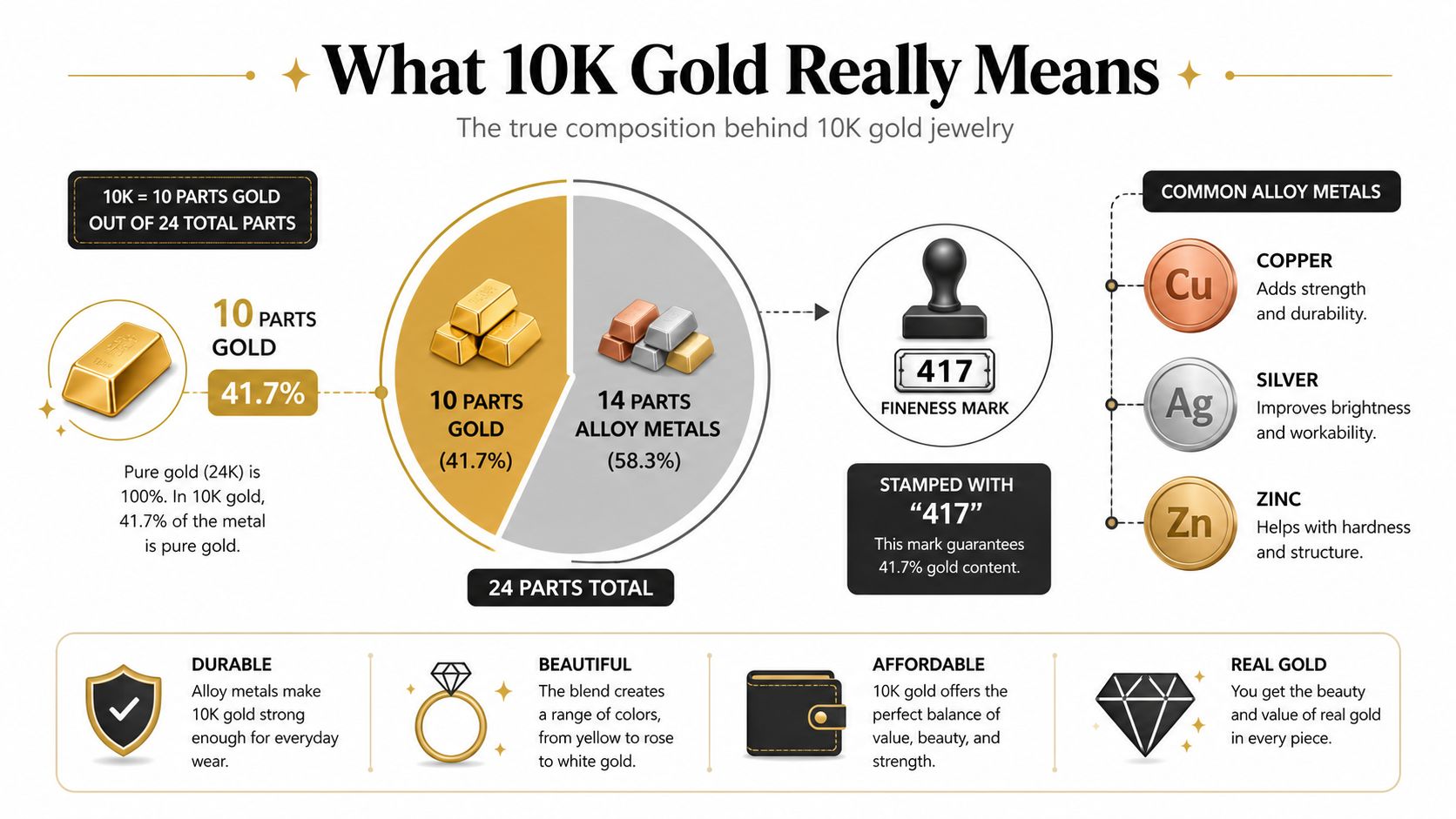
The word karat describes the proportion of pure gold in a gold alloy. Gold jewelry is measured against a total of 24 parts. In 10K gold, 10 parts are pure gold and 14 parts are other metals, so the finished material contains 41.7% gold and 58.3% alloy metals according to Whiteflash's comparison of 10K, 14K, 18K, and 24K gold.
A useful way to picture it is as a pie divided into 24 slices. Ten slices are gold. The other fourteen create the alloy's structure, color, and physical behavior. That doesn't make 10K “fake gold.” It means the gold has been blended with other metals so it can function better as jewelry.
Reading the 10K and 417 marks
You may see 10K, 10KT, or 417 stamped on a piece. The 417 mark refers to the fineness equivalent of approximately 417 parts gold per 1,000 parts of material. In everyday shopping, these marks communicate the same basic purity level.
In the United States, 10K is the minimum karat level legally permitted to be sold as gold jewelry. The Federal Trade Commission standard is reflected in the purity mark, with 10K jewelry staying around 41.6% to 41.8% pure gold according to BullionStar's explanation of 10K gold.
Why the alloy matters
Common alloy metals include copper, silver, zinc, nickel, and palladium. Manufacturers use different combinations to influence hardness, color, workability, and the final appearance of the piece.
The non-gold metals help make 10K jewelry more resistant to scratching and denting than softer, higher-gold alloys. Total Materia's overview of gold alloys explains that the harder alloying metals can increase hardness and tensile strength. In plain language, the extra metal content acts like reinforcement in a building material. It gives the piece more resistance when it meets desks, door handles, gym equipment, or other jewelry.
That combination is why shoppers looking for sturdy, accessible gold often explore 10K gold jewelry. The material is not a cheaper version of higher-karat gold. It's a different balance of gold content, strength, appearance, and price.
Key concept: 10K gold is genuine gold with a durability-focused alloy structure. Its lower gold content creates both its main advantage, toughness, and its main trade-offs, lower gold value and greater exposure to alloy metals.
How 10K Compares to 14K and 18K Gold
Choosing between karats is less like choosing between “good” and “bad” jewelry and more like choosing the right fabric for a coat. A delicate cashmere coat may feel richer, while a sturdy wool blend may handle daily use better. Gold karats work similarly. Higher karats contain more gold, while lower karats generally contain more strengthening alloy.
The main purity levels compare as follows.
| Karat | Gold Content | Durability and Hardness | Color and Price Profile |
|---|---|---|---|
| 10K | 41.7% gold | Generally the hardest and most resistant to everyday scratching and denting among these common options because of its higher alloy content | Usually the palest yellow gold and the most budget-oriented |
| 14K | 58.3% gold | A balanced structure, with substantial durability for regular wear | Warmer, richer gold color and a higher price profile than 10K |
| 18K | 75% gold | Softer than 10K and 14K, so it can be more vulnerable to scratches and dents during heavy daily use | Deeper, more saturated gold color and a higher price profile |
The purity figures for 14K and 18K appear alongside 10K in this gold alloy comparison. The key visual difference is color. Because 10K contains less pure gold, its yellow tone is generally paler than 14K or 18K. Some shoppers like that quieter appearance, especially when they prefer a less strongly yellow piece.
Durability versus richness
A 10K ring can make sense for someone who works with their hands, wears jewelry frequently, or wants a piece that doesn't require constant caution. A 14K ring often appeals to shoppers who want a middle ground between strength and a richer gold presence. An 18K piece tends to suit buyers who prioritize higher gold content and a more pronounced color over maximum resistance to daily abrasion.
This doesn't mean a higher-karat piece can't be worn regularly. It means the metal responds differently to contact and care. A ring worn while lifting, cleaning, or handling tools will experience a different environment from earrings worn occasionally.
The United States legal standard also shapes the market. Since 10K is the minimum level that may legally be sold as gold jewelry there, it occupies a recognizable entry point for solid gold. That status distinguishes it from gold-plated jewelry, where a thin gold layer covers another base material.
A useful buying rule: Choose 10K when daily toughness and accessible pricing lead your decision. Choose 14K or 18K when a warmer appearance and higher gold content matter more than maximum hardness.
For a direct look at a higher-karat style, compare the construction and appearance of a 14K link chain with the kind of everyday pieces you're considering.
Pros and Cons You Should Weigh Before Buying
A good answer to is 10K gold good depends on what you expect the jewelry to do. If the piece is an accessory you'll wear often, 10K can offer an appealing combination of genuine gold status, strength, and manageable cost. If you're buying primarily for long-term gold value, the calculation changes.
Why buyers choose 10K
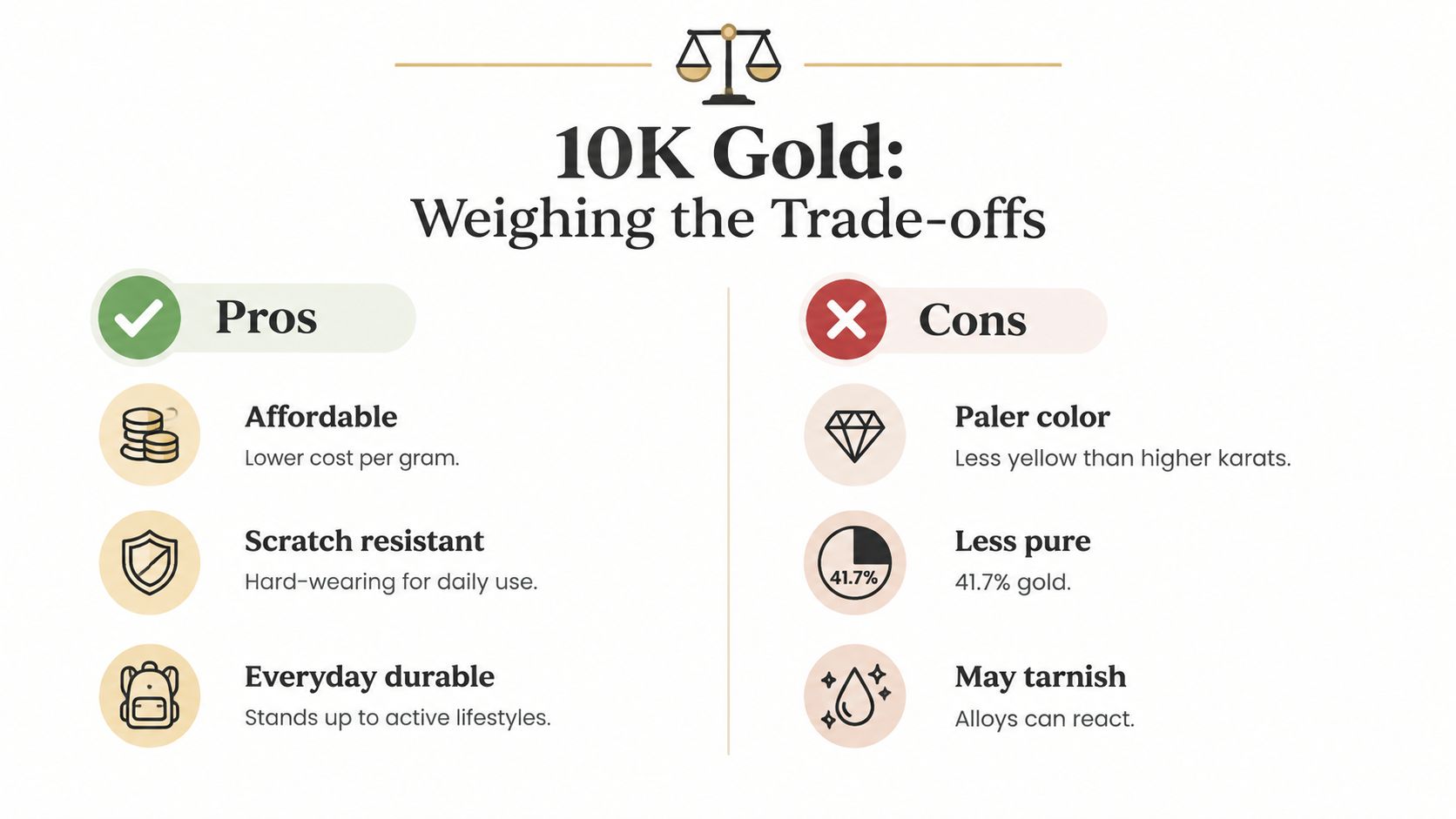
Affordability is the obvious advantage. With less gold in the alloy, 10K jewelry generally costs less than a similar piece in 14K or 18K. That can make it easier to buy a larger design, choose a personalized piece, or purchase matching items without stretching the budget.
Daily resistance is the practical advantage. The alloy structure helps 10K resist the scratches, dents, and surface wear that come with routine use. For an active wearer, that toughness may matter more than a deeper gold color.
Styling flexibility is another benefit. The paler yellow tone can blend easily with other metals and casual clothing. It can look polished without feeling overly formal, which suits jewelry worn at work, while running errands, or during ordinary social occasions.
Where the compromises appear
Lower resale value matters if you view jewelry as an asset. A 10g piece contains about 4.17g of gold because 10K is only 41.7% pure gold, as explained by this 10K gold value reference. The rest of the weight comes from alloy metals, so the recoverable gold value is materially lower than it would be in a similar-weight 14K or 18K piece.
That distinction is easy to miss when two pieces look almost identical in a product photo. 10K may be excellent for “Will it last?” but less compelling for “How much gold value can I recover later?”
Skin sensitivity requires alloy-specific information. Gold itself isn't always the source of a reaction. Nickel, copper, and zinc can cause problems for some wearers, and 10K's 58.3% alloy content creates more potential exposure than a higher-karat piece. Provence Jewellery's discussion of 10K and 14K gold recommends asking whether a 10K alloy is nickel-free when sensitivity matters.
The color may feel too light. If you want the saturated yellow associated with higher-karat gold, 10K may look understated by comparison. Some alloys can also react to moisture, chemicals, sweat, or skin oils, which may affect their surface appearance over time.
For comparison, it helps to understand how solid gold differs from plated jewelry. This guide to how long gold-plated jewelry lasts covers a separate construction category, so check the product description before assuming every gold-colored piece has the same composition.
When 10K Gold Shines Best for Everyday and Personalized Jewelry
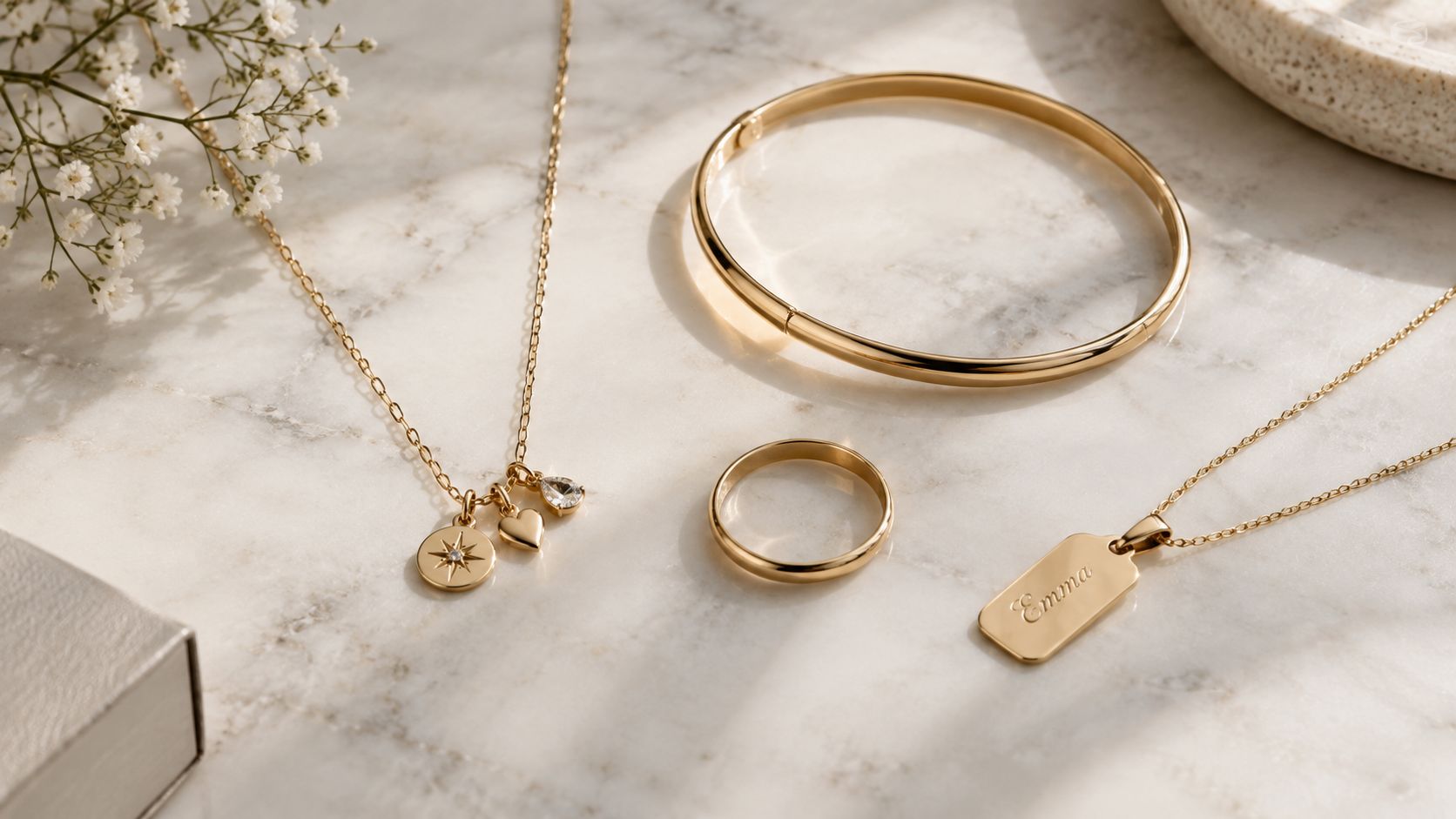
10K gold works especially well when jewelry has a job beyond looking beautiful. A charm necklace may stay around your neck through commutes, errands, and casual plans. A bracelet may rub against sleeves and desks. A ring may meet keys, shopping bags, countertops, and door handles throughout the day. Those situations reward a material chosen for resilience.
Everyday pieces with personal meaning
Personalized jewelry often gets worn more frequently than occasion jewelry because the design carries emotional significance. Initials, names, dates, and symbolic charms can become part of a daily uniform. For those pieces, 10K's durable structure can be a sensible match, especially when the wearer doesn't want to remove the jewelry constantly.
It also makes sense for shoppers building a layered collection. A 10K chain, charm, ring, or bangle can serve as an easy base for mixing textures and metals. Its softer yellow appearance may sit comfortably beside brighter yellow gold, white gold, or other neutral accessories.
Active lifestyles create another strong use case. Someone who travels often, works in a busy environment, or prefers minimal jewelry may value a piece that can handle ordinary contact without requiring precious treatment every hour. That doesn't mean the jewelry should be exposed to every chemical or impact. It means the underlying material is well suited to normal wear.
Wear scenario: If your priority is a meaningful ring or necklace that you can put on often and style casually, 10K's durability may be more useful than the extra gold content of a higher-karat alternative.
A gift buyer may also find 10K practical. It offers genuine gold status while leaving room in the budget for personalization, a matching charm, or gift-ready presentation. The right choice still depends on the recipient's skin sensitivity and whether they value gold content as part of the gift.
This video offers another visual way to think about gold jewelry and everyday styling:
Before buying, check the exact product description, metal color, dimensions, and alloy information. “10K gold” tells you the karat level, but it doesn't automatically tell you whether the piece is nickel-free or how it will suit a particular sensitivity.
How to Care for 10K Gold and Keep It Looking Great
10K gold can tolerate regular wear well, but durability doesn't make it immune to buildup or chemical damage. Skin oils, sweat, soap, perfume, and household products can dull the surface or affect alloy metals. A small care routine keeps the jewelry cleaner and helps you notice loose settings or damage early.
A simple care checklist
- Wipe after wearing. Use a soft, lint-free cloth to remove oils and sweat. This takes only a moment and reduces the residue that can make a piece look cloudy.
- Wash gently. Use warm water, mild soap, and a soft brush when the jewelry needs deeper cleaning. Avoid aggressive scrubbing, abrasive powders, and rough cloths that can mark the surface.
- Dry completely. Pat the piece dry rather than leaving moisture trapped around links, settings, or textured details. Make sure it's fully dry before placing it into storage.
- Store separately. Keep each piece in a soft pouch or a lined compartment so chains don't knot and harder jewelry doesn't rub against neighboring pieces.
For a more detailed household cleaning routine, see this guide to cleaning jewelry at home.
Know what to remove before wearing
Take 10K jewelry off before swimming, cleaning, applying perfume, or using products with harsh chemicals. Chlorine and other strong substances can affect jewelry alloys, while repeated soap and water exposure may gradually reduce shine.
Showering isn't an ideal daily habit for jewelry, even when the metal is durable. Remove the piece, dry it after use, and put it somewhere clean rather than on a damp bathroom surface.
Skin reactions deserve separate attention. 10K gold isn't automatically hypoallergenic. If you have eczema, a known nickel allergy, or a history of irritation, ask the seller whether the exact alloy is nickel-free before purchasing. If redness or discomfort develops, stop wearing the piece and seek professional medical advice rather than assuming the reaction will disappear.
Final Take Is 10K Gold Good for You
So, is 10K gold good? For many people, yes. It's a legitimate gold alloy that offers a strong everyday-wear profile, an accessible price position, and enough design flexibility for rings, necklaces, bracelets, charms, and personalized pieces.
The best reason to choose it is practical. You want jewelry that can handle frequent contact, you prefer a lighter gold color, or you'd rather spend less on the metal itself and more on the design. That makes 10K particularly appealing for casual pieces, gifts, and jewelry that becomes part of a daily routine.
The main reasons to look elsewhere are equally clear. Choose a higher karat if richer color and greater gold content matter more than maximum hardness. Think carefully before choosing 10K as an investment, because its lower gold fraction limits the amount of recoverable gold in the piece. If you have sensitive skin, confirm the alloy composition and ask specifically about nickel-free construction.
Use three questions to make the decision:
- How often will you wear it? Frequent wear favors 10K's hard-wearing structure.
- What matters more, color or toughness? Higher karats offer more gold-rich color, while 10K emphasizes resistance and practicality.
- Are you buying an accessory or an asset? 10K suits accessory-first decisions better than resale-first decisions.
EP Fine Jewelry offers 10K gold jewelry alongside personalized designs, charms, rings, bracelets, and care guidance, so shoppers can compare everyday formats before choosing. Visit EP Fine Jewelry to explore pieces that match your wearing habits, gifting plans, and preferred style.
Visit EP Fine Jewelry to browse 10K gold rings and other everyday jewelry, including personalized options suited to meaningful gifts. Check the product details and care guidance before ordering so your choice fits both your style and your skin needs.