
You're getting dressed, you slip on your watch, reach for a bracelet, then pause. Will it catch on your sweater? Will it feel annoying by lunch? Will the finish still look good after handwashing, commuting, typing, and everything else your day throws at it?
That little pause is why choosing bracelets to wear everyday is different from choosing a bracelet for dinner, a wedding, or a photo. Daily pieces have to earn their spot. They need to look good with jeans, office clothes, and weekend basics. They also need to feel easy on your wrist when you're carrying bags, opening doors, working at a keyboard, or sleeping on the couch during a movie.
Bracelets have lasted for about 7,000 years as wrist adornment, evolving from natural materials like shells, stone, copper, and bronze into the fashion and fine-jewelry styles we know now, which helps explain why they still work so well as everyday accessories (historical jewelry market overview). And this isn't a tiny category. The bracelet market was valued at about USD 2.68 billion in 2025 and is projected to reach roughly USD 4.45 billion by 2035, while broader bracelet jewelry coverage estimates USD 46.84 billion in 2025 rising to USD 67.55 billion by 2033 (global bracelet market coverage). People buy bracelets every day because they fit real life, not just special occasions.
Table of Contents
- Introduction to Bracelets You Can Wear Every Day
- What Makes a Bracelet Truly Everyday Wearable
- Popular Bracelet Styles for Daily Wear and How They Compare
- Materials That Hold Up to Everyday Life and Sensitive Skin
- How to Choose Fit Layer and Personalize for Everyday Comfort
- Keeping Your Everyday Bracelets Looking New With Simple Care
- Finding Your Perfect Everyday Bracelet and Gifting It Well
Introduction to Bracelets You Can Wear Every Day
A good everyday bracelet should feel a bit like your favorite pair of sneakers. You notice it when you first put it on, then you stop thinking about it because it works.
That's where many shoppers get stuck. A bracelet can look beautiful in a product photo and still be wrong for daily wear. A thick cuff may feel too rigid while typing. A dangling charm bracelet may tap against your laptop all day. A gold-plated piece may look perfect at first but need more careful handling than you expected.
For many, “everyday” means a bracelet has to survive ordinary habits. Handwashing. Reaching into a tote bag. Pulling on a knit sleeve. Resting your wrist on a desk. Wearing it from breakfast through errands and dinner without wanting to take it off.
Think in real-life moments
You might want one bracelet that does everything. Or you might want two lanes.
- Workday lane: A slim chain, low-profile tennis style, or smooth bangle that won't distract you at a keyboard.
- Weekend lane: A more textured piece, beaded bracelet, or personalized style with a little more personality.
- Gift lane: Something meaningful enough to feel special, but easy enough to wear often.
Some people start by browsing a broad bracelet collection at EP Fine Jewelry and then narrow their options by comfort, finish, and clasp. That's a smart order. Start wide on style, then get picky about wearability.
What matters most: The best everyday bracelet isn't the one with the boldest look. It's the one you keep reaching for without hesitation.
What everyday really asks from a bracelet
Daily wear puts a bracelet through repeated small stresses. Not dramatic damage. Just friction, moisture, bumps, and movement over and over again.
That's why the right choice usually comes down to four simple questions:
- Does it feel comfortable for hours?
- Will it snag or knock into things?
- Can the material handle regular wear?
- Does it suit your routine, not just your outfit?
If you answer those, your choice gets much easier.
What Makes a Bracelet Truly Everyday Wearable
A bracelet can be pretty and still fail the all-day test. Everyday wearability is about how the piece behaves once your life starts moving.
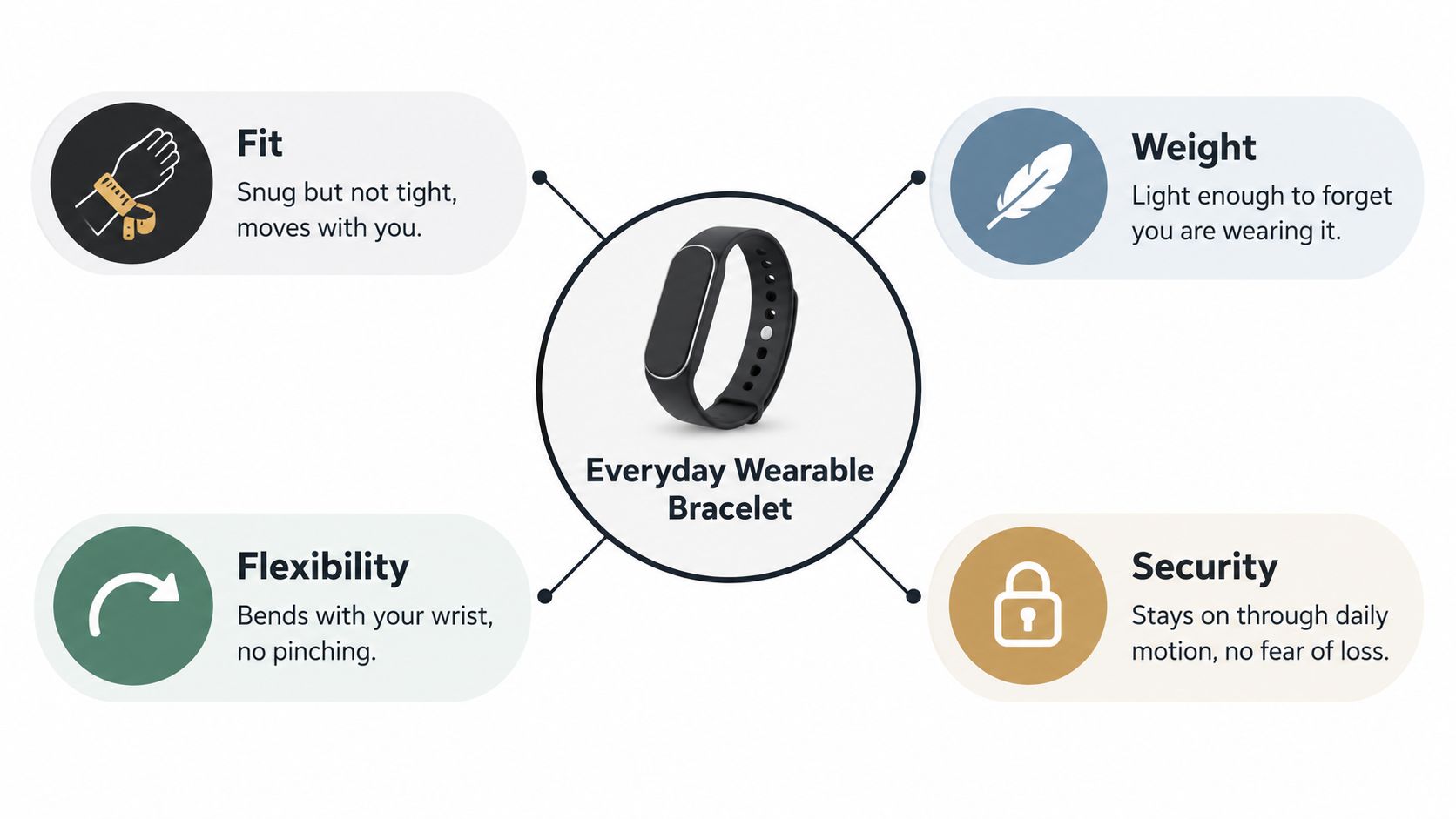
Fit should feel easy, not loose and sloppy
A bracelet should move a little, but not so much that it spins wildly or slides halfway down your hand. Think of how a comfortable watch sits. It has room to breathe, but it doesn't feel like it's trying to escape.
If a bracelet is too tight, it can pinch, leave marks, and become annoying by midday. If it's too loose, it can bang into surfaces and wear faster.
A quick way to judge fit is to ask yourself what happens when you turn your wrist palm-down. A good everyday bracelet stays controlled. It doesn't swing like a pendulum.
Weight matters more than shoppers expect
Many people assume heavier means better. Sometimes it does mean the piece feels substantial. But for daily wear, extra weight can become tiring.
A bracelet you wear every day should feel more like glasses you're used to than a handbag you're carrying. Present enough to enjoy, light enough to forget.
Watch for this especially in:
- Wide cuffs that can press into the wrist bone
- Chunky link bracelets that shift around a lot
- Layered stacks that look great standing still but feel busy in motion
A bracelet that feels impressive for ten minutes may feel irritating by hour five.
Flexibility and security work together
Rigid styles aren't automatically bad. Some people love the clean look of a bangle or cuff. But a flexible bracelet often feels friendlier during ordinary movement because it follows the wrist instead of resisting it.
Security matters just as much. Daily wear means repeated motion, and that puts pressure on the closure. A bracelet can't be “everyday” if you're constantly checking whether it's still there.
Look closely at:
- How the clasp opens and closes
- Whether you can fasten it by yourself
- Whether it catches on sleeves or hair
- Whether decorative parts stick up
Match the bracelet to your actual day
The biggest mistake is shopping for fantasy life instead of real life. If you type all day, a low-profile chain may beat a jangly stack. If you're active and wash your hands often, smoother and sturdier designs are usually easier to live with. If you travel a lot, secure clasps matter more than dramatic detail.
A useful filter is to picture your most ordinary day, not your best-dressed one.
- Desk work: Choose low-noise, low-profile, non-snag styles.
- Parenting or hands-on routines: Pick secure, simple pieces with few protrusions.
- Frequent sleeves or knitwear: Favor smooth links and minimal exposed edges.
- One-bracelet wardrobes: Choose a shape that layers well but also looks complete alone.
Popular Bracelet Styles for Daily Wear and How They Compare
Some bracelet styles are naturally easier to wear every day. Others can work, but only if you're realistic about their tradeoffs.
Chain bracelets
Chain bracelets are often the easiest starting point. They drape with the wrist, layer well, and come in everything from whisper-thin links to bolder paperclip shapes.
For daily wear, smooth chain links usually behave best. They slip under sleeves more easily and don't fight your movement. The main caution is clasp quality and link delicacy. Very fine chains can feel elegant, but they may need gentler treatment.
Bangles and cuffs
Bangles and cuffs give structure. They can make even a simple outfit feel polished. But structure is also their challenge.
A rigid bracelet doesn't adapt much. If the fit is even slightly off, you'll notice it all day. Cuffs can also catch on sweater cuffs or press into the wrist when you lean on a desk.
That said, some people love a single slim bangle as their signature piece because it's simple and visually clean.
Tennis bracelets, beaded styles, and personalized pieces
A tennis bracelet has a refined look and often sits low against the wrist, which many people find comfortable. It can move from casual to dressy easily. If you want sparkle without bulk, it's a strong option. You can see one example of a low-profile style in this diamond bezel tennis bracelet article.
Beaded bracelets feel softer and more relaxed. They can be very comfortable, especially when they're strung in a way that lets them move naturally. The tradeoff is that beads can knock against desks, and some materials need extra care.
Personalized bracelets, like name or date styles, add meaning. They're especially nice if you want a bracelet to feel like part jewelry, part memory. The key is checking whether the nameplate or charm sits flat or flips around too much.
Everyday Bracelet Styles Compared for Comfort and Versatility
| Style | Best For | Comfort and Durability Notes |
|---|---|---|
| Delicate chain | Minimal everyday wear, layering | Light and easy to stack, but very thin links can need gentler handling |
| Paperclip or link chain | Casual polish, solo wear or layering | Good visual presence, but larger links may catch more on knits |
| Slim bangle | Clean, structured look | Smooth and simple, though rigid fit needs to be right |
| Open cuff | Statement-leaning daily wear | Easy to put on, but edges and width can feel bulky during desk work |
| Tennis bracelet | Low-profile sparkle | Usually comfortable and versatile, but secure clasp design matters |
| Beaded bracelet | Relaxed, textured styling | Comfortable movement, though some beads can knock or scratch nearby pieces |
| Personalized name bracelet | Meaningful gift or signature piece | Sentimental and distinctive, but plate orientation affects how neatly it sits |
Simple rule: If you want one bracelet to do the most jobs, start with a smooth chain or low-profile tennis style.
Materials That Hold Up to Everyday Life and Sensitive Skin
Style gets attention first. Material determines whether a bracelet still feels good a few months from now.
For daily wear, the test is friction, moisture, skin contact, and maintenance. A bracelet rubs against desks, sleeves, bags, and your own skin all day. Some materials handle that. Others need more caution.
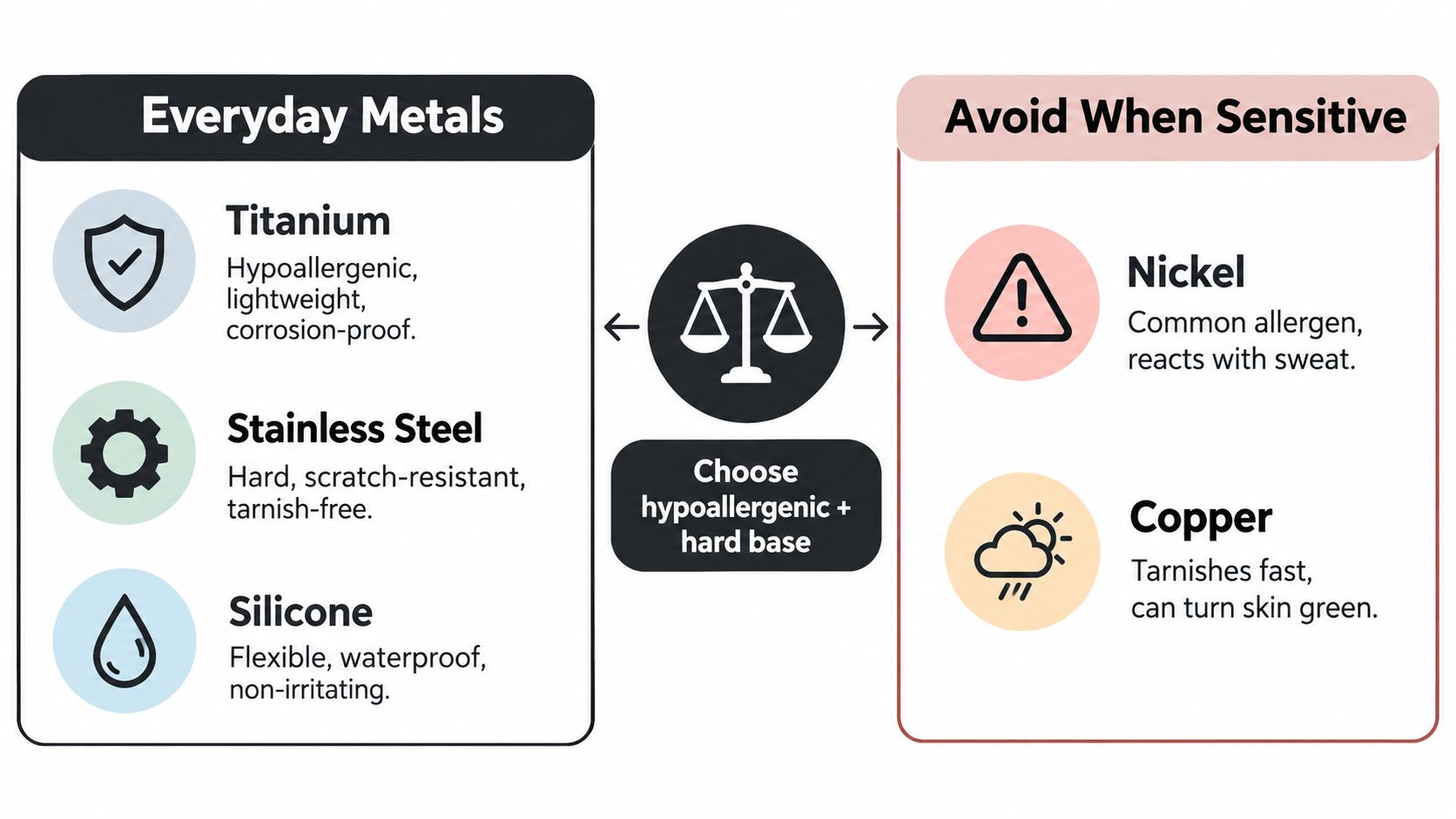
Hard base metals usually make daily life easier
Independent everyday-jewelry guidance repeatedly points to stainless steel and titanium as strong choices for daily wear because they resist scratches, rust, and moisture-driven wear better than softer precious metals or plated alloys (daily-wear metal guide).
A simple analogy helps here. Think of the base metal like the frame of a suitcase. If the frame is sturdy, the whole piece handles bumps better. If the base is weak and the beauty comes mostly from a surface coating, everyday friction can reveal that weakness.
That's the main issue with thin plating. The top layer can wear down over time, especially where the bracelet repeatedly rubs against skin or hard surfaces. Once that finish thins, the bracelet may tarnish more easily or expose a less stable metal underneath.
Sensitive skin is usually about nickel release
Many shoppers think “allergy-safe” depends only on the metal name. It's more specific than that. For skin sensitivity, nickel release is the key concern.
Guidance for everyday jewelry emphasizes nickel-free or very low-nickel options such as solid gold, platinum, titanium, and high-quality stainless steel because sweat and prolonged skin contact can increase irritation in nickel-containing alloys. It also notes that testing frameworks like EN 1811 and artificial-sweat methods help assess nickel release, while ASTM B117 or ISO 9227 are used to compare corrosion resistance. In that context, 316L stainless steel is commonly presented as a strong everyday-wear option because its chemistry and surface finish improve resistance to pitting and skin-contact wear (sensitive skin and metal performance guidance).
If you've ever worn a bracelet that seemed fine at first but turned itchy on hot days, that's why this matters.
What common material labels usually mean in practice
- Solid gold: Often a comfortable long-term choice for many people, especially if you want a precious metal and less worry about surface wear.
- Gold-plated: Can look lovely, but usually asks for more careful treatment because the beauty lives on the outside layer.
- Titanium: A practical pick for people who want light weight and strong resistance to daily wear.
- Stainless steel: Often one of the easiest “wear it and don't fuss over it” options.
- Mixed-metal fashion pieces: Fun for style, but worth checking closely if you're sensitive or hard on jewelry.
One helpful reference point for precious metal shoppers is this guide on whether 10K gold is a good choice, which can help you think through durability and daily use in plain language.
Buying filter: If a bracelet is meant for everyday wear, ask what the base metal is, not just what color it is.
How to Choose Fit Layer and Personalize for Everyday Comfort
A bracelet can be durable and still feel awkward if the fit is off or the stack is too busy. Comfort is often a styling decision as much as a material decision.
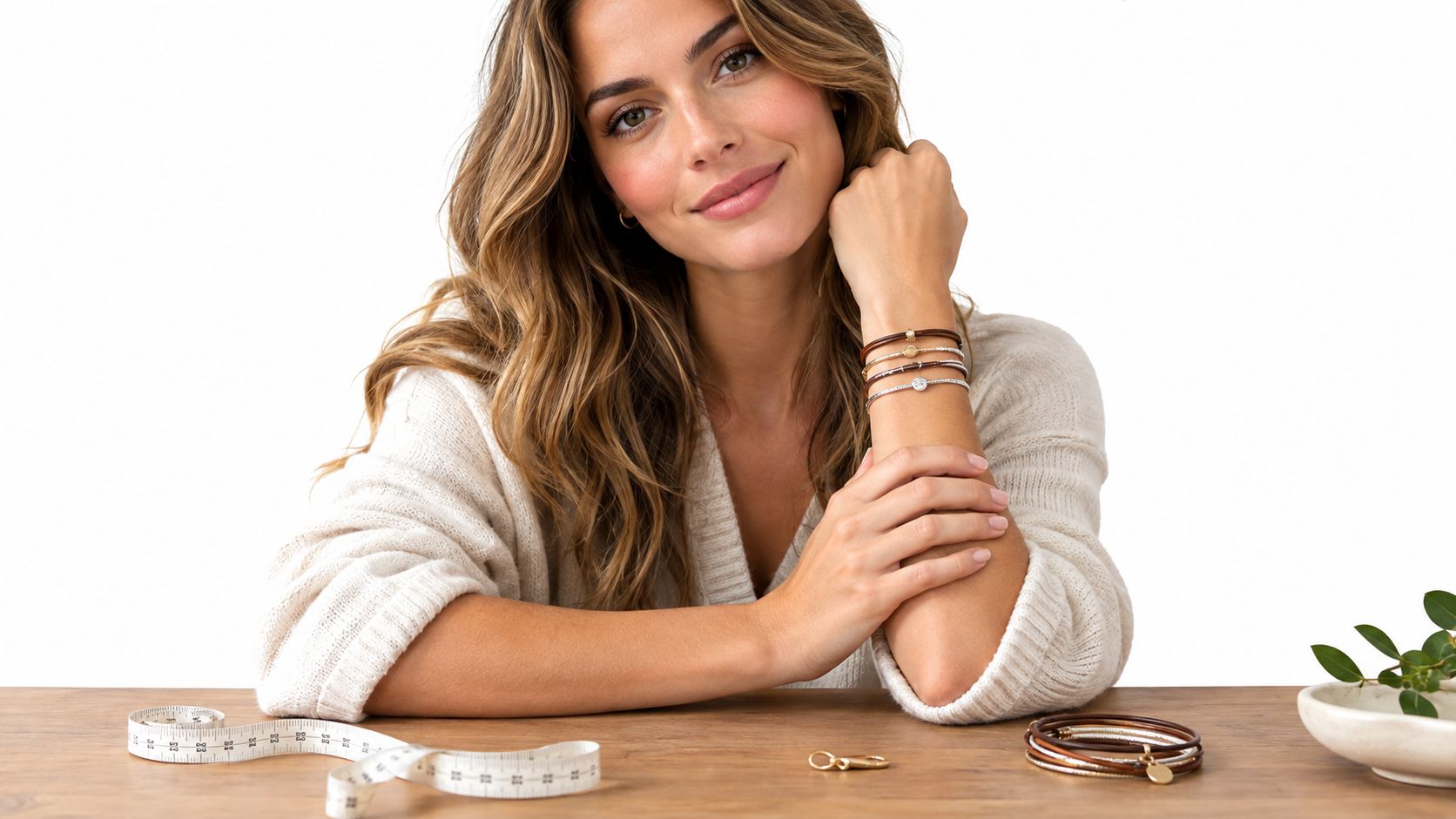
Start with wrist fit, not bracelet trend
The easiest way to choose fit is to think about drape. You want a little movement, not a roaming bracelet.
If you prefer a neat look, choose a bracelet that sits close and stays near the wrist bone. If you like a softer look, allow a bit more ease so it can shift without dropping too far down the hand. For charm or nameplate styles, too much looseness often makes the front flip or slide out of place.
A practical test in the fitting stage:
- Raise your arm: The bracelet shouldn't race down your wrist.
- Rest your hand on a desk: It shouldn't dig sharply into your skin.
- Pull on a sleeve: It shouldn't instantly snag or twist backward.
Clasp comfort matters more than most style guides admit
The clasp is the tiny part that controls whether you'll wear the bracelet. A beautiful bracelet with a frustrating clasp often ends up sitting in a box.
Look for a clasp that feels secure without being fiddly. If you often dress in a hurry, choose something you can fasten solo without turning it into a morning project.
Common real-life questions help:
- Does the clasp have sharp edges?
- Will it catch your hair or sweater cuff?
- Can you close it with one hand?
- Does the bracelet stay balanced, or does the clasp keep rotating to the front?
Some of the most wearable bracelets are not the flashiest ones. They're the ones with closures you trust and forget about.
Layer with contrast, not crowding
A good stack has rhythm. One bracelet might bring shine, another texture, another meaning. If every piece is the same width and movement, the stack can feel tangled even when it looks coordinated.
Try combinations like:
- A slim chain plus one bangle for structure and movement
- A tennis-style bracelet plus a plain chain for sparkle without overload
- A personalized bracelet plus one simple companion piece so the custom element stays readable
If you want ideas for sentimental styles, this roundup of personalized bracelets shows the range from subtle to more expressive.
A quick styling demo can also help you spot what looks balanced before you buy.
Personal details should still wear easily
Personalization works best when it doesn't fight the function of the bracelet. A date, initials, or a short name can make a piece feel anchored to a memory, but the design still needs to sit comfortably and read clearly on the wrist.
Gift buyers should also think about practical details. Custom pieces can involve production time, and final-sale policies are common for personalized jewelry. If you're giving the bracelet as a present, details like gift boxes and order notes can make the experience feel more thoughtful without changing the bracelet itself.
Keeping Your Everyday Bracelets Looking New With Simple Care
Most bracelet wear doesn't come from one big accident. It comes from small repeated habits. Lotion under the clasp. Moisture left on metal. Two bracelets rubbing together in a drawer.
That's why simple care works so well. You don't need a complicated ritual. You need a few repeatable habits.
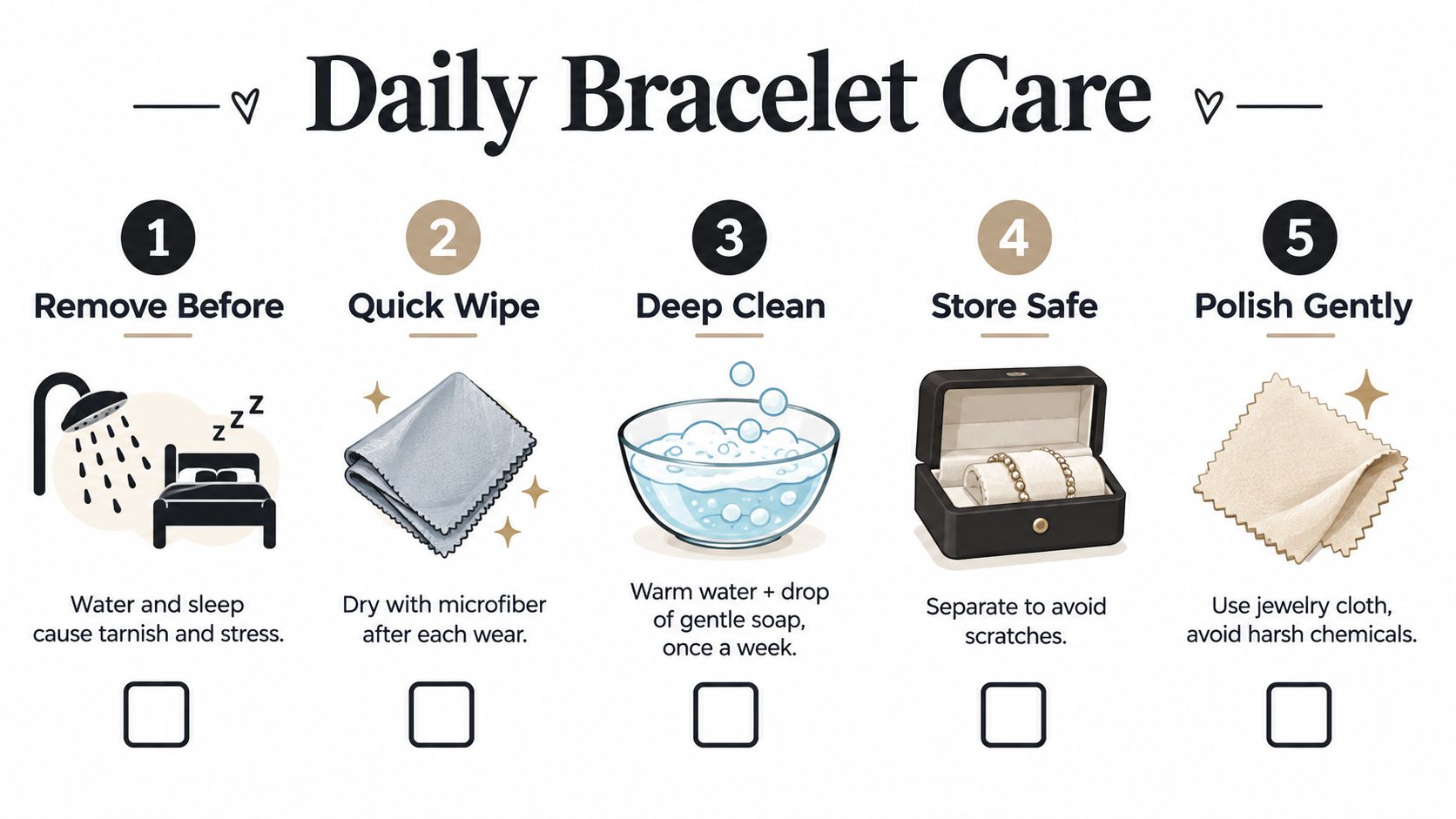
The small routine that prevents most problems
Independent jewelry-care guidance consistently warns against perfume, lotion, humidity, and strong chemicals, and recommends storing bracelets separately to reduce scratches. It also points out a common content gap: many shoppers still don't get clear comparisons of how materials age in real daily use, especially in humid climates or with frequent handwashing (bracelet care and material-maintenance discussion).
A basic routine keeps things manageable:
- Wipe after wear: A soft dry cloth removes moisture and skin residue before they sit on the surface.
- Store separately: Individual pouches or separate sections prevent bracelets from rubbing each other.
- Keep products away: Put on lotion, perfume, and hair products first. Add jewelry after.
- Remove for rough tasks: Cleaning, gym sessions, and anything abrasive can shorten the life of finishes and settings.
Care depends on what the bracelet is made from
Harder, corrosion-resistant metals are usually easier to live with. Plated bracelets often need the gentlest treatment because their finish can wear from repeated friction. Beaded and personalized pieces may need extra attention around stringing, charms, or decorative plates.
If you wash your hands frequently or live somewhere humid, check your bracelets more often. Not in a stressful way. Just enough to notice dullness, residue, or a clasp that feels less secure than usual.
Daily habit that pays off: Treat bracelets like sunglasses. Put them on deliberately, take them off deliberately, and don't toss them loose into a bag.
For a simple home routine, this guide on how to clean jewelry at home can help you clean gently without overdoing it.
When “worn in” is normal and when it's not
Some signs of wear are normal. Fine surface marks happen. A bracelet that's loved every day won't stay showroom-perfect forever.
What you want to avoid is preventable wear. Flaking finish, deep scratches from storage friction, sticky buildup around links, or irritation from poor material match. Good daily habits won't freeze time, but they can keep a bracelet looking fresh and feeling comfortable much longer.
Finding Your Perfect Everyday Bracelet and Gifting It Well
The right everyday bracelet usually becomes obvious once you stop asking only “Do I like this?” and start asking “Will I live in this?”
A strong choice checks four boxes. It suits your routine. It feels comfortable for hours. The material matches your sensitivity and maintenance tolerance. The design still looks like you.
A simple decision checklist
Before you buy, run through this short list:
- Lifestyle fit: Will it work with typing, commuting, errands, and sleeves?
- Clasp confidence: Can you fasten it easily, and does it feel secure?
- Snag risk: Are there raised details, sharp edges, or dangling parts that may annoy you?
- Material reality: Are you choosing solid metal performance or a finish that needs extra care?
- Gift meaning: If it's for someone else, does it match how they dress and move?
If you're torn between two styles, the more wearable one usually gets more love. The flashy bracelet often wins the checkout moment. The comfortable one wins the next hundred wears.
Gifting works best when practicality meets sentiment
The nicest bracelet gifts feel personal without becoming fussy. A personalized name or date bracelet can be meaningful, but everyday comfort still matters. The recipient should be able to wear it with ordinary clothes, not save it for rare occasions.
That's especially true if you want your gift to become part of someone's routine. Meaning opens the box. Wearability keeps the bracelet on the wrist.
Choose the piece that feels easy, sturdy, and familiar from day one. That's usually the bracelet that lasts in someone's life.
EP Fine Jewelry offers bracelets, bangles, and personalized pieces that fit this everyday-wear conversation, along with gift box options, order notes, and care support for shoppers who want both meaning and practicality. If you're narrowing down bracelets to wear everyday, visit EP Fine Jewelry to compare styles and find a piece that matches your routine, comfort needs, and gifting plans.