
You want more personality than a single earring can provide, but an overloaded ear doesn't fit your style. Maybe you're dressing for the office, choosing jewelry for a gift, or trying to make a simple weekend outfit feel more intentional. A minimalist ear stack gives you that extra detail without turning every piercing into a competing focal point.
Start with the lower-lobe anchor, then move upward with smaller or lighter pieces. Keep the lower position visually strongest, use spacing to let each earring breathe, and adjust the arrangement to the outfit's formality. The seven ideas below move from an effortless single stud to expressive mixed metals and coordinated jewelry across categories. EP Fine Jewelry's earrings and Personalized collection can also help you build a stack around initials, birthstones, or another meaningful detail.
Table of Contents
- 1. Single Minimal Stud Stack
- 2. Dual Lobe Stack With Spacing
- 3. Second Lobe Plus Single Upper Stud
- 4. Helix-to-Lobe Gradient Stack
- 5. Matching Symmetrical Double-Ear Stack
- 6. Asymmetrical Mixed-Metal Stack
- 7. Solitary Statement Stud With Charm Integration
- 7 Minimalist Ear Stack Designs Comparison
- Choose Your Anchor, Then Add With Intention
1. Single Minimal Stud Stack
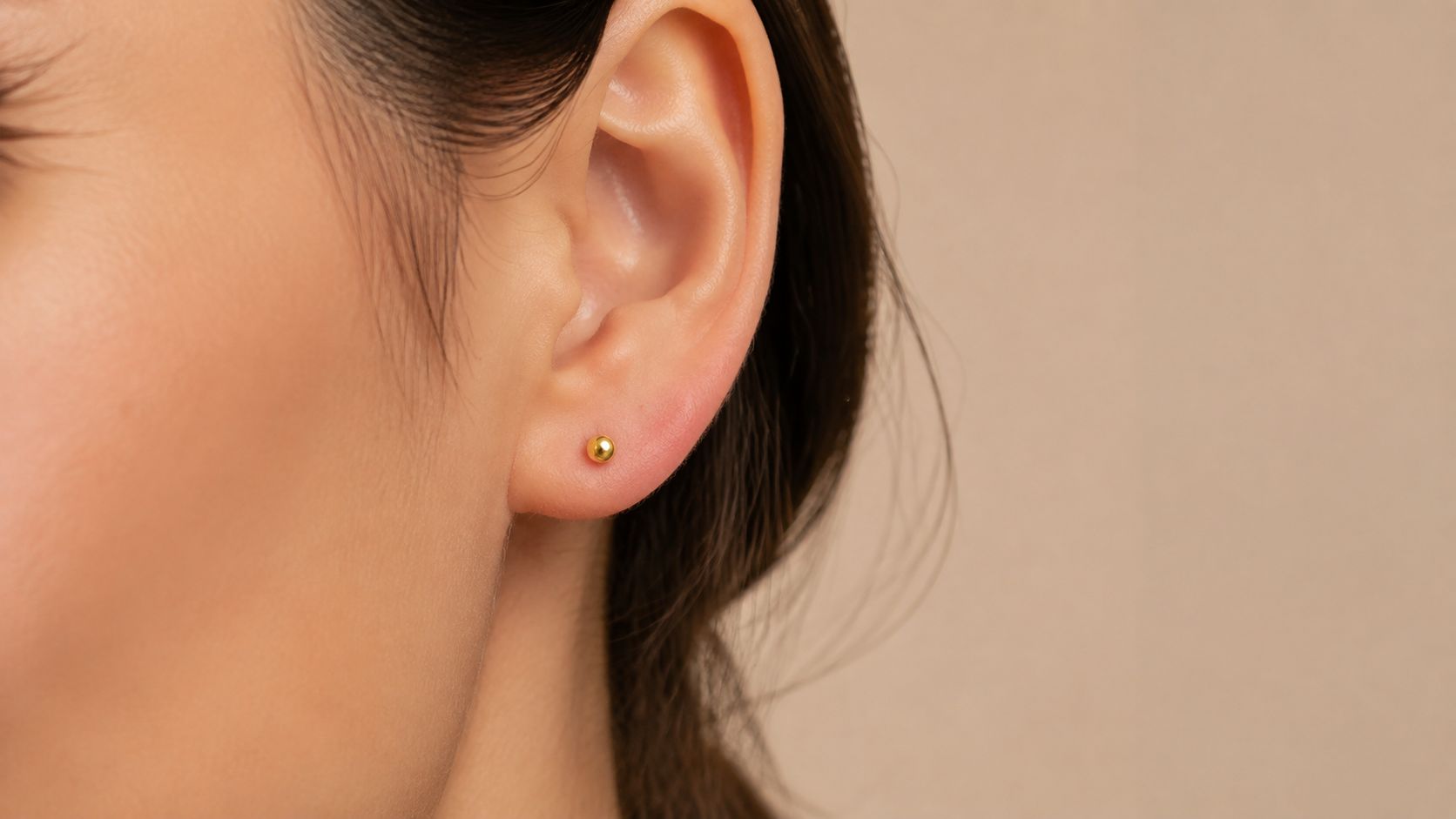
The cleanest ear stack starts with one small stud in the lower lobe. It may sound simple, but a carefully chosen stud can carry an entire outfit, especially when your clothing already has texture, color, or a strong silhouette.
Begin by placing the stud in the traditional lower-lobe hole. Choose a shape that sits close to the ear, such as a small diamond-style accent, a smooth geometric form, or a personalized birthstone. A tiny gold stud works with a white shirt and fitted trousers, while a silver geometric stud can sharpen a casual knit or denim look.
Build it from the lobe upward
There's no need to add another piercing for this version. Treat the lower-lobe stud as the anchor and coordinate it with a necklace, charm, or ring rather than adding more earrings. A personalized initial or birthstone can become the meaningful detail, while the rest of your jewelry stays quiet.
For shoppers comparing classic styles, EP Fine Jewelry's guide to diamond studs can help explain why this format remains a useful foundation. For gifting, select a personalized stud and consider the gift box option at checkout. An order note can also suggest a future pairing, such as a tiny hoop or second stud, without making the first purchase feel incomplete.
Practical rule: If the stud looks polished on its own, it's strong enough to anchor a larger stack later.
2. Dual Lobe Stack With Spacing
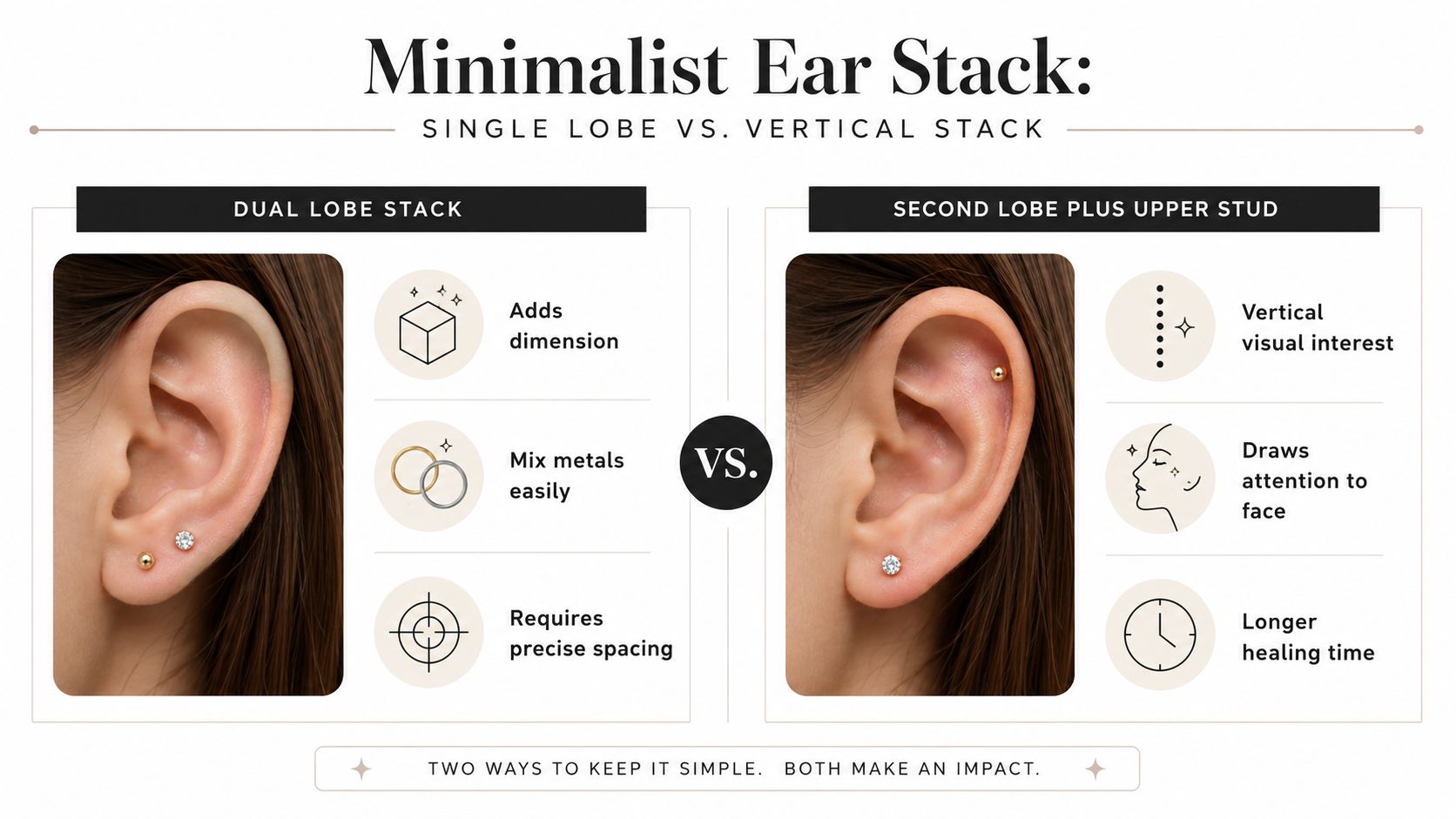
Two lower-lobe studs add interest without making the ear look busy. Start with the more noticeable piece in the established lower-lobe position. Add the second stud slightly above or beside it, following the distance between your existing piercings. The visible skin between them acts like a small frame, helping each piece stay clear.
A small gold stud beside a pearl-style stud creates a gentle contrast. For a personal detail, combine a diamond-style accent with a birthstone. Two metal tones can also make a plain outfit feel more current. A tiny gold stud suits a white shirt and structured trousers, while mixed metals can add definition to denim or a simple knit.
Use spacing as part of the design
Build upward from the lower lobe. Let the lower piece carry the visual weight, then choose a smaller shape, simpler finish, or quieter color for the upper position. If the piercings sit close together, low-profile studs prevent the area from appearing compressed. If they are farther apart, slightly different shapes can make the distance look deliberate rather than accidental.
The Three Stud Earring uses 14K plated Gold Silver with Cubic Zirconia and offers 3 variants across option1, option2, and option3. Although this arrangement shows two visible positions, a multi-stud design can give you more flexibility when deciding how pieces will sit across both ears. Check the product details before choosing how many pieces you need.
Leave enough visible skin between the studs for the arrangement to look intentional, not compressed.
For a gift, pair complementary pieces from the Personalized collection, add the gift box option, and use the order notes field for a styling suggestion or message. Jewelry Care guidance also helps you clean and store both pieces without allowing them to rub together.
3. Second Lobe Plus Single Upper Stud
This arrangement creates vertical movement with only two earrings. Place the larger piece in the lower-lobe position, then add a smaller stud in the upper-lobe hole. The result feels more layered than a dual-lobe arrangement because the eye travels upward along the ear.
A pearl-style lower stud with a tiny metal upper stud works well for a polished daytime outfit. You can also keep the metal consistent and vary the size, using a more noticeable lower piece and a smaller upper accent. For a personalized version, place the meaningful birthstone or initial where it can be seen clearly, then use a plain stud as the supporting piece.
Keep upper placements light
Upper-lobe and cartilage-adjacent placements can be more sensitive than a long-established lower-lobe hole. Choose a small, lightweight stud and avoid designs that pull, snag, or press against the ear. If the piercing is new, don't change the jewelry early to match an outfit.
A guide to types of earrings can help you compare studs, hoops, and other formats before choosing a piece for a higher placement. Professional aftercare guidance also matters. Cleveland Clinic notes that lobe piercings typically heal in about 6–8 weeks, while cartilage placements can take 12–16 weeks or even 3–12 months, depending on location, as explained in its ear-piercing healing guidance.
During healing, keep the composition simple. Wear the lower-lobe anchor first, add the upper stud only when the placement is ready, and ask a qualified piercer if swelling, pressure, or persistent irritation appears.
4. Helix-to-Lobe Gradient Stack
A helix-to-lobe arrangement follows the ear's natural curve. Start with the strongest piece at the lower lobe, then move upward through smaller studs, tiny huggies, or other low-profile designs. Each position should feel like the next step in a subtle staircase rather than a separate statement.
For an understated gradient, choose one metal and vary the size from lower to upper placement. A larger gold lower stud, a smaller middle piece, and a tiny helix accent create definition without filling every available space. You can also use personalization as the organizing principle, placing the most important birthstone or initial in the lower position and quieter pieces higher up.
Scale the stack as it rises
Style guidance commonly recommends a strong anchor with two to four supporting pieces and a 60–70% negative-space balance, so the ear reads curated instead of crowded. It also recommends placing larger designs lower on the ear and progressively smaller studs or huggies higher up, as described in this ear stack styling guide.
A tiny helix piece can add a polished detail to a blazer or evening outfit, but it shouldn't compete with a bold necklace. For readers comparing silhouettes, EP Fine Jewelry's article on diamond climber earrings offers another way to think about upward movement along the ear.
Healing deserves priority here. Add placements one at a time, avoid sleeping directly on a tender cartilage piercing, and follow professional aftercare rather than treating a new helix like an established lobe.
5. Matching Symmetrical Double-Ear Stack
Place the lower-lobe anchors on both ears before adding anything higher. Check their position from the front, then choose whether each side needs only that stud or a second matching accent. This order makes symmetry easier to judge and keeps the stack minimal, because repetition supplies cohesion without elaborate shapes.
Matching birthstone studs can mark a shared birthday month or personal milestone. Identical initial studs create a clear personalized story, while pearl-style studs on both lower lobes pair naturally with a simple necklace. If you add a second piece to each ear, choose smaller upper accents so the lower-lobe anchors remain the visual starting point.
Build both ears together
Set up the two ears as a pair rather than finishing one side and copying it later. After placing the lower studs, compare them from the front. Add the upper pieces at matching heights when your piercing placement allows, but remember that ears naturally differ. Aim for visual balance, not perfect measurement.
A structured outfit gives this arrangement a clear setting. A fitted jacket, clean neckline, or monochrome look lets matching studs appear deliberate. For softer clothing, personalized pieces add character and keep the result from feeling too formal.
EP Fine Jewelry's Personalized collection, optional gift box, and order notes can support a matching gift presentation. Coordinate the earrings with a necklace from the Necklaces collection or a ring from the Rings category by repeating the same initial, birthstone, or metal family. This creates a shared thread across the pieces while keeping each item easy to identify.
6. Asymmetrical Mixed-Metal Stack
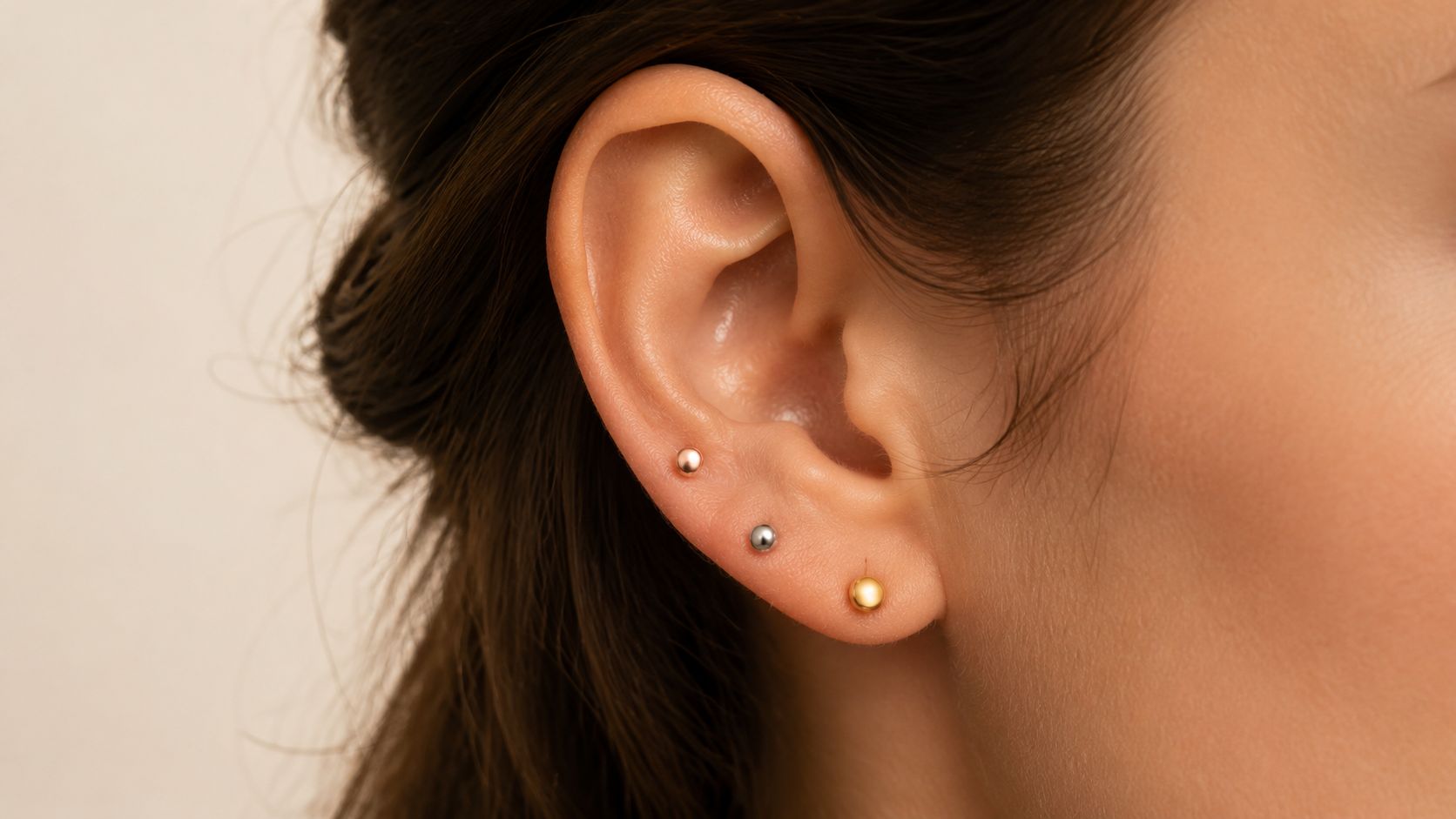
Mixed metals can look minimalist when the variation has a clear pattern. Start with one dominant metal in the lower lobe, add a second tone above it, and use a third only if the pieces remain small and visually related. The arrangement should look selected, not accidental.
For example, place a gold stud in the lower lobe, a silver ball stud in the second position, and a rose-gold accent higher up. Another option uses one pearl-style piece, one diamond-style accent, and one birthstone, with the metal tones changing gradually rather than randomly. On the opposite ear, repeat one metal or one motif instead of duplicating the entire arrangement.
Create a visual connection
Choose one detail that appears across the stack, such as matching round shapes, the same stone color, or a repeated initial. That connection keeps the contrast controlled. If the earrings vary in metal, keep their scale close. If they vary in shape, keep the metal family more consistent.
Before buying another piece, lay your current earrings beside one another and identify the dominant tone. The next earring should either reinforce that tone or act as a deliberate accent. EP Fine Jewelry's guide to mixing gold and silver can help you think through that combination before you place an order.
This style suits creative workwear, a simple black dress, or casual clothing that needs one sharper detail. Use lightweight pieces for daily wear, and keep high-friction designs away from healing placements. Mixed metal doesn't require more jewelry. It requires a clearer reason for every piece.
7. Solitary Statement Stud With Charm Integration
A minimalist ear stack doesn't have to mean multiple earrings. One meaningful, more noticeable stud can become the focal point while your necklace, bracelet, bangle, or ring completes the story. This approach works when you want a personal detail without filling the ear.
Begin with the lower-lobe anchor, choosing a premium-looking stud with a clear shape or stone. A personalized initial can lead into a charm necklace with a related letter or symbol. A birthstone stud can coordinate with a matching charm and ring, while a classic diamond-style accent can sit beside a simple gold necklace and delicate bangle.
Let the rest of the jewelry support the ear
The lower-lobe piece should be the most noticeable element near your face. Keep the accompanying necklace or charm restrained enough that it doesn't compete. Repeating one material, motif, or personalization detail is usually enough to make the pieces feel connected.
This is a useful option for people who don't have multiple piercings or prefer to remove fewer earrings at night. It also suits gifting because one personalized earring can become part of a broader jewelry story. Explore how charm holder necklaces can provide a base for adding a meaningful charm without requiring another ear piercing.
Use EP Fine Jewelry's category navigation to compare earrings with charms, necklaces, bangles, bracelets, and rings. The gift box option can make the set present-ready, while order notes can carry a message or a suggestion for coordinating the pieces.
7 Minimalist Ear Stack Designs Comparison
| Style | Complexity 🔄 | Resources ⚡ | Expected Outcomes 📊⭐ | Ideal Use Cases | Key Advantages ⭐💡 |
|---|---|---|---|---|---|
| Single Minimal Stud Stack | Low, single piercing, minimal setup | Low, 1 small stud, minimal care | Subtle, timeless look; low visual impact ⭐ | Minimalist purists, everyday wear, starter stack | Versatile & affordable; easy personalization (pair with necklaces) 💡 |
| Dual Lobe Stack with Spacing | Medium, two close piercings, precise placement | Medium, 2 studs, careful spacing, minor maintenance | Adds dimension while remaining restrained; photogenic 📊⭐ | Gift sets, personalization fans, social-media styling | Distinct yet minimal; mix metals possible; offer spacing guides 💡 |
| Second Lobe Plus Single Upper Stud | Medium–High, requires cartilage piercing & care | Medium–High, cartilage-safe studs, longer healing time | Vertical interest and facial framing; noticeable effect ⭐📊 | Customers expanding collection, statement-seekers | Visually engaging; recommend hypoallergenic materials and healing guidance 💡 |
| Helix-to-Lobe Gradient Stack | High, multiple placements, coordinated design | High, 3–4 studs, longer healing & styling effort | Strong curated statement and cohesive flow; high impact 📊⭐ | Style-conscious collectors, curated gift buyers | Maximum impact; recommend bundle discounts and visual stack builder 💡 |
| Matching Symmetrical Double-Ear Stack | Low–Medium, mirror placements, easy to execute | Medium, paired pieces (1–2 per ear), consistent metals | Balanced, polished appearance; flattering and cohesive ⭐📊 | Gift shoppers, formal/minimalists, milestone buyers | Easy to market as pairs; ideal for gifting and coordinated sets 💡 |
| Asymmetrical Mixed-Metal Stack | Medium, intentional imbalance requires styling | Medium, 2–3 varied-metal studs, styling guidance needed | Distinctive, trend-forward look; high social appeal 📊⭐ | Creative, fashion-forward customers, younger demographics | Highly personal and Instagram-worthy; provide styling tools/guides 💡 |
| Solitary Statement Stud with Charm Integration | Low–Medium, single ear piece but cross-category styling | Medium–High, premium stud + coordinated charms/necklaces | High perceived quality; cohesive multi-category narrative; increases AOV ⭐📊 | Gift shoppers, cross-category buyers, minimalist purists | Quality-focused storytelling; promote curated bundles and discounts 💡 |
Choose Your Anchor, Then Add With Intention
A polished minimalist ear stack follows a repeatable order. Start with the lower-lobe anchor, then decide whether the outfit calls for symmetry or contrast. Add smaller or lighter pieces as you move upward, and stop when every earring has visible breathing room.
For a first stack, choose one stud or a two-piece lobe combination. These options let you test your preferred metal, shape, and comfort level without committing to several placements. A lower-lobe stack is also the practical entry point for a curated ear. Professional piercing guidance describes lobe stacking as the safest and fastest-healing place to begin, and recommends starting in the first lobe placement or slightly above a low existing hole to create a balanced stacked effect. The same guidance often uses a 40/60 styling split, with about 40% of the pieces acting as bolder focal elements and 60% serving as daintier accents, as outlined by Huda Beauty's piercing-stacking guidance.
Use comfort as a design filter
A stack only works if you can wear it comfortably. Choose low-profile pieces for sleep, commuting, and active days. During healing, use saline cleaning, avoid alcohol and hydrogen peroxide, don't twist the jewelry, and select biocompatible materials such as titanium, surgical stainless steel, or 18K gold, following the practical advice in this ear-piercing aftercare guide.
Cartilage placements need more patience than established lobes. Don't add a helix, flat, conch, or other upper-ear piece just because it completes an online inspiration photo. Build the visual plan first, then let your piercer and your healing progress determine the timeline.
For gifting or personalized styling, EP Fine Jewelry offers a dedicated Personalized collection, an optional gift box, order notes, Jewelry Care guidance, and complementary charm, necklace, bracelet, bangle, and ring categories. Choose one meaningful anchor, coordinate the supporting pieces, and let the jewelry reflect the person or outfit instead of overwhelming it.
Explore EP Fine Jewelry's Earrings and Personalized collections for studs and meaningful pieces that can form the foundation of a minimalist ear stack. Visit EP Fine Jewelry to compare coordinating charms, necklaces, bracelets, bangles, and rings, then use the gift box or order notes option when you're preparing a personalized present.